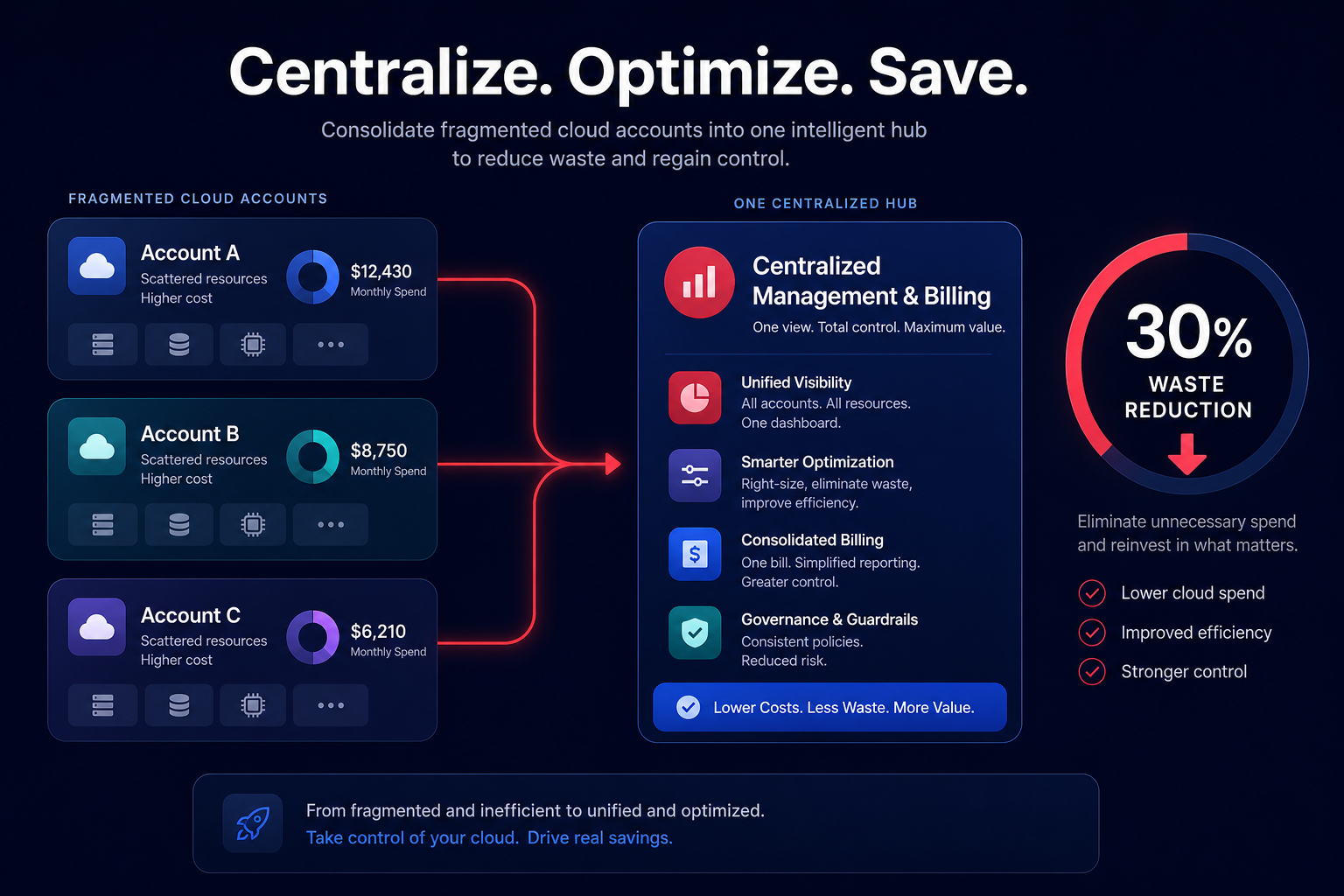
Managing a handful of AWS accounts is a standard part of scaling, but without a centralized strategy, your cloud environment quickly becomes a fragmented collection of “shadow IT” silos. Organizations often find themselves juggling dozens of separate invoices, missing out on volume discounts, and leaving valuable Reserved Instances and Savings Plans unused in one account while another pays full on-demand rates.
Industry research indicates that executives estimate approximately 30% of cloud compute spending is wasted due to idle resources and inefficient procurement strategies. By consolidating your accounts into a single management structure, you can eliminate billing complexity and unlock structural savings that are impossible to achieve in isolation.
The foundation of centralization: AWS Organizations
The first step in resolving fragmentation is implementing AWS Organizations. This service acts as the central nervous system for your cloud footprint, allowing you to manage multiple accounts from a single management account.
Through AWS Organizations, you can group accounts into Organizational Units (OUs) based on business function, such as production, development, or shared services. This structure is more than just an administrative convenience; it enables cloud cost governance frameworks that enforce spending guardrails across your entire enterprise. For example, you can use Service Control Policies (SCPs) to prevent developers from launching expensive, high-performance instances in a sandbox environment, ensuring cost control is baked into the infrastructure layer from the start.
Unlocking savings with consolidated billing
The most immediate financial benefit of centralization is consolidated billing. When you link multiple accounts, AWS treats them as a single entity for billing purposes. This leads to two primary cost-reduction levers that improve your bottom line.
Volume pricing tiers
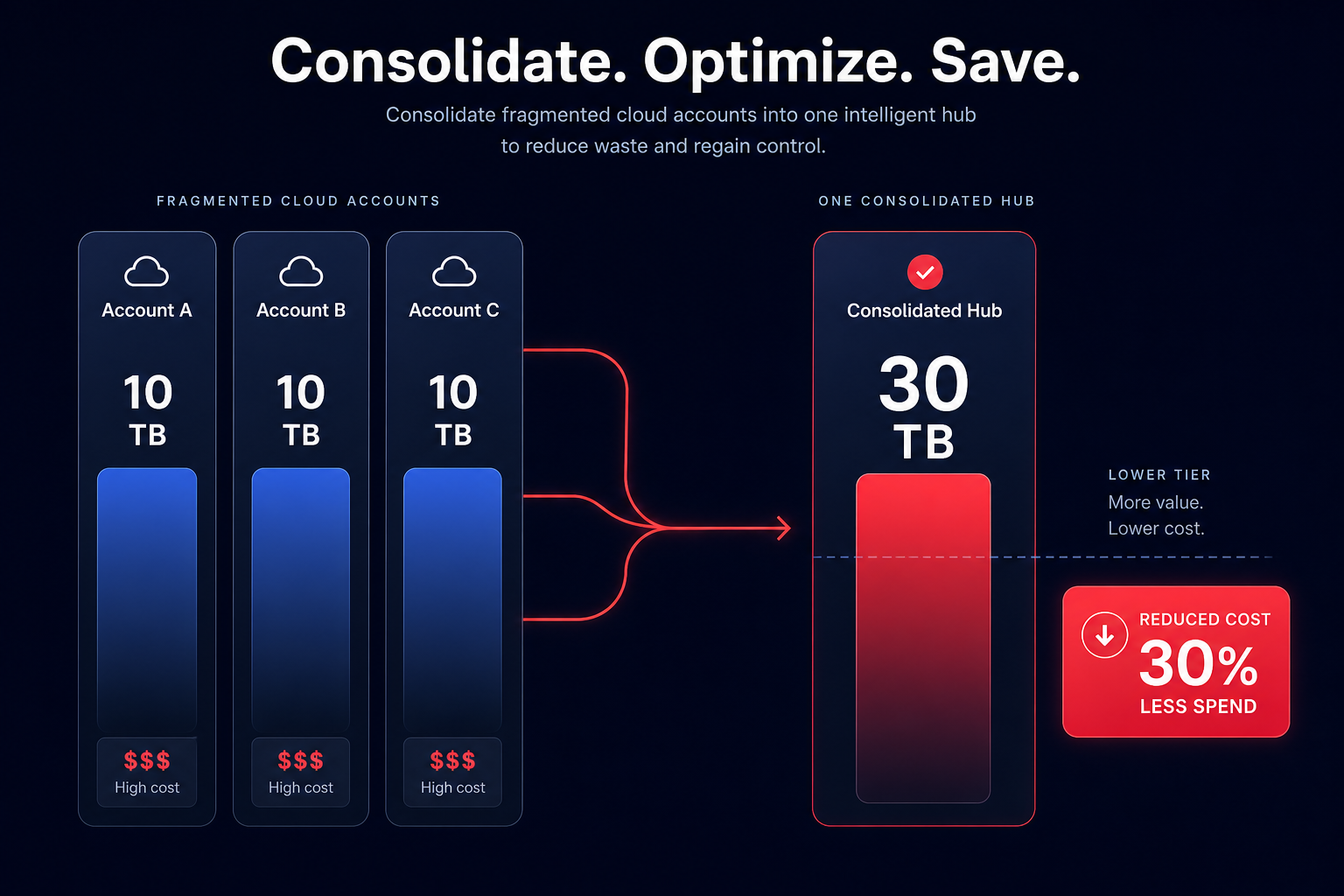
Many AWS services, such as Amazon S3 and data transfer, offer tiered pricing where the cost per unit decreases as your usage increases. In a fragmented environment, three separate accounts each using 10TB of storage might all pay the highest tier rate. By consolidating, AWS sees a single 30TB requirement, which often pushes your usage into a lower price bracket and reduces the overall bill without any changes to your actual architecture.
Discount sharing for commitments
In a standalone account, a Reserved Instance (RI) or Savings Plan is essentially a “use it or lose it” asset. If the specific instance it covers is shut down, the discount sits idle while you continue to pay for the commitment. In a consolidated structure, discount sharing is enabled by default. If one account is not using its committed capacity, the management account automatically applies that discount to eligible usage in any other member account. This dramatically increases your utilization rates and ensures you are not paying on-demand prices while a pre-paid discount goes to waste.
Improving visibility and accountability
Consolidation solves the problem of spend transparency by aggregating data into a single Cost and Usage Report (CUR). However, a single bill can also make it harder to attribute costs to specific departments unless you have a robust tagging and allocation strategy.
By using automated tagging for AWS cost allocation, you can enforce metadata requirements across all accounts in your organization. This allows you to use AWS Billing Conductor to create custom billing groups that mirror your internal organizational structure. You can generate pro forma invoices for different business units, even if they share resources, making chargeback and showback workflows seamless for your finance department.
This level of observability is critical for moving from reactive firefighting to proactive cost management. When you can see a spend spike in a specific account and trace it to a non-compliant resource within seconds, you prevent minor inefficiencies from ballooning into massive monthly overages.
Scaling optimization with automation
While consolidating accounts provides the necessary structure for savings, the actual work of optimizing rates and rightsizing workloads remains a significant engineering burden. Most organizations identify savings opportunities in AWS Cost Explorer but struggle to implement them because their DevOps teams are focused on building products, not managing financial commitments.
This is where Hykell changes the equation. Hykell integrates directly with your AWS Organization to operate automated cost optimization on autopilot. Instead of your team manually buying and selling RIs or guessing which Savings Plan coverage you need for the next three years, Hykell’s AI-driven platform manages a blended portfolio of commitments in real-time.
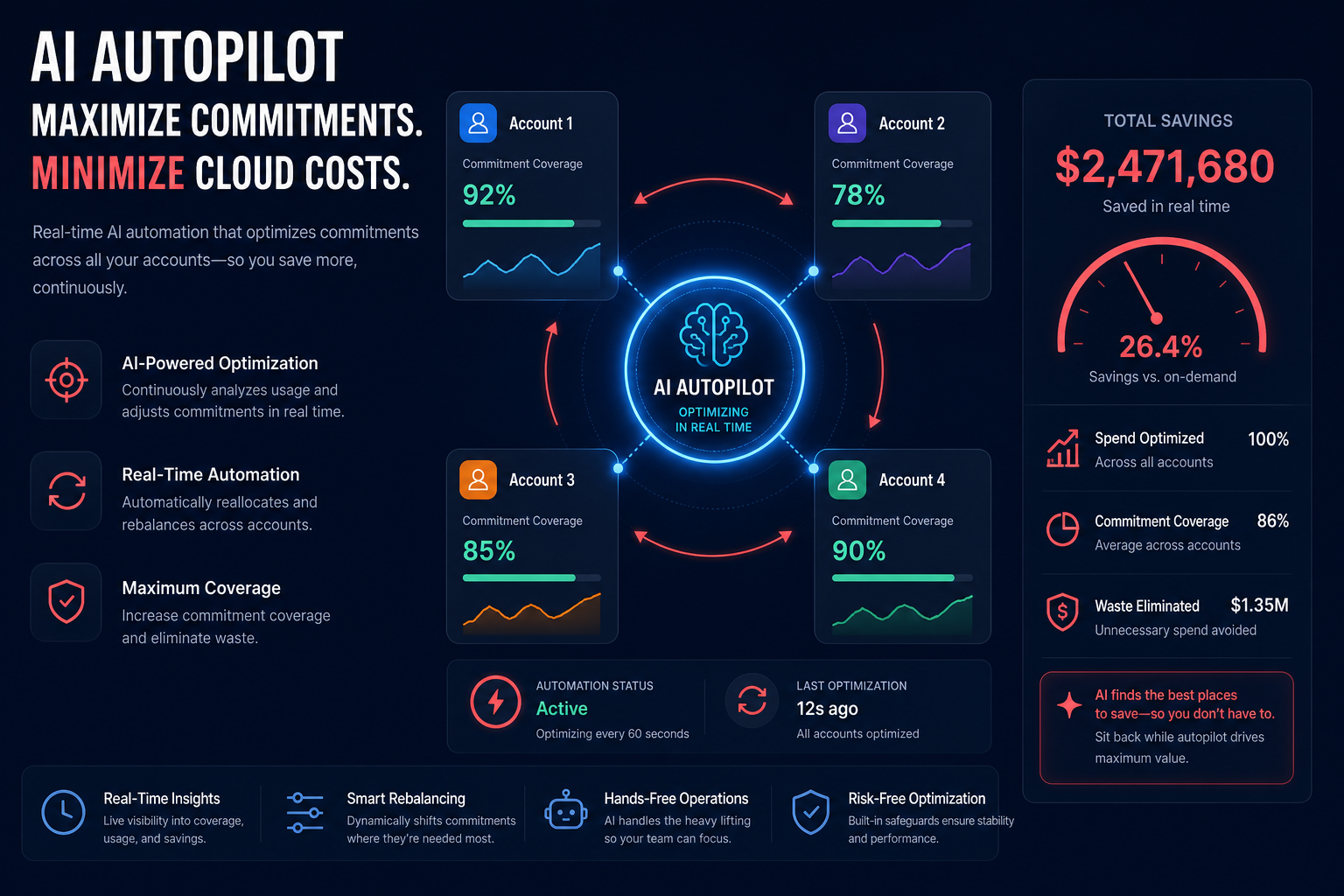
By continuously adjusting your discount coverage to match your actual usage, Hykell helps you achieve Effective Savings Rates (ESR) of 50–70% on compute spend. Because Hykell operates on a performance-based model, you only pay a slice of what you actually save. If there are no savings, you pay nothing.
Take control of your fragmented AWS spend
Consoliding your AWS accounts is the first step toward a mature FinOps practice. It eliminates redundant billing, captures volume discounts, and provides the visibility necessary to hold teams accountable. But visibility is only half the battle; the real value lies in taking action on those insights without draining your internal engineering resources.
Stop letting fragmented accounts and idle discounts inflate your cloud bill. Use our cloud cost savings calculator to see how much you could recover, or contact us today to start your automated audit and reduce your AWS costs by up to 40% on autopilot.