Navigating the complexities of AWS cost management often feels like a balancing act between maximizing discounts and maintaining operational flexibility. For many businesses, the fear of “commitment lock-in” – paying for resources you no longer need – leads to analysis paralysis. You might end up paying full On-Demand rates while waiting for a perfect data set that never arrives.
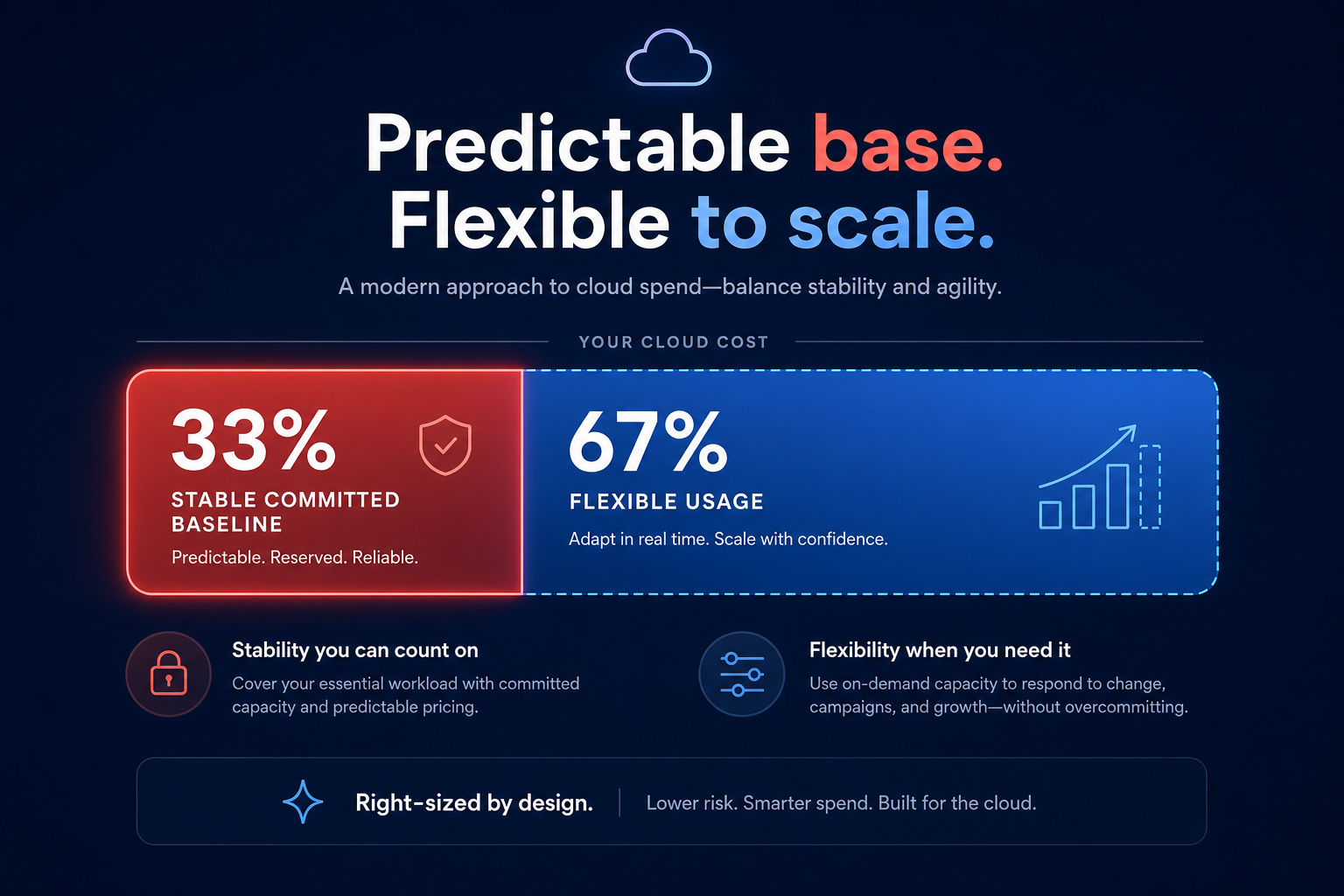
Strategically committing to roughly 33 percent of your baseline AWS consumption through Savings Plans is an effective safe harbor strategy. This approach allows you to capture immediate discounts on your most stable workloads while leaving room for architectural shifts, rightsizing, and the adoption of newer instance families.
Understanding the safe harbor commitment level
A 33 percent commitment serves as a conservative starting point because it protects you against the volatility of cloud environments. According to AWS, Savings Plans can provide up to 72% savings compared to On-Demand prices. However, unlike Reserved Instances, Savings Plans cannot be sold on a secondary market or canceled once the term begins.
By committing to only a third of your total compute spend, you ensure that your utilization rate – the percentage of your commitment actually being used – remains near 100 percent. Even if your business undergoes a significant pivot or a 50 percent reduction in infrastructure, you remain covered without wasting spend. This strategy mitigates the hidden costs of AWS commitments, where companies unknowingly leave 20 percent or more on the table by overcommitting to rigid, long-term contracts.
Choosing between flexibility and deep discounts
When you decide to commit to a portion of your spend, you must choose the right vehicle for that commitment. AWS offers two primary paths:
- Compute Savings Plans: These provide the highest level of flexibility, offering up to 66 percent savings. They automatically apply to usage across Amazon EC2, AWS Fargate, and AWS Lambda, regardless of region, instance family, or operating system. For most evolving organizations, these are the gold standard because they adapt as you accelerate Graviton adoption.
- EC2 Instance Savings Plans: These offer deeper discounts of up to 72 percent but require you to commit to a specific instance family in a specific region, such as the M7g family in us-east-1.
In a tiered commitment strategy, you might use an EC2 Instance Savings Plan for the rock-solid 33 percent of your infrastructure that you know will not change. You can then use automated Savings Plan purchases or Compute Savings Plans to cover the next layer of usage. Understanding the technical trade-offs between these options is essential for a Compute Savings Plan vs EC2 Savings Plan comparison.
The rolling commitment strategy
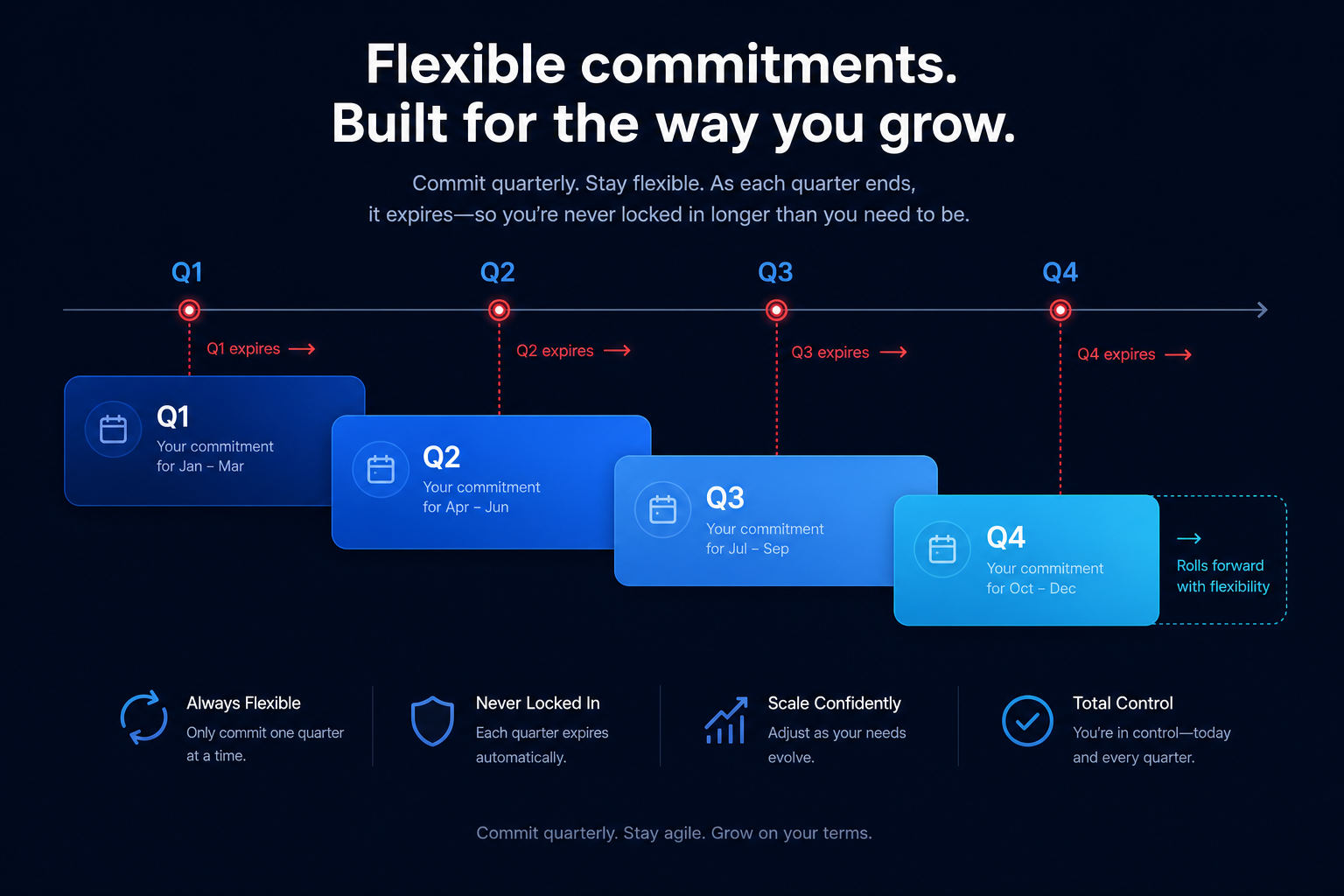
Rather than making one massive purchase every three years, AWS and FinOps experts often recommend a rolling approach. If you aim to cover a total of 33 percent of your consumption, you can break that into four smaller, staggered commitments purchased quarterly.
This staggered approach means that roughly 25 percent of your total committed spend expires every three months. This creates recurring levers that allow you to reduce or increase your commitment based on recent performance and short-term future forecasts. This reduces the burden of long-range usage predictions and ensures your AWS rate optimization strategy remains aligned with your actual engineering roadmap.
Why rightsizing must come before commitment
Committing to 33 percent of an inefficient bill still results in wasted spend. Hykell often finds that roughly 40 percent of EC2 instances run at least one size larger than necessary for their actual workload. Before locking into any Savings Plan, you should perform a deep cloud cost audit to identify underutilized resources.
Locking in a discount for an oversized instance essentially subsidizes waste. By rightsizing your compute and optimizing storage tiers first, your 33 percent commitment applies to a lean, efficient baseline. This maximizes your Effective Savings Rate (ESR) and ensures you are not paying for “zombie” resources.
Automating your commitment strategy with Hykell
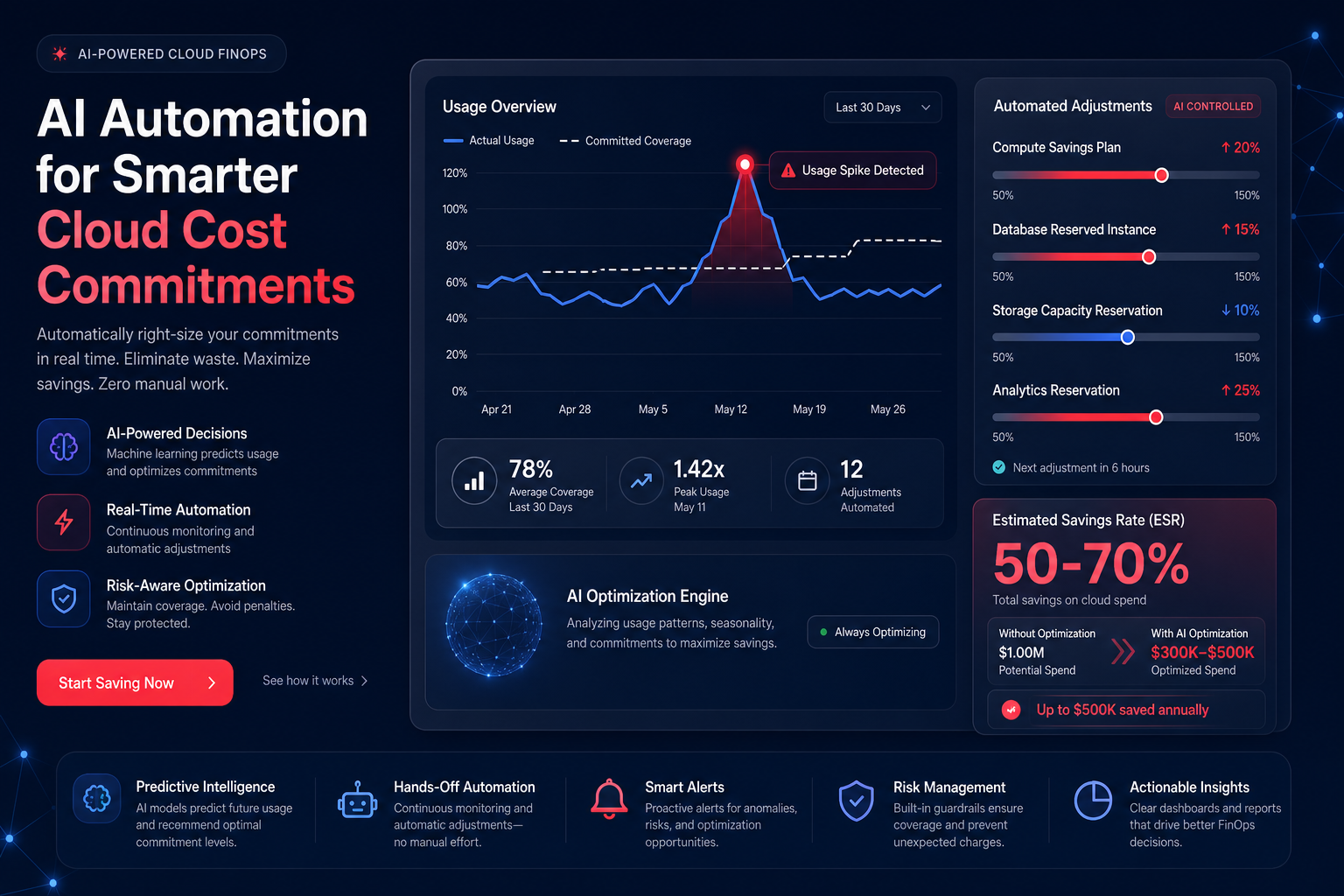
Managing a tiered, rolling commitment strategy manually is a technical and political minefield. It requires constant monitoring of coverage reports, utilization metrics, and engineering roadmaps. Hykell eliminates this manual effort by managing a blended portfolio of Savings Plans and Reserved Instances on autopilot.
The AI-powered platform from Hykell analyzes your historical usage and real-time spikes to purchase and adjust commitments automatically. This allows you to achieve the benefits of long-term discounts – often reaching an ESR of 50–70 percent – without the risk of overcommitment or the need for ongoing internal engineering effort.
If you want to see exactly how much you could save by optimizing your commitment levels, use the Hykell AWS savings calculator. We dive deep into your cloud costs to uncover hidden savings and only take a slice of what you actually save – if you do not save, you do not pay.
You can request a free commitment audit today to start optimizing your AWS spend with precision and confidence.