Is your AWS bill climbing while your application speed stays stagnant? Selecting the right processor architecture – AWS Graviton or AMD – is the fastest way to bridge the gap between cost and performance without rewriting your entire infrastructure.
Understanding the architectural divide: ARM vs. x86
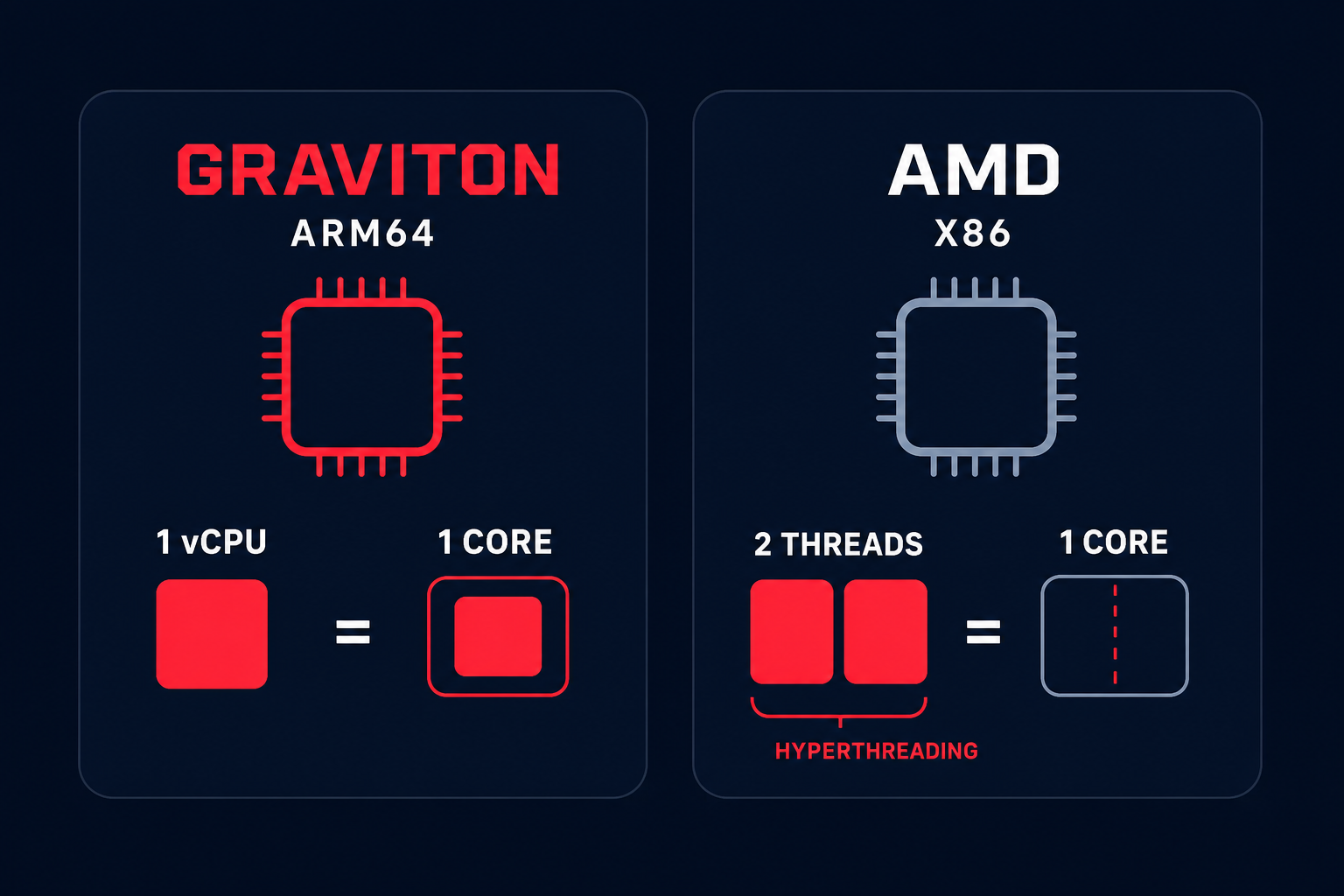
The choice between AWS Graviton and AMD isn’t just about brand names; it represents a fundamental shift in how your code executes. AWS Graviton processors are custom-built by AWS using the ARM64 architecture. Unlike traditional x86 processors from AMD and Intel, Graviton maps one vCPU to one physical core. This architecture eliminates the “noisy neighbor” issues often associated with hyperthreading, where two virtual cores share the resources of a single physical core, potentially leading to performance jitter.
AMD instances, such as the M7a or C7a families, utilize 4th Generation AMD EPYC processors. These are based on the x86 architecture, offering broad compatibility with legacy software and Windows Server environments that Graviton cannot yet support. While these instances still utilize hyperthreading, AMD has made massive strides in efficiency, with M7a instances delivering up to 50% higher performance compared to the previous M6a generation.
Cost comparison: the price of a compute cycle
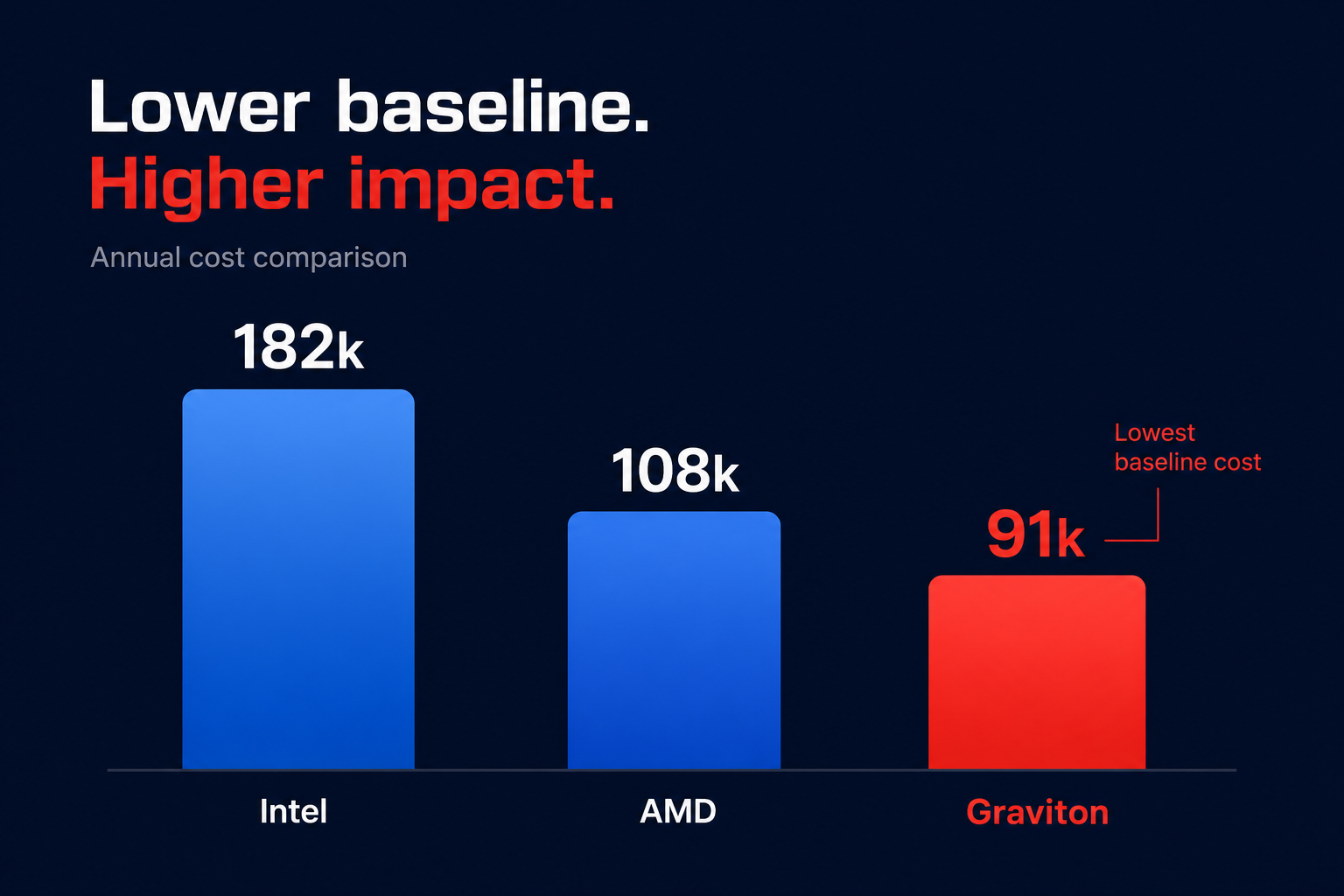
When looking strictly at the hourly rate, Graviton typically wins the pricing battle. Graviton instances are generally priced 20% lower per hour than comparable x86 instances. In a direct comparison of annual costs, a compute-heavy workload that requires $182,000 on Intel might cost approximately $108,000 on AMD and only $91,000 on Graviton. This lower baseline makes ARM-based instances an attractive starting point for any cost-reduction initiative.
However, the “cheapest” instance isn’t always the most cost-effective if you don’t account for throughput. You must consider the price-performance ratio rather than the sticker price alone. AWS states that Graviton-based EC2 instances can deliver up to 40% better price-performance than their x86 counterparts. AMD counters this with the C7a family, which provides 10% better price-performance than previous AMD generations, serving as a powerful middle ground for organizations that are not yet ready to transition away from the x86 ecosystem.
To see how these architectural shifts impact your specific bottom line, you can use the Hykell cost savings calculator to analyze your current usage patterns and identify the most lucrative migration opportunities within your environment.
Performance benchmarks for specific workloads
Your choice should depend largely on the nature of your software and its computational requirements. Graviton3 and Graviton4 excel in multi-threaded, cloud-native environments and microservices. For instance, Graviton4 is up to 45% faster for large Java applications than its predecessor. It also dramatically reduces compilation costs, with some benchmarks showing a 35% reduction in expenses for CI/CD pipelines compared to both AMD and Intel.
AMD instances remain highly competitive in single-threaded performance and floating-point intensive tasks. If your application relies on high clock speeds or specific x86 instruction sets, an AMD instance like the C7a might outperform Graviton despite the higher hourly cost. For database users, migrating RDS workloads to Graviton often yields a 35% to 52% price-performance improvement for open-source engines like MySQL and PostgreSQL, making it a primary target for database optimization.
Compatibility and migration effort
The true cost of moving to Graviton includes the engineering effort required for the transition. Because Graviton is ARM-based, your software must be compiled for ARM64. Most modern Linux distributions, Docker images, and languages like Python, Go, and Node.js support this natively. If your stack is fully containerized, the transition is often seamless and requires minimal developer intervention.
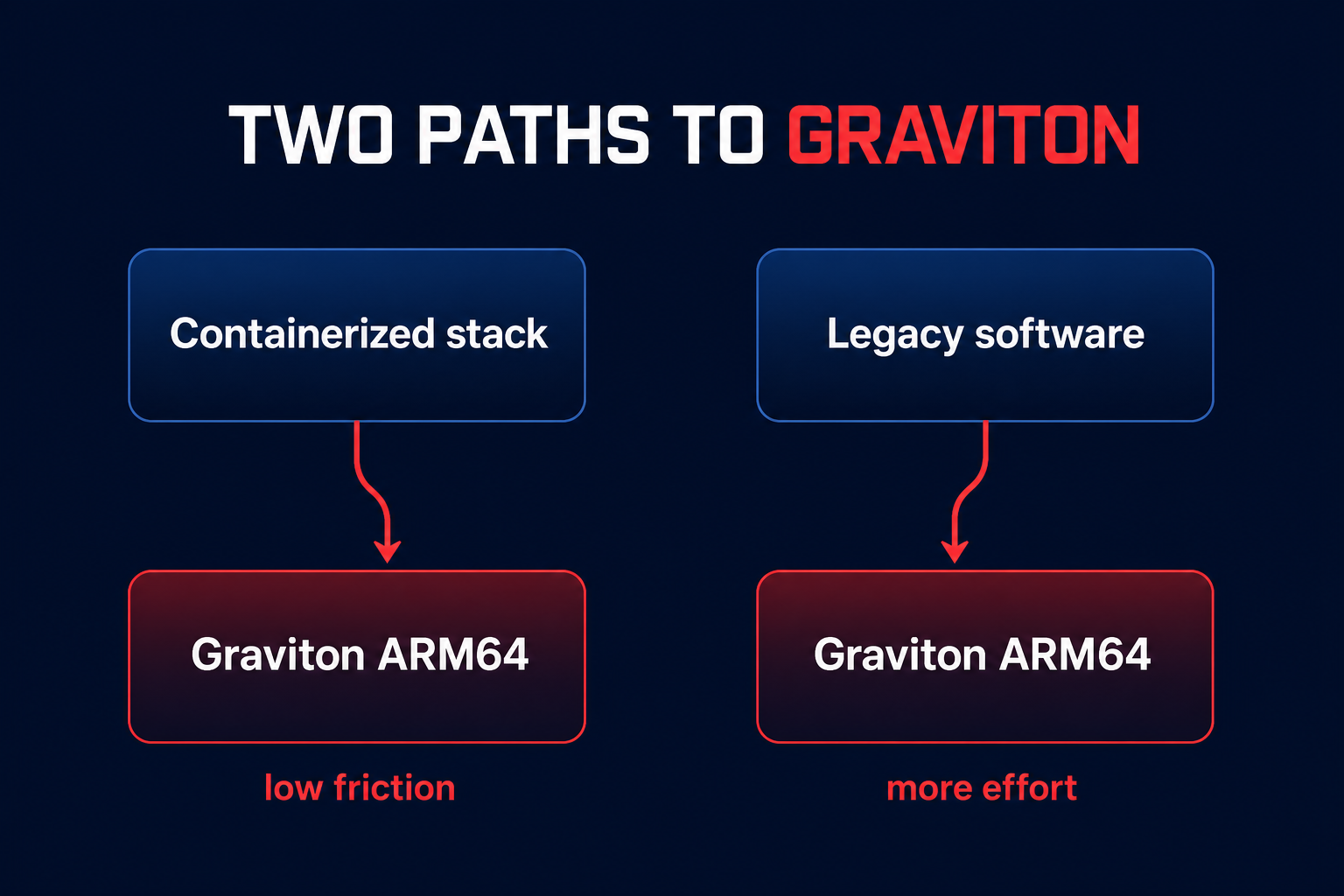
AMD instances offer the path of least resistance for legacy systems. Because they are x86-based, you can move from Intel to AMD instances with virtually zero code changes. This makes AMD an excellent choice for legacy applications, proprietary binaries, or Windows-based workloads that cannot run on Graviton due to architectural constraints.
Optimizing your architecture at scale
Choosing between Graviton and AMD is only the first step in a broader efficiency strategy. To maximize your results, you need to layer these architectural choices with smart AWS rate optimization strategies. Savings Plans and Reserved Instances can be stacked on top of Graviton’s lower base price to drive total savings above 50%, provided your commitment strategy is handled correctly.
Many businesses struggle to balance this transition while maintaining performance SLAs and managing complex commitment portfolios. Hykell provides real-time observability into your infrastructure, helping you spot underutilized x86 resources and identifying which specific workloads are the best candidates for a Graviton migration. By automating the selection and commitment process, you ensure that you are always running on the hardware that offers the best performance per dollar for your specific needs.
Determining the right mix of Graviton and AMD instances shouldn’t be a guessing game based on marketing specs. By analyzing your actual resource consumption and performance requirements, you can build a resilient, high-performance architecture that costs significantly less to operate.
If you’re ready to see how much you could save by optimizing your processor choices and commitment strategies, run a free analysis with Hykell and discover how to reduce your cloud spend by up to 40% on autopilot.