Have you ever opened your AWS bill and wondered why “Data Transfer” has suddenly become one of your top-line expenses? Networking costs are notoriously difficult to predict because they depend entirely on the distance and direction data travels across the global infrastructure.
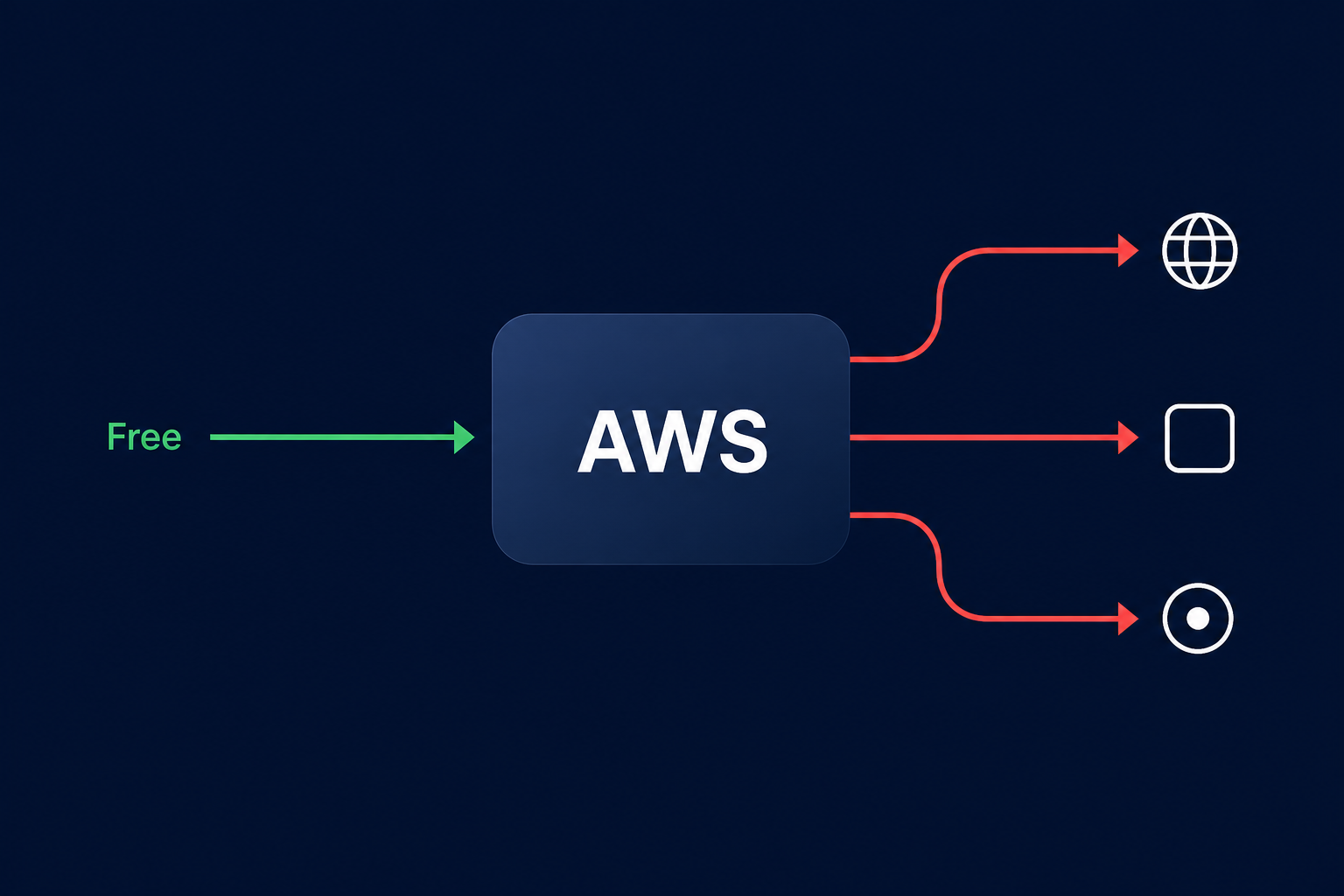
Understanding the mechanics of egress fees is the first step toward reclaiming your cloud budget. While moving data into AWS (ingress) is almost always free, moving it out – whether to the internet, another region, or even a different Availability Zone (AZ) – can quickly escalate into a convenience tax that erodes your margins.
The fundamental rules of AWS data transfer
AWS pricing follows a hierarchy based on how far data moves from its source. Generally, the further data moves from its source, the more you pay. AWS does not charge you to move data from the internet into their ecosystem, but moving it out is a different story.
For data transfer out to the internet, you receive 100 GB of free data transfer per month, aggregated across most services. Beyond that, most US regions charge roughly $0.09 per GB for the first 10 TB, with rates decreasing as your volume increases.
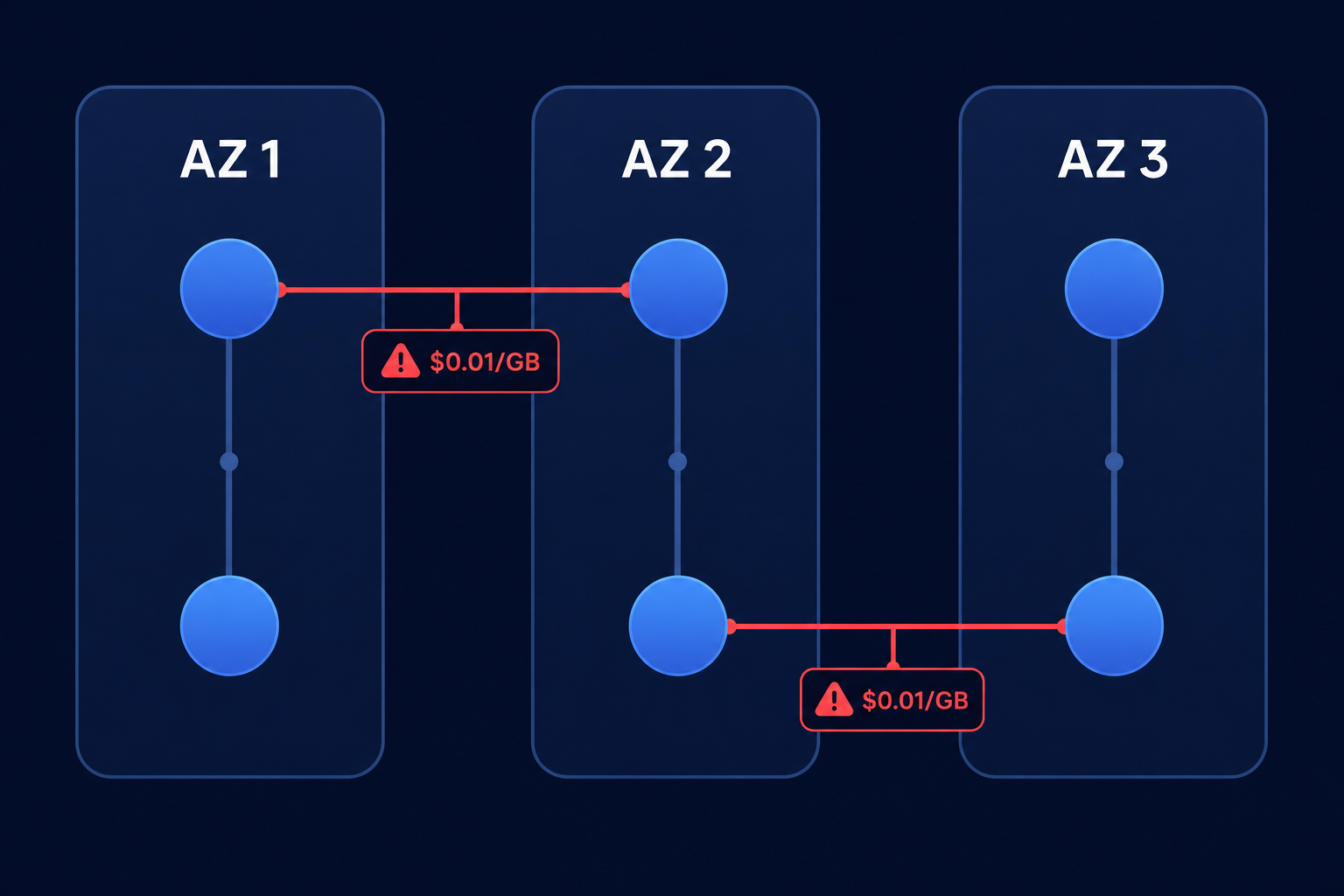
Internal transfers also carry costs that are often overlooked. Moving data between different AWS Regions typically costs around $0.02 per GB, and you are only charged for the data leaving the source region. Moving data between Availability Zones within the same region costs approximately $0.01 per GB in each direction. While this seems small, high-volume microservice architectures can generate massive cross-AZ charges if your traffic isn’t localized.
Common hidden drivers of networking costs
Many engineering teams are surprised by high networking bills despite having low internet egress. This is often due to architectural traps that trigger internal transfer fees.
The NAT Gateway processing fee
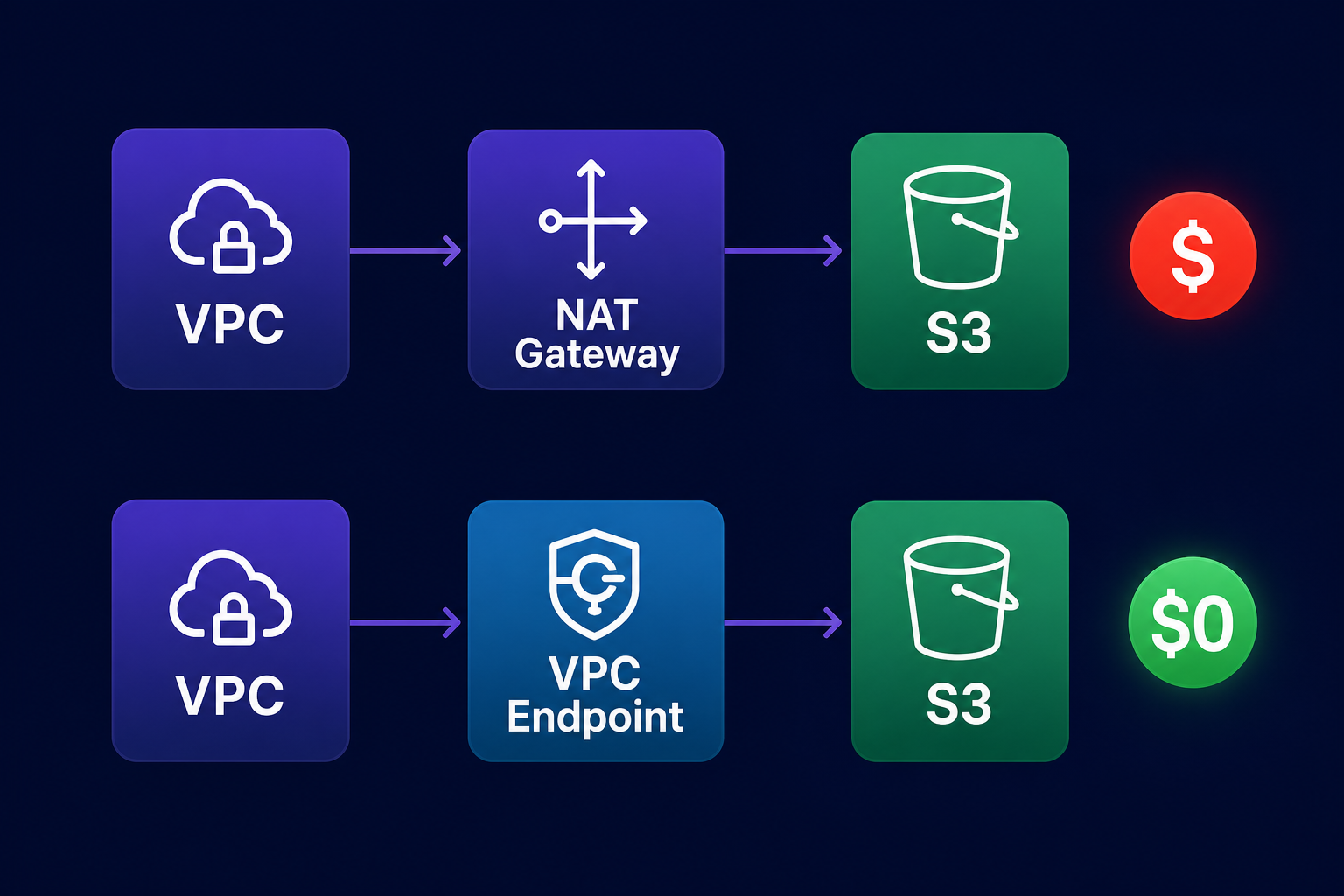
One of the most frequent sources of bill shock is the Managed NAT Gateway. AWS charges a data processing fee of $0.045 per GB for every gigabyte that passes through the gateway. If your private instances are downloading large container images from ECR or backing up data to S3 through a NAT Gateway, you are paying this processing fee on top of any other transfer rates.
Cross-AZ traffic and replication
If you run a Kubernetes or database cluster distributed across three AZs for high availability, your nodes are constantly communicating. If those nodes aren’t AZ-aware, a significant portion of your internal traffic will incur a $0.01/GB cross-AZ charge. For data-heavy applications, these AWS egress costs can represent 25% to 35% of the total infrastructure budget.
A similar logic applies to disaster recovery. While multi-region architectures provide the highest level of resilience, they double your data transfer footprint. Every gigabyte replicated for disaster recovery purposes incurs inter-region egress fees, which can impact the overall ROI of your global expansion.
How to calculate and monitor your egress spend
To manage these costs, you need visibility beyond a simple monthly total. AWS provides several tools to help you perform <a href="https://docs.aws.amazon.com/wellarchitected/latest/cost-optimization-pillar/costdatatransfer_modeling.html”>data transfer modeling to predict how changes to your architecture will impact your bottom line.
- AWS Cost Explorer: Use this for baseline visibility. Filter by “Usage Type” and look for “DataTransfer-Out-Bytes” or “DataTransfer-Regional-Bytes” to see where the bulk of your spend originates.
- Cost and Usage Report (CUR): For granular detail, the CUR provides line items for each unique combination of service and operation. You can query the `lineItem/UsageType` column to identify which specific microservice is responsible for a spend spike.
- AWS Budgets: Set up alerts based on your historical data transfer usage to catch anomalies before they result in a month-end surprise.
Proven strategies to minimize data transfer fees
Reducing your networking bill usually requires architectural adjustments rather than just searching for a cheaper rate. You should prioritize replacing NAT Gateway traffic with VPC Endpoints whenever possible. Gateway Endpoints are free, allowing you to bypass the $0.045/GB NAT processing fee for S3 and DynamoDB traffic entirely.
You can also leverage Amazon CloudFront to reduce internet egress costs. Moving data from S3 or EC2 to CloudFront is free, and egress rates from CloudFront to the internet are often significantly lower than direct EC2-to-internet rates. On an architectural level, ensure that high-traffic components are located in the same AZ. For private instances that must use a NAT Gateway, you should deploy one gateway per AZ to avoid cross-AZ processing charges.
High egress can sometimes be solved at the application layer as well. Implementing pagination, compression, and field-level filtering – only returning the specific data the client needs – can reduce the volume of data leaving your network by 50% or more.
Automating your path to efficiency
Manually auditing every route table and cross-AZ flow is an uphill battle for growing engineering teams. While architectural best practices provide a foundation, achieving a truly optimized Effective Savings Rate requires continuous monitoring and automated adjustments.
At Hykell, we help you take the guesswork out of cloud expenses. Our automated execution layer proactively identifies underutilized resources and networking inefficiencies, often reducing overall AWS costs by up to 40% without requiring ongoing engineering effort.
If you are ready to see exactly where your data transfer dollars are going, use our cloud cost calculator to estimate your potential optimization gains or book a detailed cost audit today.