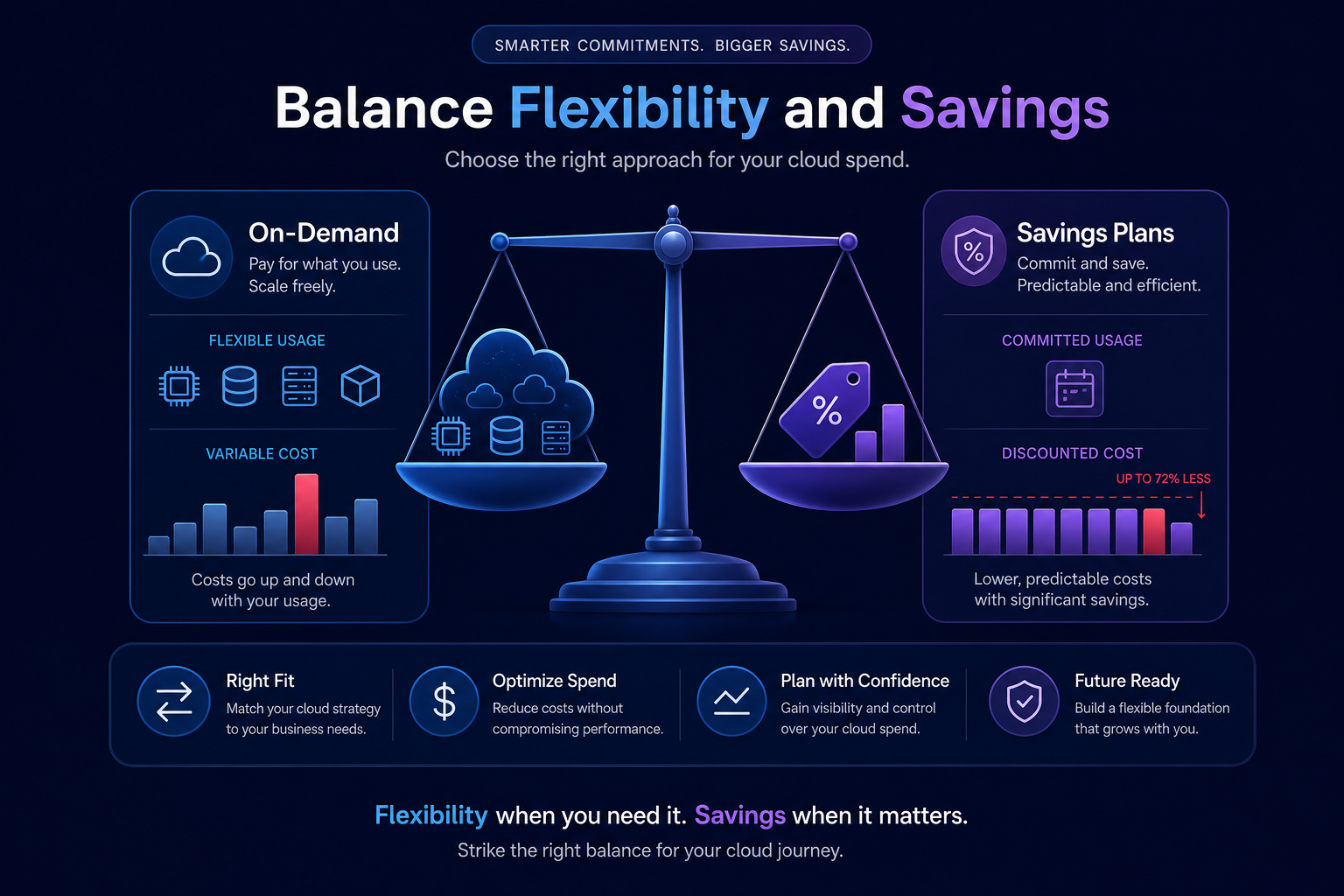
Are you still paying the full “sticker price” for AWS compute just to avoid the commitment trap? While On-Demand instances offer the ultimate freedom, they are often the most expensive way to power a growing business.
Choosing between the flexibility of On-Demand and the deep discounts of AWS Savings Plans is the most significant financial decision you will make in the cloud. Understanding the trade-offs between these two models – and how to bridge the gap – is the key to reducing your bill by up to 40% without sacrificing your ability to pivot.
The cost of On-Demand flexibility
AWS On-Demand pricing is designed for unpredictability. You pay for compute capacity by the hour or the second with a 60-second minimum and zero long-term obligation. This makes it the perfect choice for short-term projects, experimental workloads, or handling sudden spikes in traffic that fall outside your normal baseline.
However, this flexibility comes at a premium. For any workload that runs consistently, staying on On-Demand rates is essentially a “flexibility tax.” Many businesses rely on On-Demand because they fear being locked into a specific instance family or region, but this often leads to significant overspending on steady-state workloads that could easily be covered by a discount program.
Savings Plans: trading commitment for deeper discounts
AWS Savings Plans offer a way to slash your costs by up to 72% in exchange for a commitment to a consistent amount of compute usage, measured in dollars per hour, for a one-year or three-year term. Unlike the rigid Reserved Instances of the past, Savings Plans apply automatically across your eligible usage.
There are two primary types of Savings Plans, each offering a different balance of savings and mobility.
Compute Savings Plans
These are the most flexible options available, providing discounts of up to 66% compared to On-Demand rates. They apply to usage across EC2, AWS Lambda, and AWS Fargate, regardless of the instance family, size, or region. If you migrate from C5 instances to M5, or move a workload from Virginia to Ireland, your discount follows you automatically. This is particularly useful for teams undergoing AWS cost optimization for startups where architecture is still evolving.
EC2 Instance Savings Plans
These offer deeper discounts – up to 72% – but require you to commit to a specific instance family in a chosen region, such as the M5 family in us-east-1. While you can change sizes within that family, you lose the ability to switch families or regions without losing the discount. For a deeper dive into which plan fits your architecture, see our guide on Compute Savings Plans vs. EC2 Instance Savings Plans.
Managing the commitment dilemma and lock-in risk
The primary challenge with Savings Plans is that they are “use it or lose it.” If you commit to $10/hour of compute but your usage drops to $8/hour during a quiet period or after an optimization drive, you still pay for the full $10. This is the hidden cost of AWS commitments: the risk of paying for unused capacity when your infrastructure changes.
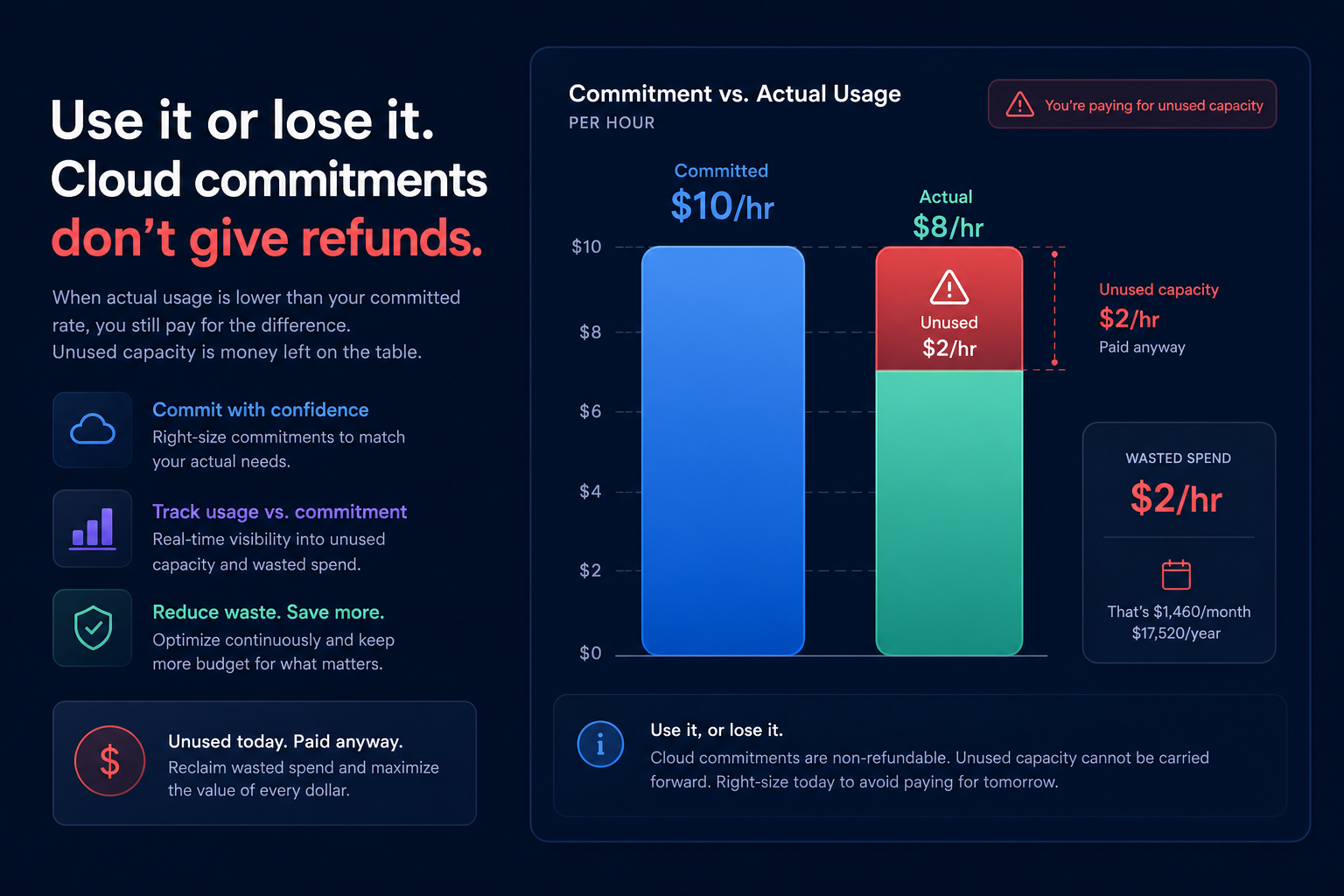
Conversely, if you under-commit, any usage above your hourly baseline is billed at the expensive On-Demand rate. Finding the “sweet spot” is difficult because your infrastructure is rarely static. Engineering teams constantly right-size instances, migrate to Graviton processors, or adopt Kubernetes, all of which shift the underlying compute requirements. Most organizations struggle to manage this balance manually, often leaving 20% or more in potential savings on the table.
Automating the bridge between freedom and savings
You should not have to choose between the high cost of On-Demand and the high risk of long-term Savings Plans. Hykell provides an automated execution layer that eliminates this trade-off by using AI to manage a blended portfolio of Savings Plans and Reserved Instances.
This approach captures the maximum possible discount while maintaining the flexibility of an On-Demand model. Our AWS rate optimization service proactively manages these commitments in the background, ensuring you achieve an Effective Savings Rate (ESR) of 50–70% without your engineering team lifting a finger. By combining AWS Savings Plans vs. Reserved Instances in a dynamic mix, Hykell handles the heavy lifting of cost optimization so you can focus on building your product.
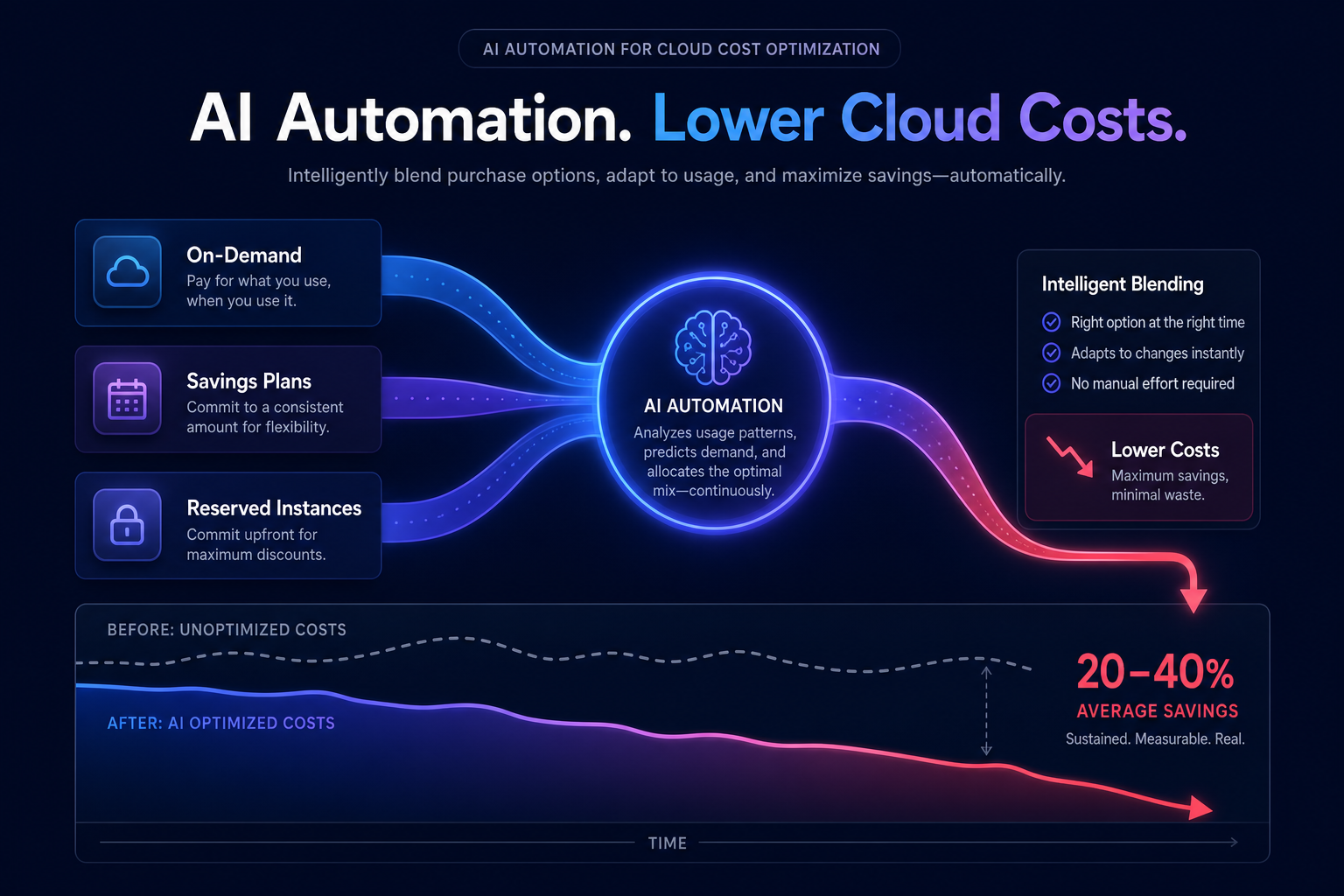
Hykell operates on autopilot and only takes a slice of the savings we generate for you. If you don’t save money, you don’t pay. If you are curious about how much you could be saving by moving away from On-Demand pricing, use the Hykell AWS cost savings calculator to simulate your potential reductions and see how automated optimization can cut your spend by up to 40%.