Are you overpaying for your AWS infrastructure? Navigating the complexity of EC2 pricing models – from Savings Plans to Spot Instances – can slash your cloud bill by 72% or more while maintaining peak performance for your applications.
Managing EC2 costs requires balancing performance needs with cost efficiency. AWS provides several purchasing models, each suited to different workload patterns. Hykell specializes in combining these options to tailor cost-saving strategies based on your unique needs, ensuring no budget is left on the table.
The flexible baseline: On-Demand Instances
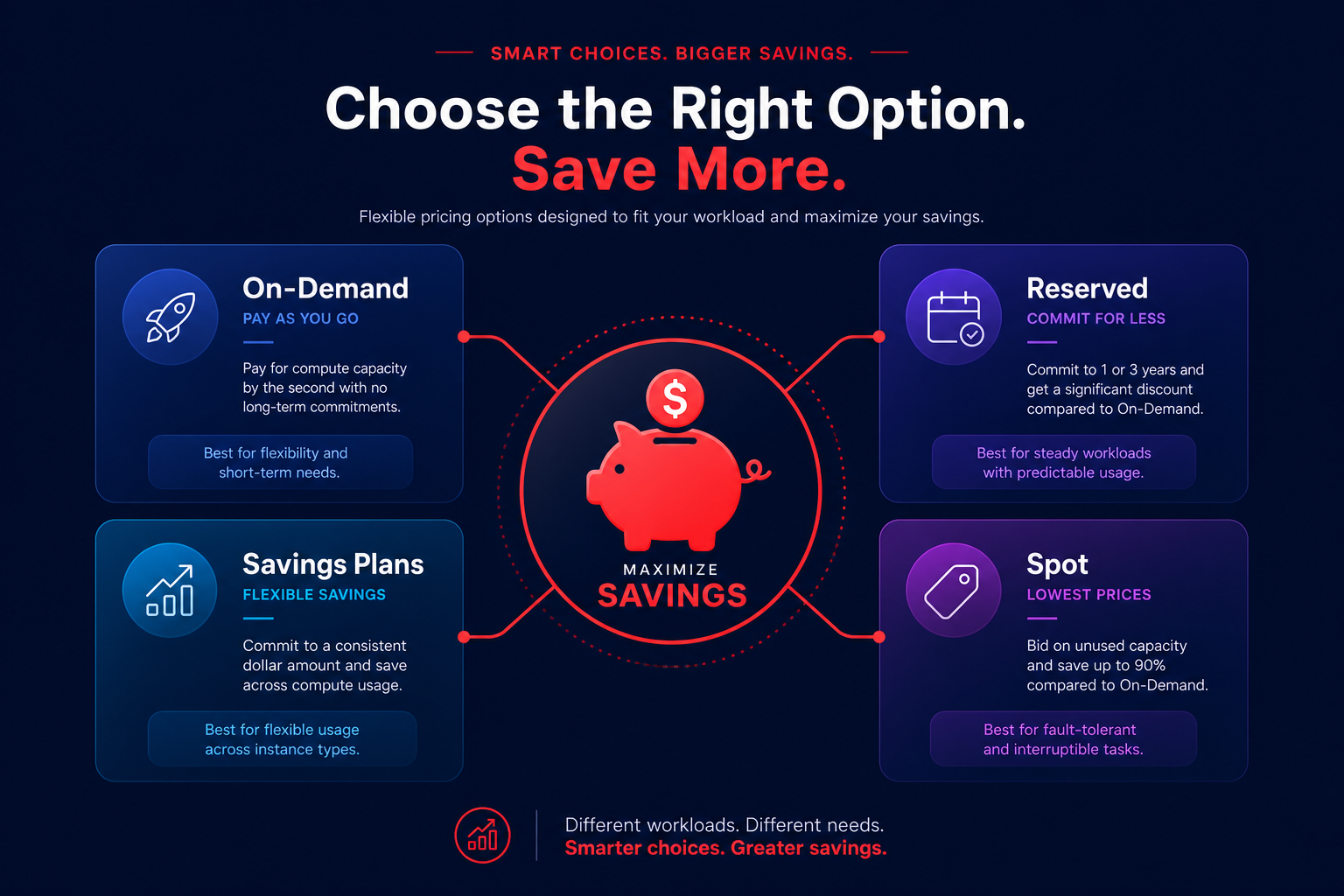
On-Demand Instances operate on a pure pay-as-you-go model with no long-term commitments. You pay for compute capacity by the hour or second, with a 60-second minimum. While this offers maximum flexibility, it is also the most expensive way to consume AWS resources.
This model is ideal for short-term, unpredictable workloads that cannot be interrupted, such as a new application launch or an experimental project. However, running a steady-state production environment entirely on On-Demand rates is often a significant financial drain. For a deeper look at how these costs compare to discounted options, review our AWS Reserved Instances vs On-Demand cost breakdown.
Deep discounts with Reserved Instances
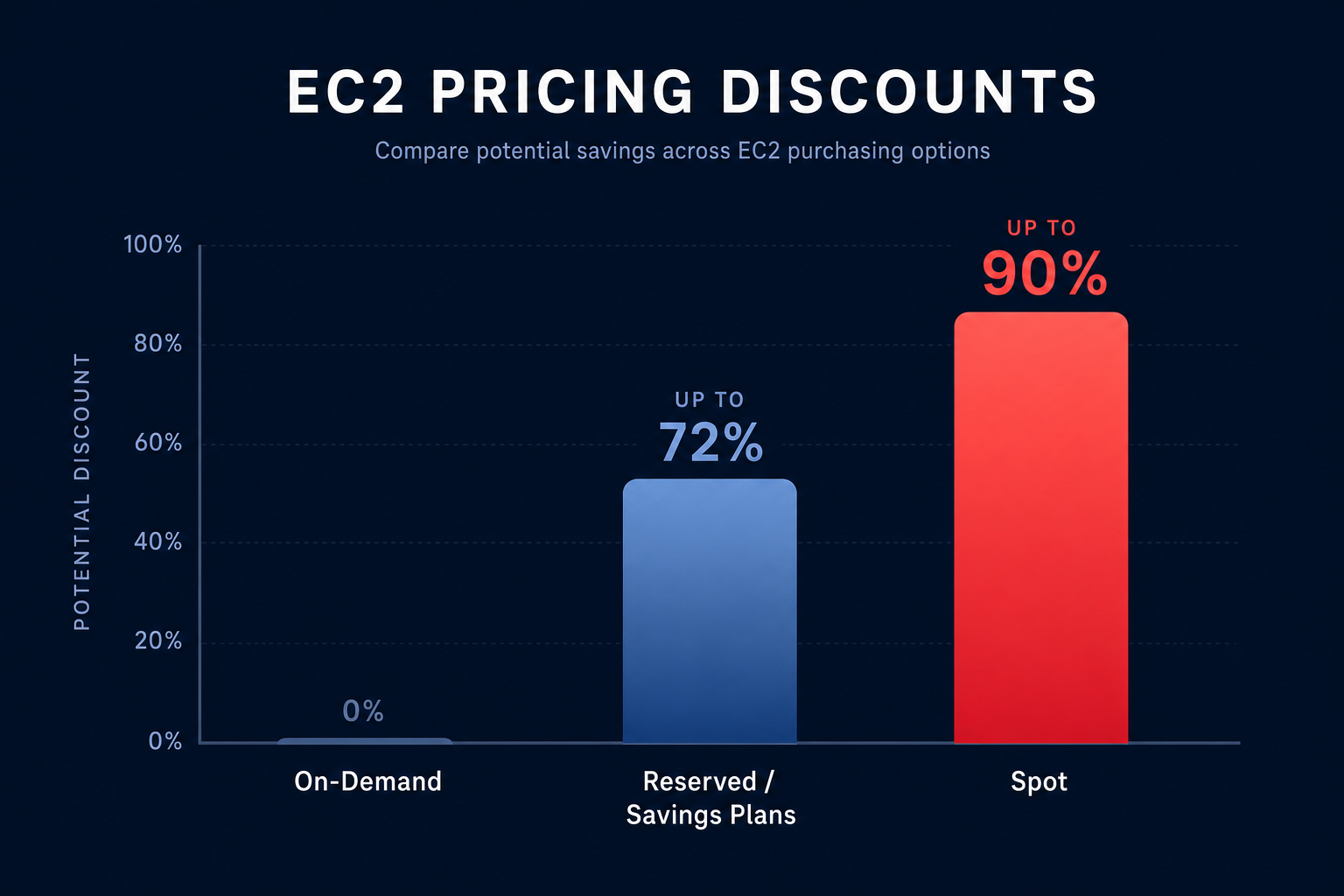
Reserved Instances (RIs) provide a significant discount – up to 72% – compared to On-Demand pricing in exchange for a one-year or three-year commitment. RIs are not physical instances but billing discounts applied to your account.
- Standard RIs offer the deepest discounts but are the most rigid. Their unique advantage is that they are tradeable on the Reserved Instance Marketplace. If your needs change, you can sell your unused capacity to other users.
- Convertible RIs allow you to exchange your reservation for another instance type, region, or operating system. While the discount is slightly lower (up to 66%), the adaptability ensures your infrastructure can evolve alongside your business needs.
Choosing between these requires a clear AWS Reserved Instance planning guide to avoid overcommitting to the wrong instance family.
Modern flexibility: AWS Savings Plans
Savings Plans are a flexible pricing model that provides lower prices in exchange for a specific usage commitment measured in dollars per hour. Unlike RIs, which are tied to specific instance attributes, Savings Plans apply automatically to any eligible usage.
- Compute Savings Plans provide the most flexibility, applying to usage across EC2, AWS Fargate, and AWS Lambda regardless of instance family, size, region, or operating system.
- EC2 Instance Savings Plans offer the lowest prices (up to 72% off) but require a commitment to a specific instance family within a chosen region.
When deciding which path to take, it is helpful to compare Compute Savings Plans vs EC2 Instance Savings Plans to see which fits your growth trajectory. For a high-level comparison of all commitment-based options, see our guide on AWS Savings Plans vs Reserved Instances.
Maximizing savings with Spot Instances
For workloads that are fault-tolerant or horizontally scalable, Spot Instances offer the deepest possible discounts – up to 90% off On-Demand prices. These instances utilize spare EC2 capacity.
The trade-off is that AWS can reclaim this capacity with just a two-minute notice. This makes them ideal for stateless microservices, batch processing, or CI/CD pipelines. By implementing AWS Spot Instance automation, you can run even stable workloads on Spot by diversifying across capacity pools and automating interruption handling. You can learn more about the specific trade-offs in our comparison of spot instance vs reserved instance models.
The stock market analogy for AWS pricing
Think of your AWS pricing strategy like a diversified investment portfolio:
- Convertible RIs and Compute Savings Plans are like diversified funds, providing adaptability in an evolving market.
- Standard RIs are blue-chip stocks, offering high returns for stable, long-term holdings.
- Spot Instances are high-volatility assets that can provide massive returns if managed with the right automation.
Just as a balanced portfolio maximizes financial returns, combining these tools ensures the best value for your cloud investment.
Optimize your AWS costs with Hykell
Hykell combines RIs, Savings Plans, and Spot Instances into a unified AWS rate optimization strategy. By leveraging an advanced proprietary tool that analyzes your AWS bill via a secure, read-only IAM role, we identify inefficiencies and apply intelligent AWS cost optimization on autopilot.
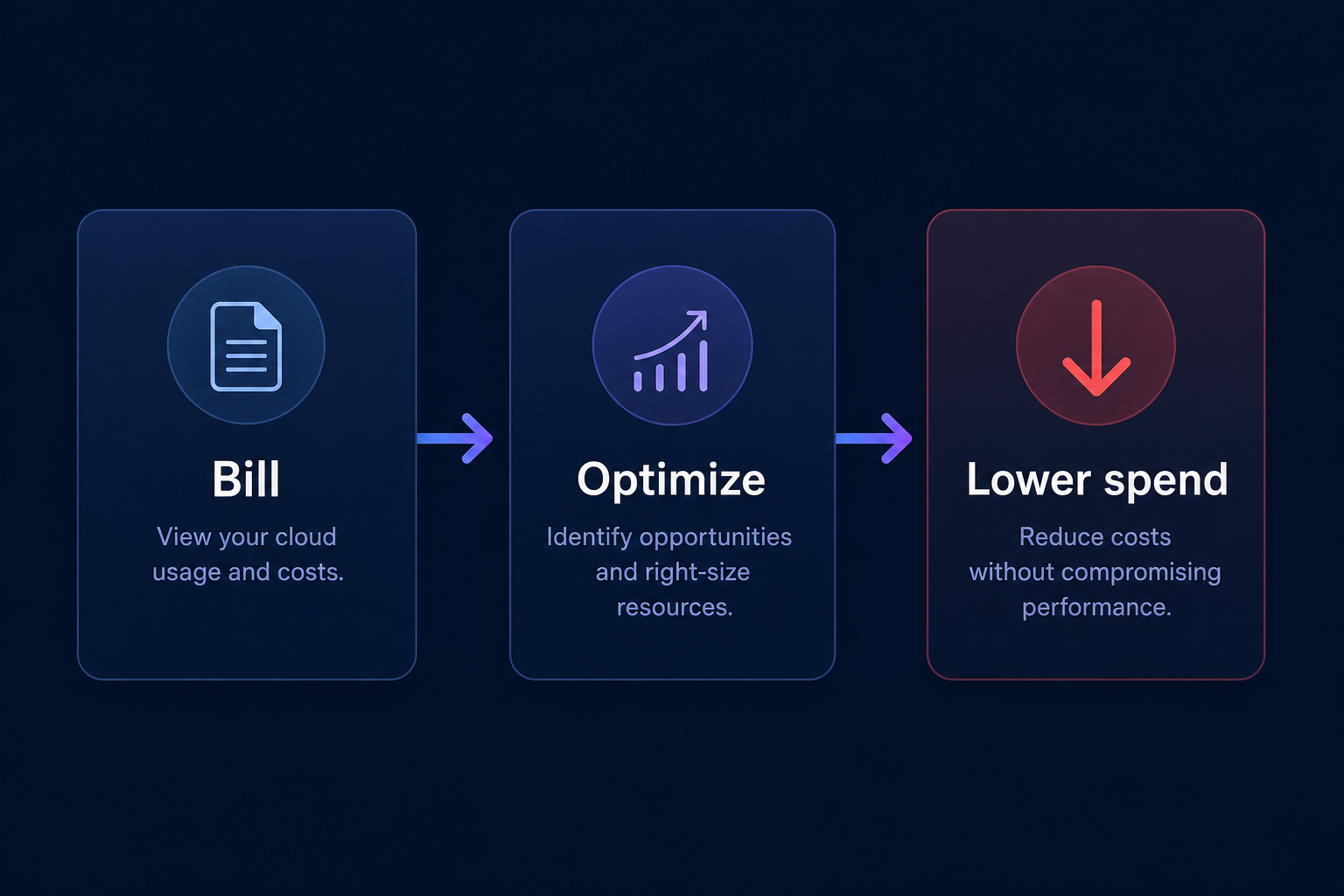
Our approach often uncovers opportunities for additional gains, such as migrating to Graviton processors, which can offer 40% better price-performance than Intel-based instances. Many organizations also find significant waste in their storage tiers; moving from gp2 to gp3 or identifying idle EBS volumes can further trim your spend.
Don’t let potential savings slip through the cracks. Use our AWS cost savings calculator to see how much you could save, or contact Hykell today to unlock significant savings and maximize the value of your cloud investment.