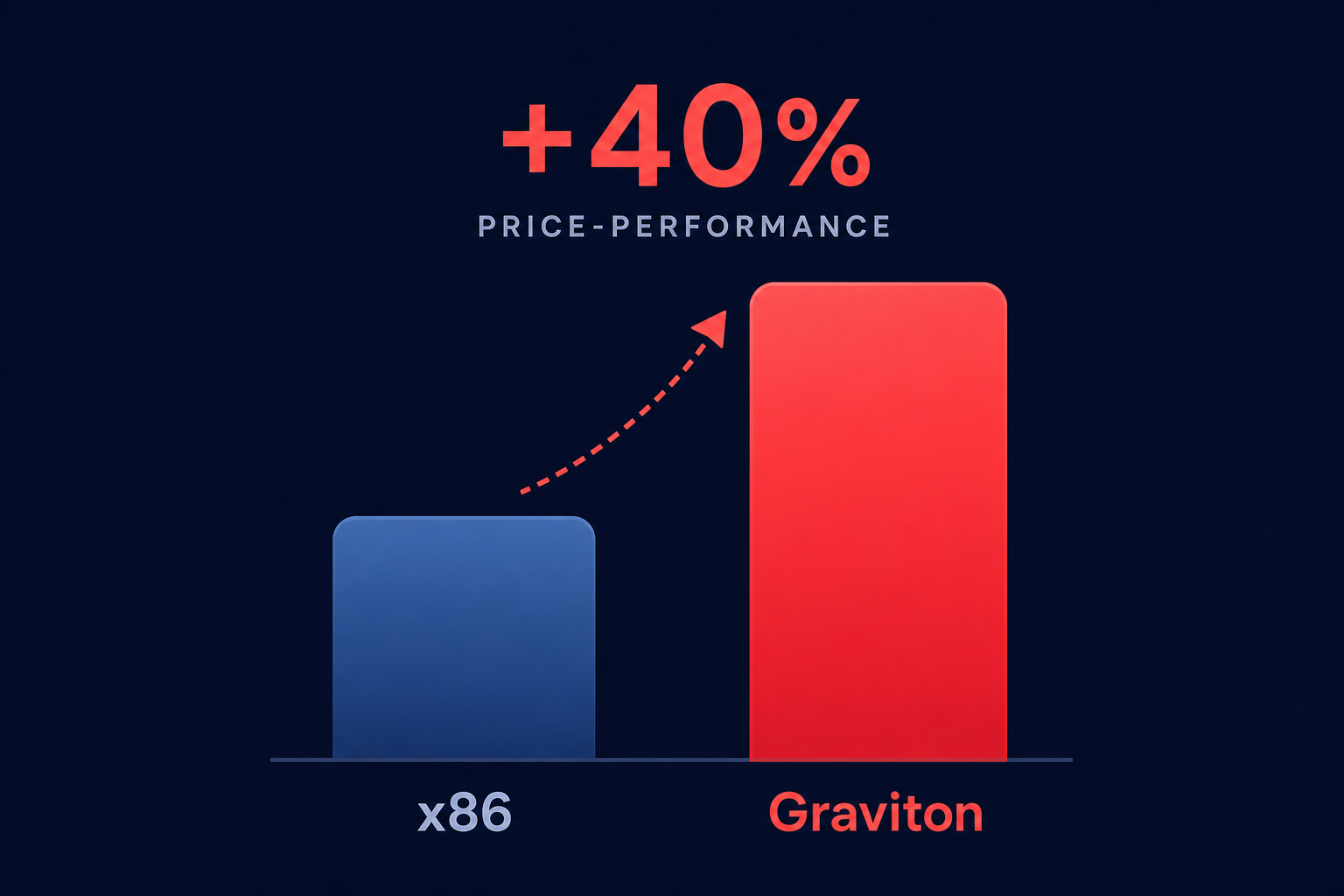
Is your AWS bill scaling faster than your application performance? While Intel and AMD have long dominated the cloud, AWS Graviton processors are rewriting the economics of compute by delivering up to 40% better price-performance for modern workloads.
Technical architecture of AWS Graviton
The primary differentiator of the AWS Graviton family is its ARM Neoverse core architecture. Unlike Intel or AMD processors that rely on complex instruction set computing (CISC), Graviton uses reduced instruction set computing (RISC). This allows for a more streamlined execution of commands, leading to lower power consumption and higher efficiency across varied cloud environments.
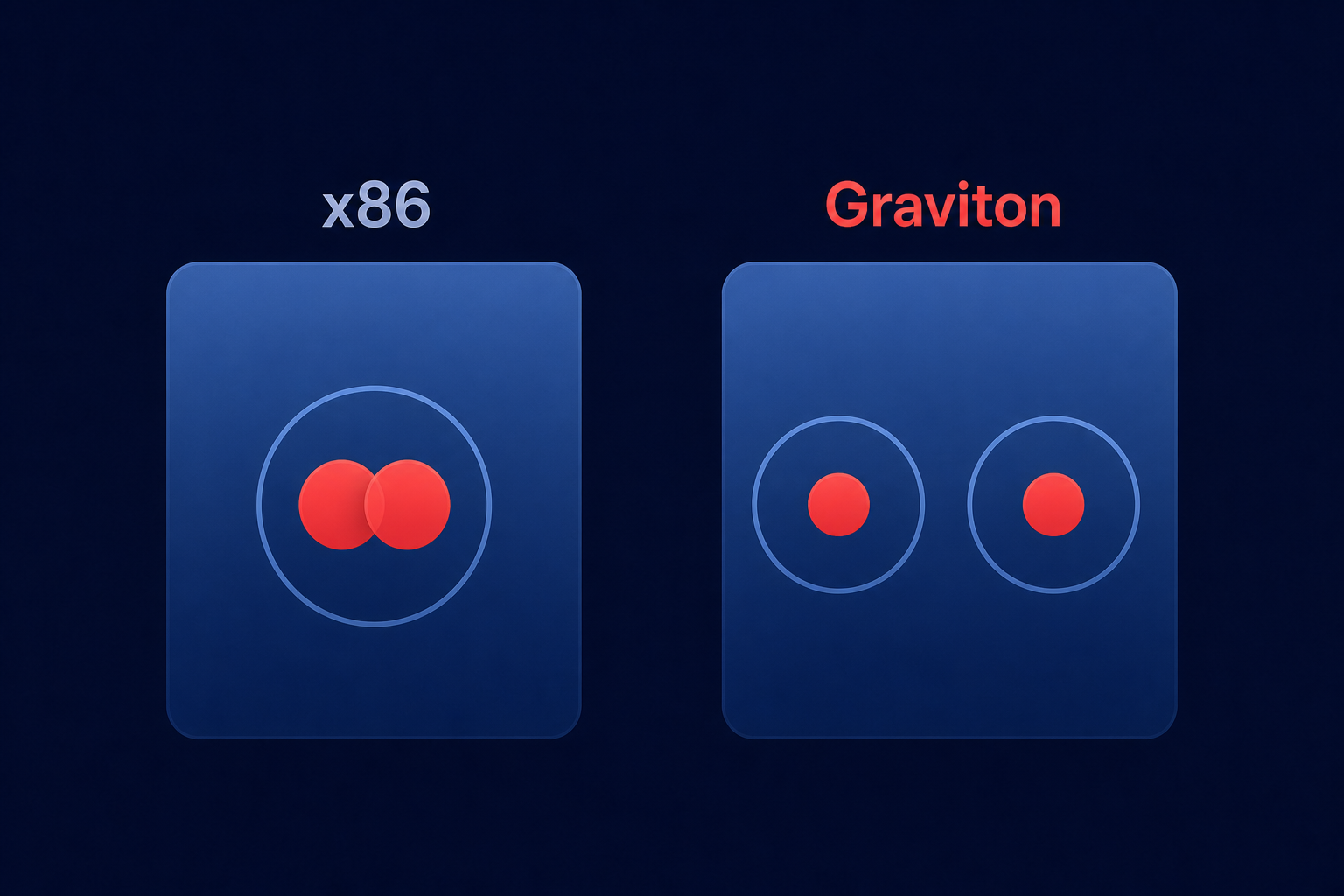
One of the most critical technical advantages is how these chips handle virtual CPUs (vCPUs). In traditional x86 instances, a vCPU is typically a single thread on a hyperthreaded physical core, which can lead to resource contention. In contrast, Graviton maps one vCPU to one physical core. This architecture provides more consistent performance for multi-threaded applications and high-concurrency web tiers by ensuring each process has dedicated physical resources.
The rapid evolution of AWS Graviton instance types has seen several generations of silicon development:
- Graviton2: Built on a 7nm process, these chips introduced a 40% price-performance jump over fifth-generation x86 instances.
- Graviton3: This generation introduced DDR5 memory, providing 50% more bandwidth than DDR4. It delivers up to 25% better compute performance than its predecessor and is particularly strong for floating-point and cryptographic workloads.
- Graviton4: The latest generation features 96 Neoverse-V2 cores and 12 DDR5 memory channels. According to AWS technical guidance, Graviton4 is up to 30% faster than Graviton3 for databases and 45% faster for large Java applications.
Graviton as a driver for cloud cost optimization
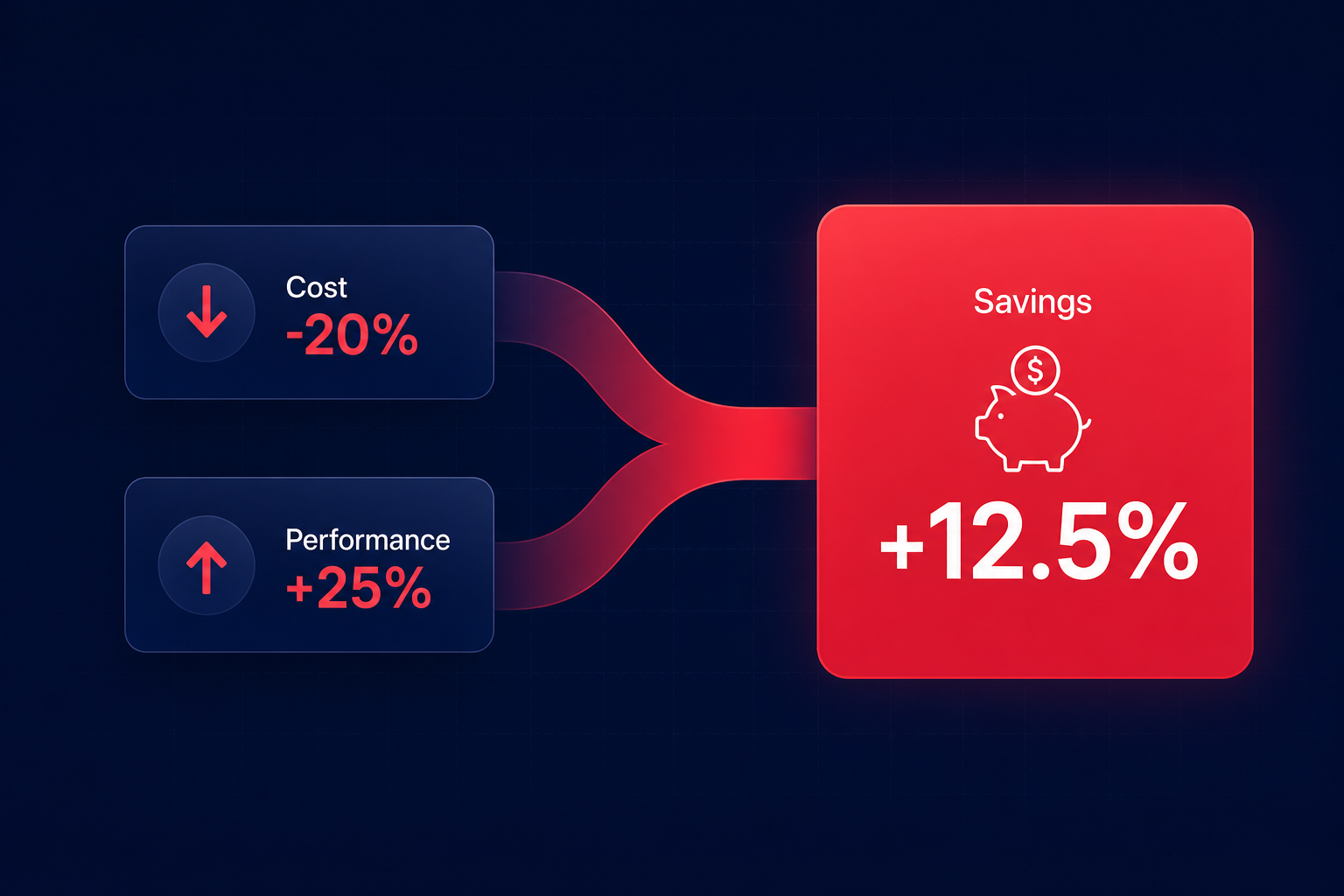
Adopting Graviton is a core component of a modern AWS rate optimization strategy. AWS generally prices Graviton-based instances about 20% lower than comparable x86 instances. When you combine this lower hourly rate with the typical 15–25% performance boost, the cost comparison between Graviton and Intel reveals a clear advantage: you can often complete the same amount of work with fewer, cheaper resources.
Beyond the raw instance cost, Graviton contributes to operational efficiency and sustainability. These processors use up to 60% less energy for the same performance as comparable EC2 instances. This reduction in carbon footprint makes it an attractive choice for organizations balancing financial targets with ESG commitments.
Workloads that see the most immediate gains include:
- Containerized Microservices: Platforms like Docker and Amazon EKS make it easy to deploy multi-architecture images that run natively on ARM64.
- Data Processing: Large-scale analytics using Spark or Hadoop benefit from high memory bandwidth and dedicated physical cores.
- Web Tiers: Applications written in interpreted languages like Python, Node.js, and Java often require compatibility checks for software but minimal code changes to run efficiently.
Navigating the transition to ARM64
While the benefits are significant, moving from x86 to ARM64 requires an intentional approach. Graviton instances only support Linux-based operating systems, meaning Windows-specific workloads must remain on x86 hardware. However, the ecosystem for ARM is mature, with major distributions like Amazon Linux 2, Ubuntu, and RHEL offering full support.
Languages like Go, Rust, and .NET Core have robust ARM64 compilers that allow you to tap into these efficiencies. The primary challenge involves identifying which parts of your infrastructure are ready for migration and conducting performance benchmarking for AWS Graviton to prevent regressions.
Following best practices for Graviton instances involves a phased approach to minimize risk. You should begin by auditing for x86-only dependencies before launching small development environments on T4g or M7g instances. Recompiling C/C++ code with ARM-optimized flags can unlock an additional 10–15% performance gain, while using mixed-instance Auto Scaling groups allows you to blend x86 and ARM nodes during the transition.
Accelerating your Graviton gains with Hykell
The barrier to Graviton adoption is often engineering bandwidth rather than a lack of interest. Manually migrating applications to Graviton instances requires time for assessment and validation that many DevOps teams cannot spare. Hykell simplifies this process by using intelligent automation to analyze your real-world usage patterns and identify the best candidates for migration.
Hykell removes the manual burden of cloud financial management, helping you capture price-performance gains without requiring internal teams to become ARM experts. We dive deep into your infrastructure to find underutilized resources and optimizing EC2 workloads on autopilot. By combining the structural efficiency of ARM-based processors with automated commitment management, you can achieve an effective savings rate that manual oversight rarely reaches.
Switching to Graviton and optimizing your pricing commitments is the most impactful way to scale your compute power while shrinking your bill. To see how much your specific infrastructure could save, use the Hykell cloud cost savings calculator to get a detailed projection of your potential ROI.