Are you still paying a “legacy tax” on your Redis and Memcached workloads by running them on traditional x86 architecture? Switching your Amazon ElastiCache nodes to AWS Graviton isn’t just a minor tweak – it’s a performance-first strategy that can slash your costs by 20% overnight.
The architectural advantage for in-memory workloads
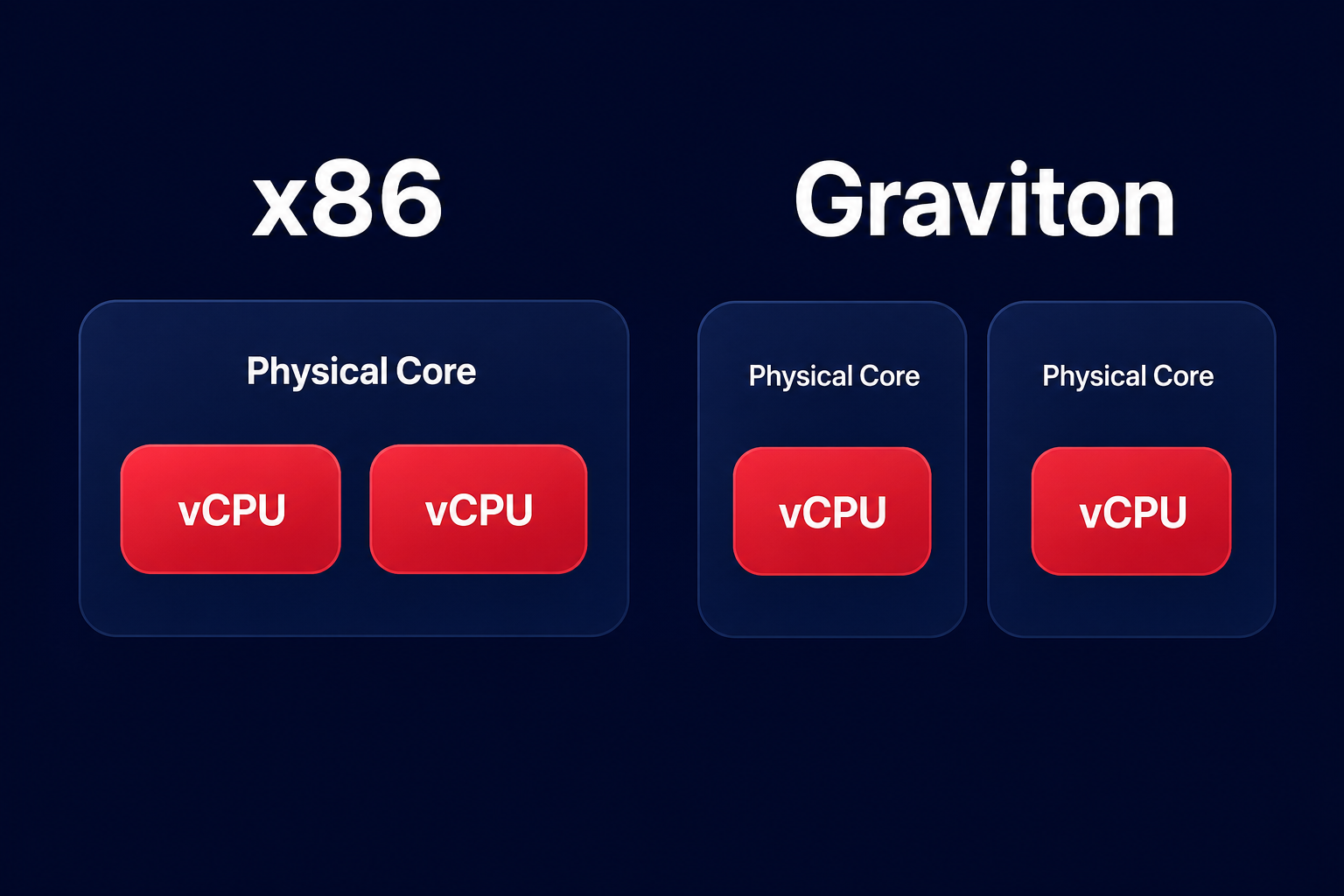
Amazon ElastiCache relies heavily on memory bandwidth and efficient CPU utilization to handle high-throughput, low-latency traffic. Traditional x86 instances often utilize hyperthreading, where two virtual cores share a single physical core. In contrast, AWS Graviton instances utilize a 1:1 vCPU-to-physical-core mapping. This architecture eliminates the resource contention common in multi-threaded environments, providing more consistent performance for cache-heavy operations.
According to AWS, moving to Graviton2-based M6g or R6g instances can deliver up to 45% better price-performance compared to previous-generation instances. For Redis specifically, you can expect up to 35% higher throughput and 24% lower latency. If you are running Memcached, the gains are even more dramatic, with up to 51% greater throughput and 12% lower latency.
At Hykell, we’ve seen that these architectural shifts are often the lowest-hanging fruit in AWS rate optimization, as they require minimal configuration changes while delivering immediate ROI.
Comparing Graviton2 vs. Graviton3 for ElastiCache
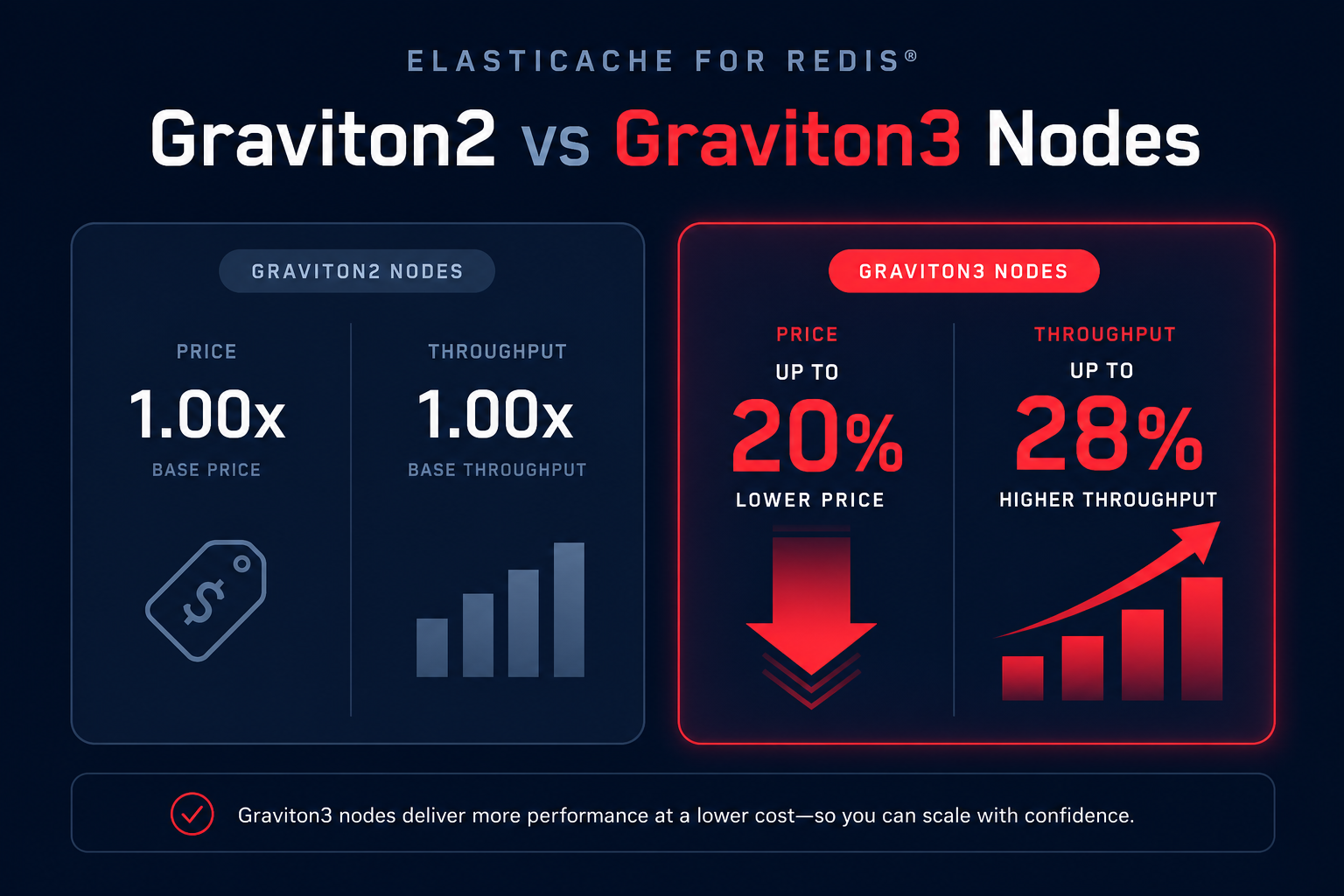
While Graviton2 established the benchmark for efficiency, the newer Graviton3-based M7g and R7g families push the boundaries further. Graviton3 nodes are priced up to 20% lower than Graviton2, yet they provide significantly more “punch” per dollar. For instance, an R7g.4xlarge node can deliver up to 28% higher throughput than its R6g equivalent.
One of the primary drivers of this performance is the transition to DDR5 memory, which offers 50% more memory bandwidth than the DDR4 used in older generations. For memory-bound applications like Redis, this bandwidth is the primary bottleneck for scaling. You can learn more about these specific metrics in our guide to performance benchmarking for AWS Graviton instances.
Stackable savings with data tiering and commitments
Switching to Graviton architecture is only the first step in a comprehensive AWS ElastiCache cost optimization strategy. To maximize your efficiency, consider these three layers of savings:
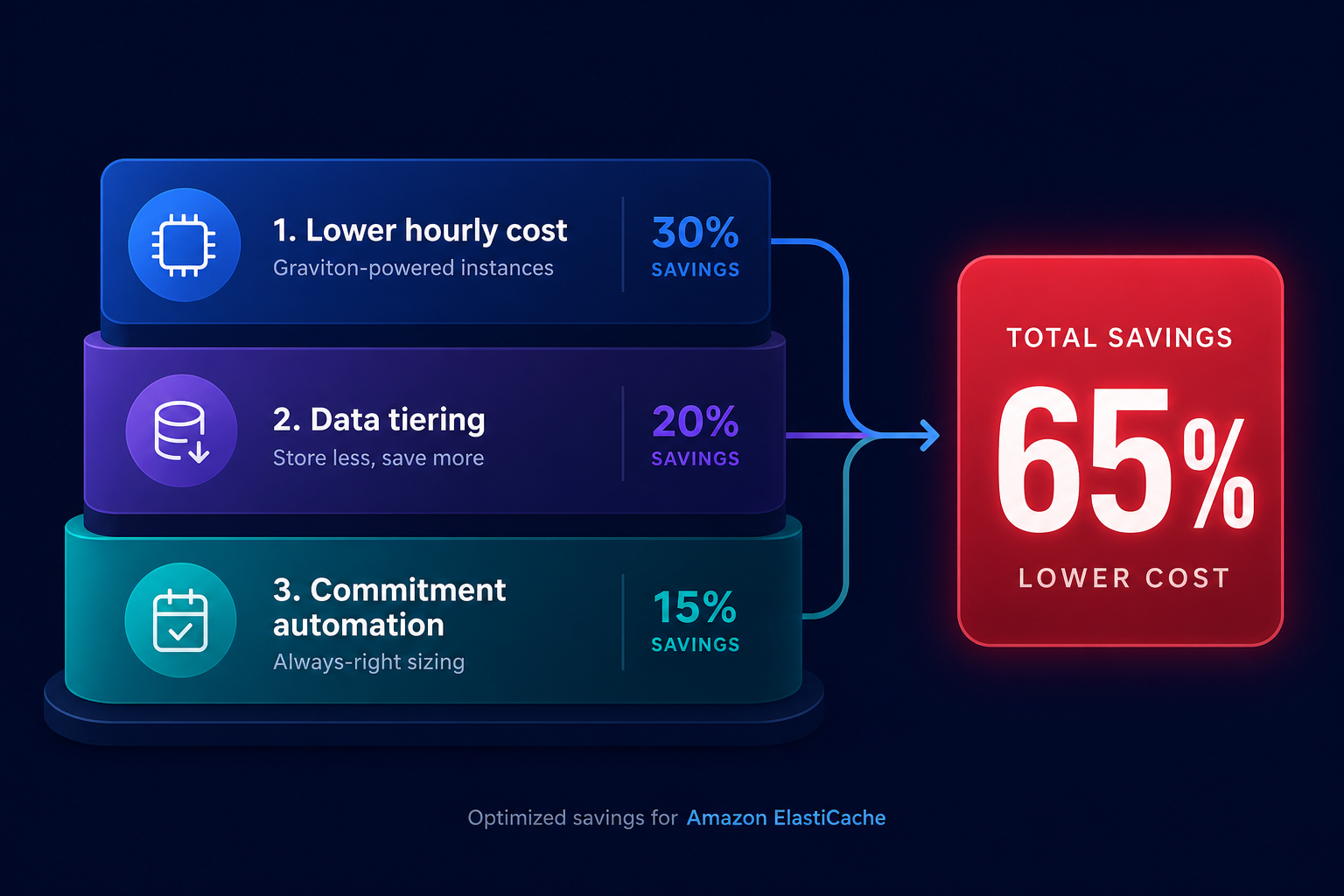
- Data Tiering with R6gd Nodes: For massive datasets where only 20% of data is frequently accessed, Graviton2-based R6gd nodes use local NVMe SSDs to store less-frequently used data. This can provide nearly 5x the total capacity at 60% savings compared to keeping everything in RAM.
- Hourly Rate Reductions: Graviton instances generally cost less per hour than comparable Intel-based instances. You can view the specific differences in our analysis of AWS ARM vs x86 pricing.
- Commitment Automation: By combining the lower baseline price of Graviton with automated Reserved Nodes or Savings Plans, you can compound your discounts. Hykell’s platform handles this on autopilot, ensuring you reach an Effective Savings Rate of 50–70% without manual engineering effort.
How to execute a seamless migration
Migrating ElastiCache to Graviton is significantly easier than migrating application code because AWS manages the underlying engine. Since Redis and Memcached are open-source and compatible with ARM64 architecture, you don’t need to recompile your database engine – AWS has already done it for you.
You can initiate the move by modifying your existing cluster to use M7g or R7g node types. For production environments, we recommend a phased approach or using a blue-green deployment to ensure your client libraries interact correctly with the new architecture. For a deeper dive into the technical requirements, see our guide on migrating applications to Graviton instances.
Maximizing your Graviton gains
The transition to Graviton instances for ElastiCache represents one of the most effective ways to reduce your AWS bill while simultaneously improving application responsiveness. By leveraging the 1:1 core mapping and superior memory bandwidth of ARM architecture, you move away from expensive, over-provisioned x86 hardware.
However, choosing the right instance is only half the battle. To ensure you are capturing the full 40% savings potential of the AWS ecosystem, you need a strategy that includes right-sizing, automated rate optimization, and continuous monitoring.
Ready to see exactly how much you could save by optimizing your ElastiCache architecture? Use the Hykell savings calculator to get an instant analysis of your potential cloud reductions.