Did you know AWS Graviton instances use up to 60% less energy while delivering 40% better price-performance than their x86 counterparts? For cloud architects, switching to Graviton isn’t just about reducing spend – it’s about re-engineering your infrastructure for a more efficient, sustainable future.
Exploit the architectural advantage of dedicated cores
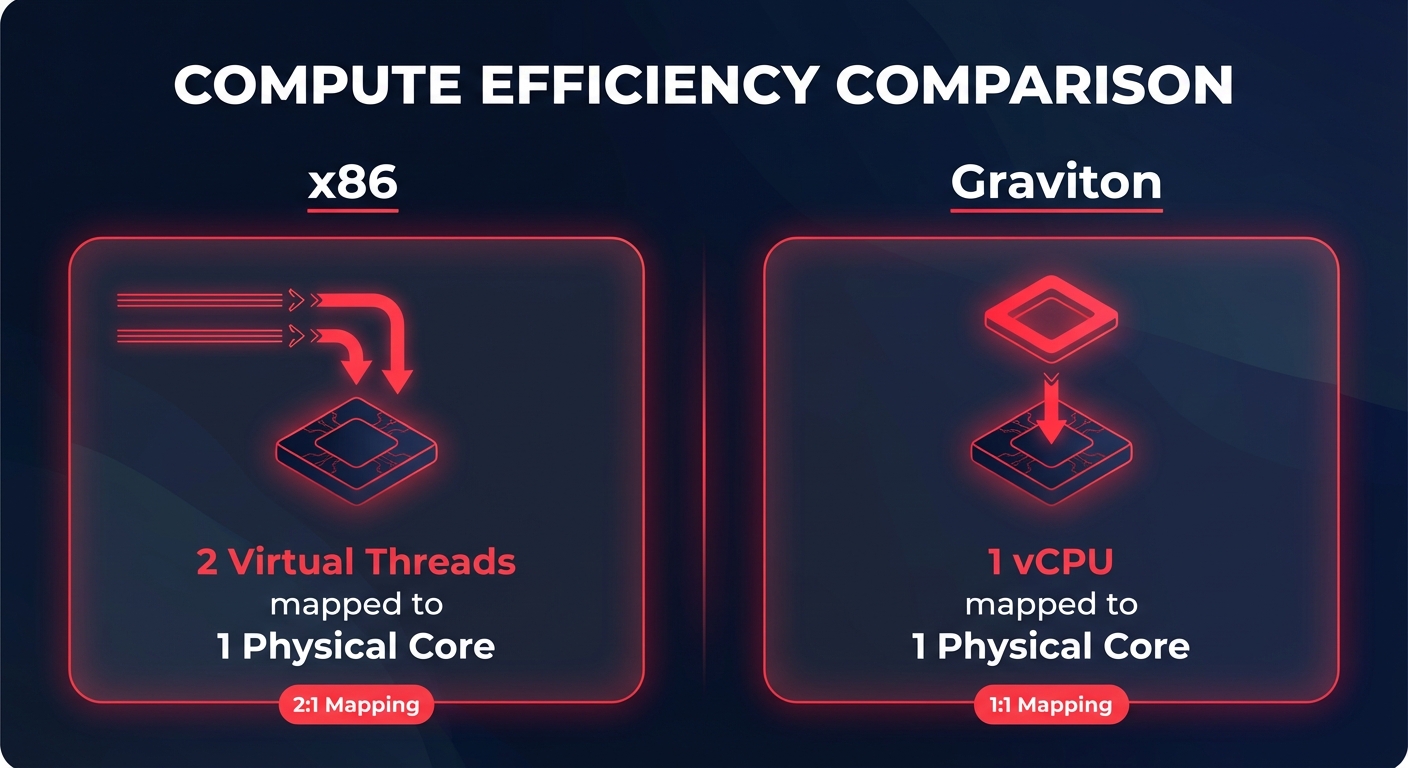
The most fundamental difference between AWS Graviton and traditional x86 instances from Intel or AMD lies in the vCPU mapping. While x86 instances typically use simultaneous multithreading (hyperthreading) to present two virtual cores for every one physical core, Graviton maps one vCPU to one physical core.
This 1:1 mapping eliminates the “noisy neighbor” effect within the processor itself, providing more consistent performance for compute-intensive and high-concurrency workloads. When comparing architectures, a cost comparison between Graviton and Intel instances often reveals that Graviton instances deliver higher throughput even when they appear to have fewer “virtual” resources. This allows for better compute density, particularly in scale-heavy environments where predictable performance is critical for meeting service-level objectives.
Optimize your toolchain for Arm64 efficiency
To truly maximize the benefits of Graviton instances, you cannot simply lift and shift code without tuning the underlying software layer. Running applications on custom silicon requires a toolchain that understands the specific instruction sets and cache hierarchies of the Arm architecture.
Use Arm-optimized compilers and libraries
If you are running compiled languages like C, C++, or Go, you should utilize the latest versions of GCC or LLVM. These versions include specific optimizations for the Arm Neoverse cores used in Graviton processors, which can improve execution speed by 10–15%. Incorporating compiler flags like `-march=armv8.2-a+crc+crypto` for Graviton2 or `-march=armv8.4-a` for Graviton3 allows you to unlock hardware-level acceleration for cryptographic and floating-point operations, significantly reducing the CPU cycles required for complex math or security tasks.
Modernize your runtimes
The version of your runtime significantly dictates your efficiency. For instance, Graviton4 is up to 45% faster for large Java applications compared to Graviton3, primarily due to improvements in garbage collection and memory bandwidth handling. If you are using Python or Node.js, moving to the latest stable releases is essential. These modern runtimes have undergone extensive performance tuning for Graviton, reducing execution time for standard libraries by up to 20% compared to legacy versions.
Build a robust multi-architecture container strategy
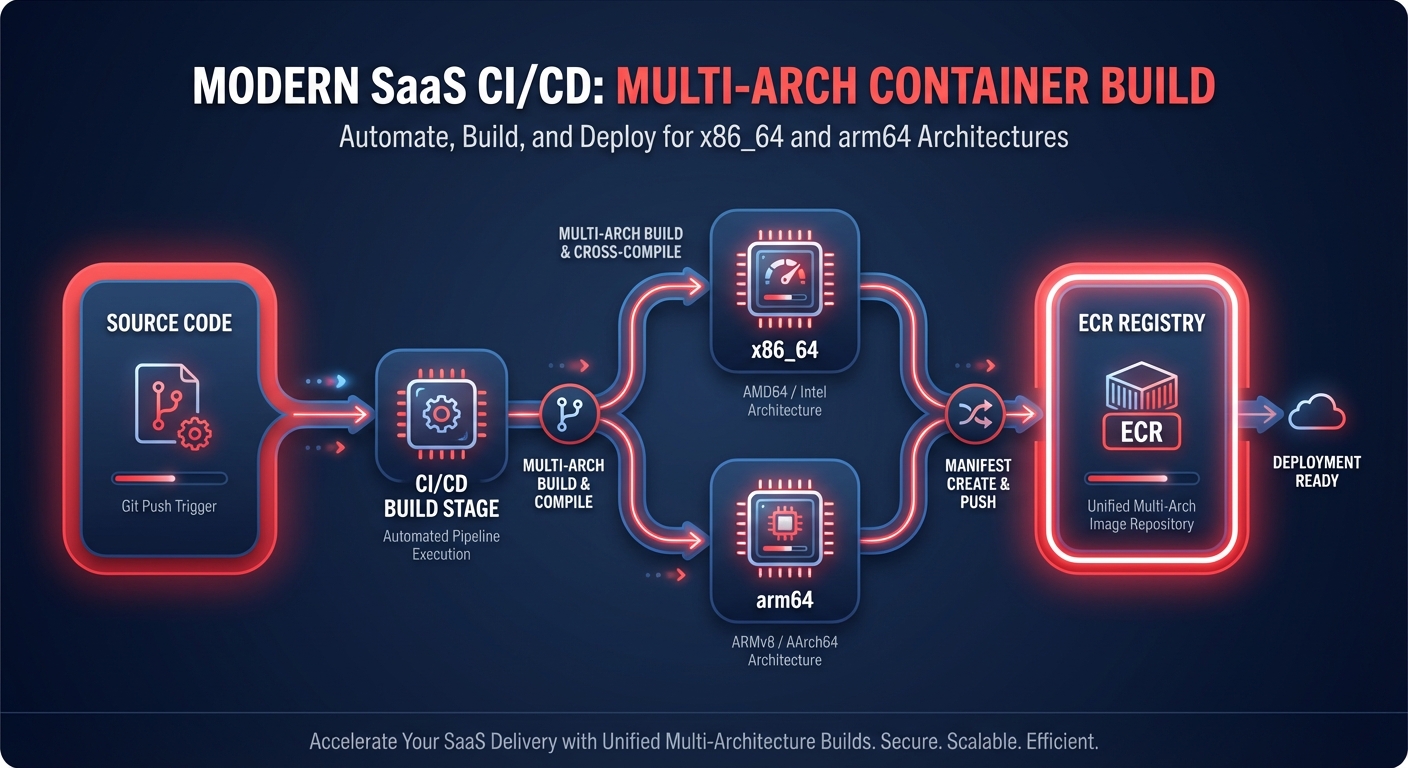
Most modern engineering teams utilize Docker and Kubernetes, making the compatibility of software with AWS Graviton a primary concern. To ensure a smooth transition, you should adopt a multi-architecture container image strategy that supports both your existing x86 nodes and new Arm64 instances.
Using `docker buildx`, you can create multi-architecture manifests that contain both x86_64 and arm64 versions of your application. This setup allows your CI/CD pipeline to push a single image tag to Amazon ECR, while your Auto Scaling Groups automatically pull the correct architecture based on the specific instance type being provisioned. This approach effectively mitigates multi-architecture support challenges by allowing you to run mixed-architecture clusters safely during the migration window.
Right-size your EBS and network configuration
Performance optimization extends beyond the CPU. Graviton-based instances, such as the C7g and R7g families, offer superior memory throughput – delivering up to 50% faster memory access than the Graviton2 generation. However, these gains can be negated if your storage configuration creates a bottleneck.
You must ensure that your instance’s EBS bandwidth capacity matches your volume’s throughput requirements. Upgrading from gp2 to gp3 volumes while moving to Graviton often results in compounding savings and improved predictability. While the ARM vs x86 pricing structure gives you an immediate cost advantage on compute, adhering to AWS EBS best practices – such as migrating to gp3 for its 20% lower price point – can further reduce your total infrastructure spend.
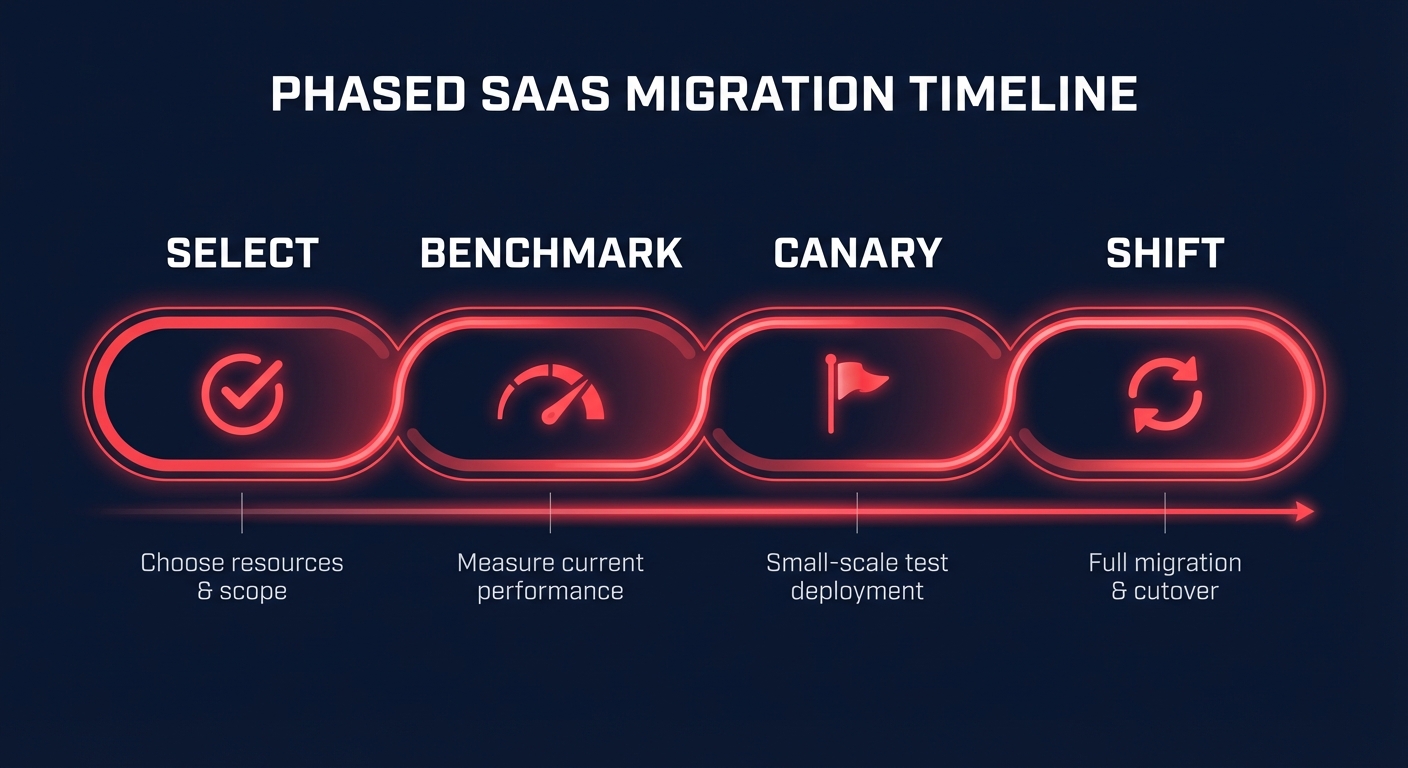
Implement a phased migration with clear baselines
Attempting to migrate an entire production environment at once introduces unnecessary risk. A phased migration to Graviton allows you to validate performance gains and refine configurations without jeopardizing uptime.
- Identify low-risk candidates by starting with stateless workloads like web servers, caching layers, or development environments that can be easily rolled back.
- Benchmark under load using representative traffic to measure the effect of Graviton on performance under heavy load, focusing specifically on p99 latency and requests per second.
- Utilize canary deployments to route a small percentage of production traffic to Graviton instances within your existing load balancer.
- Analyze the telemetry once you have confirmed that Graviton provides equal or superior performance, then gradually shift the remaining traffic to the new architecture.
Supercharge your Graviton gains with automated optimization
While Graviton offers an incredible performance-per-dollar ratio, manual instance selection and architecture management consume significant engineering cycles. Many teams find that the effort required to identify migration candidates and manage mixed-architecture fleets offsets the initial cost savings.
Hykell’s Graviton migration acceleration program simplifies this transition by identifying the best candidates for migration and automating the conversion process with built-in protections. By layering Graviton’s architectural efficiency with Hykell’s automated rate optimization, you can stack multiple layers of discounts to achieve an Effective Savings Rate (ESR) that significantly outperforms standard manual management.
The Hykell platform provides the real-time observability required to track the impact of your migration, ensuring that your move to Arm64 delivers the performance and cost benefits you expect. Because Hykell operates on a success-based model, you only pay a portion of the actual savings achieved. You can use the Hykell savings calculator to audit your current AWS environment and determine exactly how much you could save by modernizing your infrastructure today.