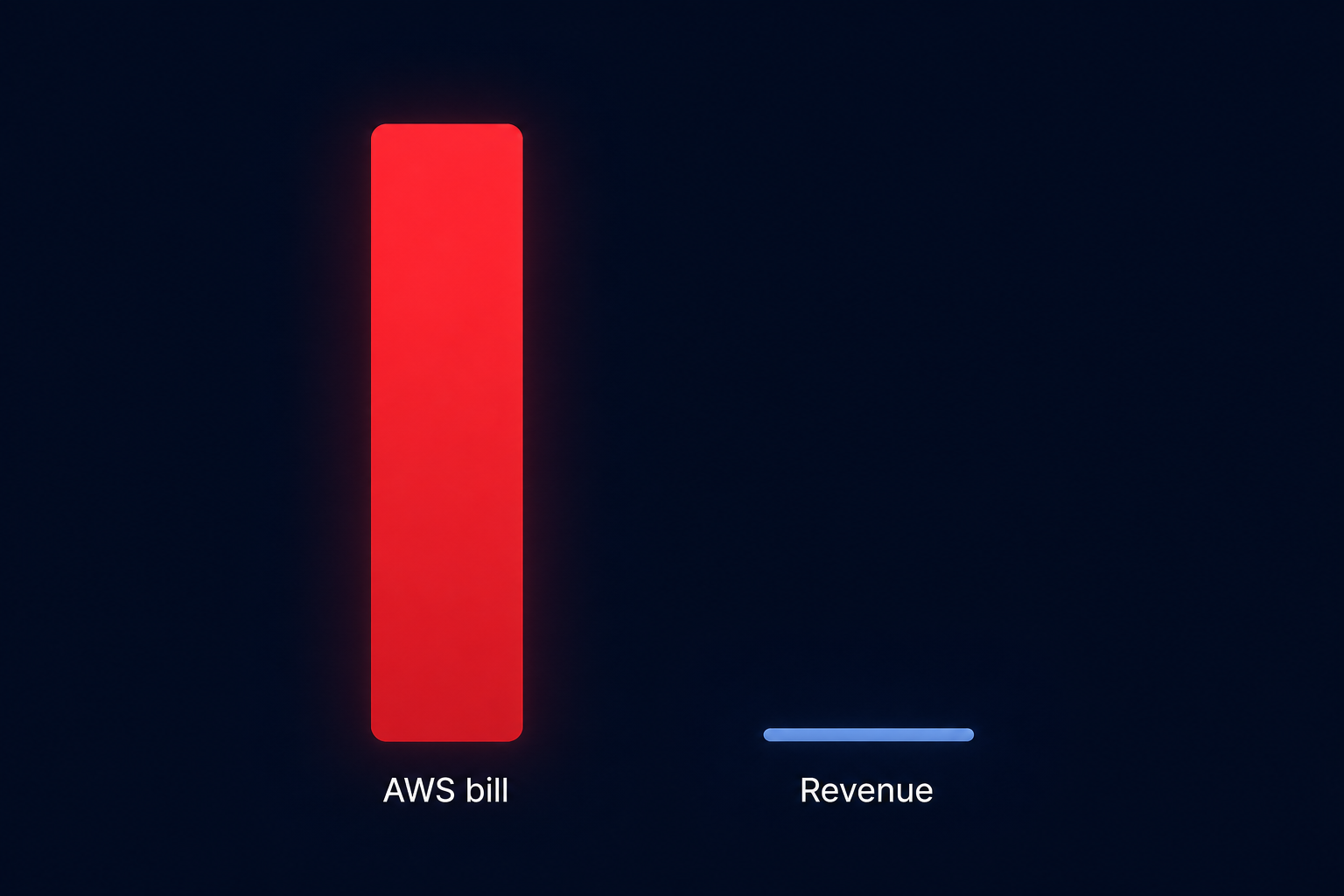
Is your AWS bill scaling faster than your revenue? Most businesses pay for 30% more capacity than they actually use, yet manually managing commitment models is an operational nightmare that distracts your best engineers from innovation.
Understanding AWS pricing models
AWS operates primarily on a pay-as-you-go model, but the real savings come from understanding how to leverage different purchase types. Navigating these options manually often leads to “commitment lock-in” or paying for idle capacity.
- On-demand instances: These are best for unpredictable workloads with no long-term commitment. However, they are the most expensive way to consume cloud resources.
- Savings Plans: These offer up to 72% discounts in exchange for a commitment to a consistent amount of usage for a one or three-year term. Choosing between Compute Savings Plans vs EC2 Instance Savings Plans requires balancing the need for flexibility across regions and services with the desire for deeper discounts.
- Spot instances: You can achieve up to 90% savings by utilizing spare AWS capacity. These are ideal for fault-tolerant applications, though they can be interrupted with little notice.
- Reserved Instances (RIs): Similar to Savings Plans, these provide significant discounts for predictable workloads. Hykell automates this process through AWS rate optimization, managing an algorithmic mix of RIs and Savings Plans to maximize your savings without the risk of manual over-commitment.
Essential tools for cost transparency
Before you can optimize, you must understand where your money is going. AWS provides several native tools, but high-growth teams often need more granular, automated insights.
- AWS Pricing Calculator: This tool helps you build forward-looking estimates. To get a more realistic view of what you could save after rightsizing and commitment automation, you can use a specialized AWS cost savings calculator.
- AWS Cost Explorer: This is the standard for historical analysis. It allows you to visualize usage patterns and identify cost drivers over the last 13 months.
- AWS Budgets: You can set custom alerts to track your spend against a baseline, helping to prevent “bill shock” when new services are deployed.
For a deeper dive into these utilities, refer to our AWS pricing calculator guide.
Strategies for automated cost optimization
True efficiency comes from moving beyond manual audits to automated systems that adjust in real-time. Hykell provides cloud cost optimization solutions that operate on autopilot, typically reducing total spend by up to 40%.
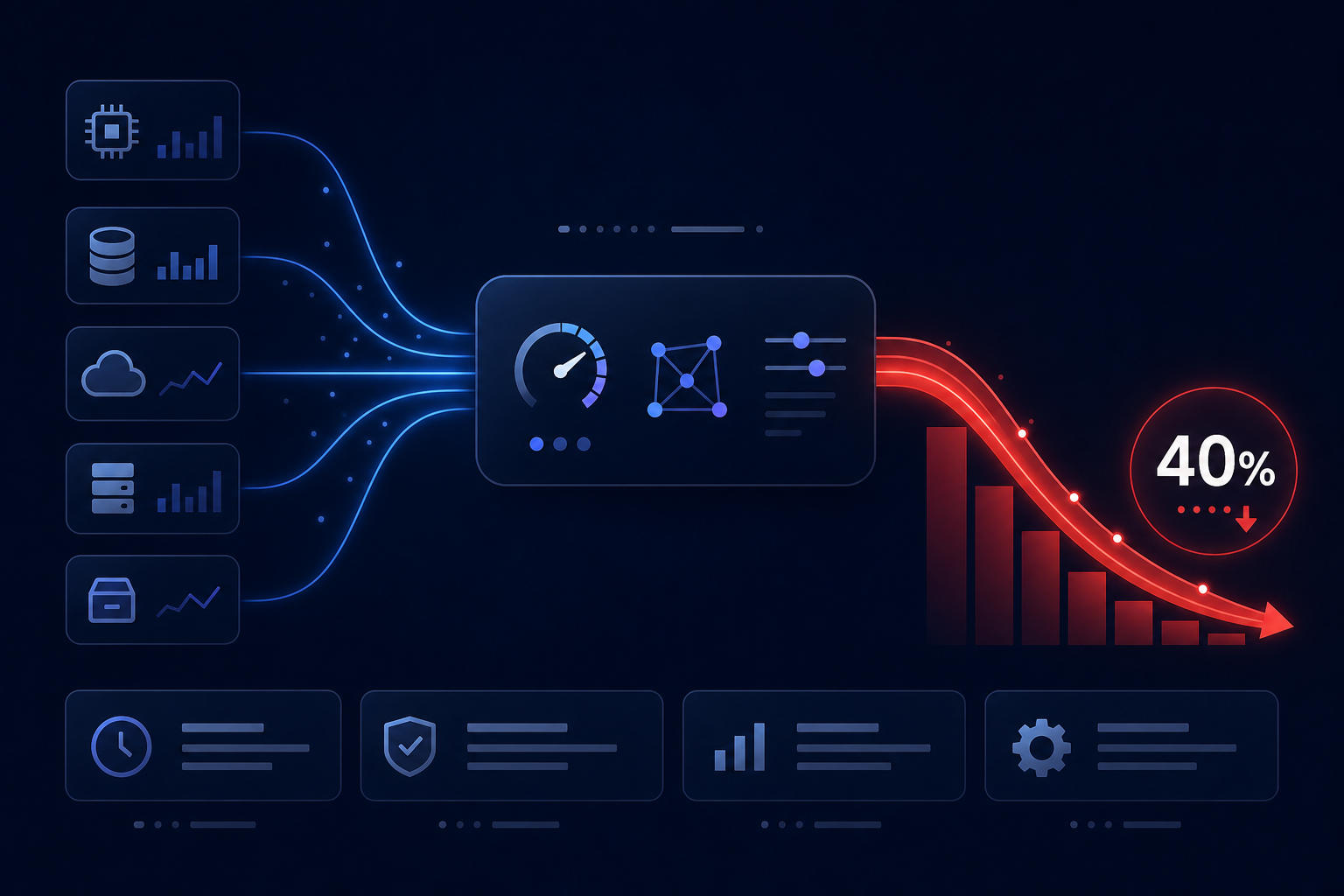
- Rightsizing compute resources: Many teams provision for peak load and never scale back. Automated tools can identify over-provisioned EC2 instances and suggest smaller, more efficient types without impacting performance.
- Accelerating Graviton migration: Moving to ARM-based Graviton instances can deliver up to 40% better price-performance. Hykell helps identify workloads suitable for Graviton migration to ensure you capture these gains without engineering friction.
- Optimizing storage and networking: Costs for Amazon S3 storage can spiral if lifecycle policies aren’t enforced. Similarly, NAT Gateway costs can be reduced by up to 80% through architectural refactoring and the use of VPC endpoints.
- Managing observability spend: Hidden drivers like Amazon CloudWatch Logs and AWS WAF pricing can represent a significant portion of your monthly bill.
Optimizing Kubernetes on AWS
Running Amazon EKS requires a specialized approach to cost management. Because Kubernetes abstracts the underlying infrastructure, it is easy to lose sight of actual resource consumption.
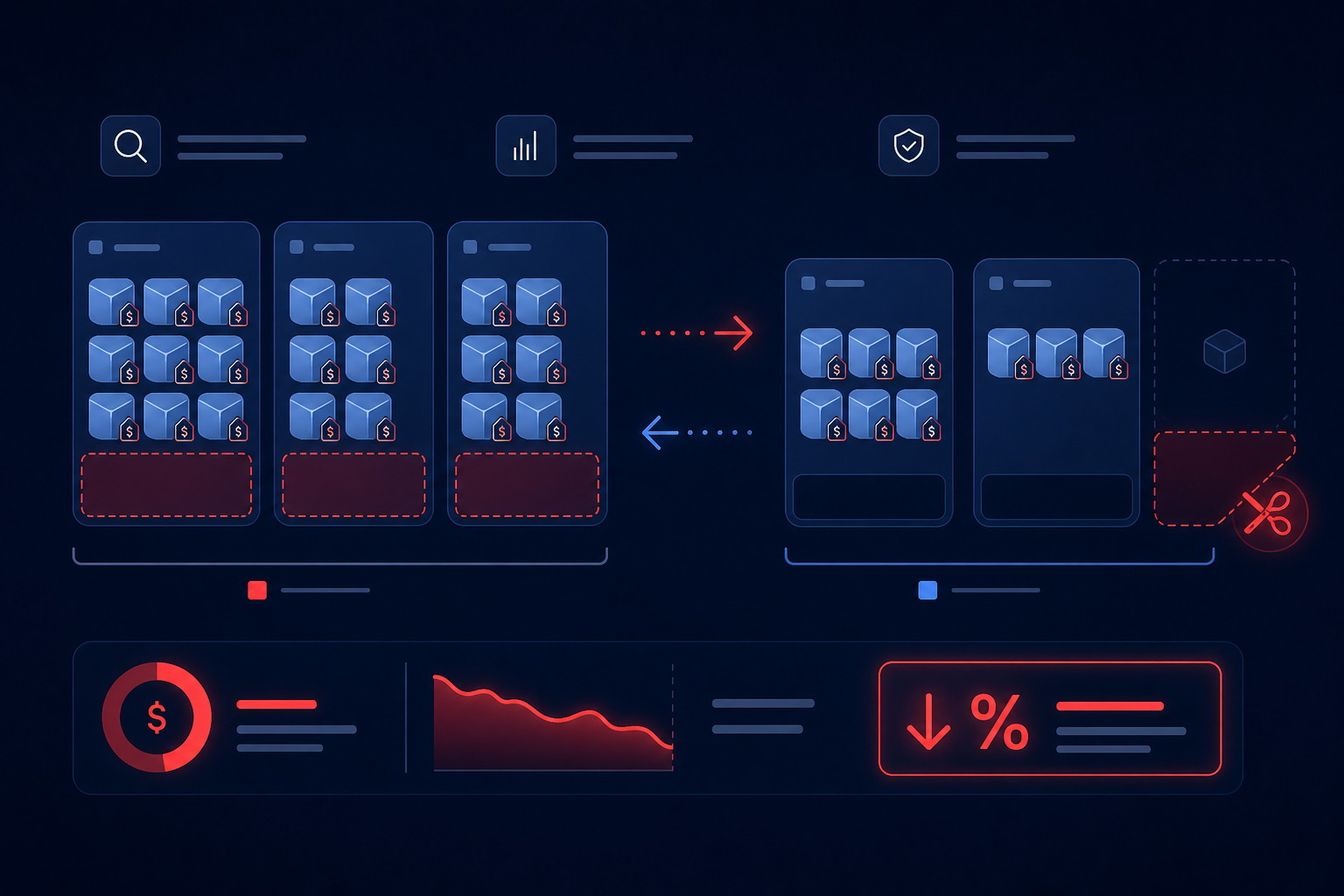
- Pod density and autoscaling: Improving pod density can shift node costs by 15% to 25%. Implementing the Horizontal Pod Autoscaler (HPA) ensures that resource allocation matches real-time demand.
- Spot management for EKS: Using Spot instances for stateless Kubernetes workloads is one of the fastest ways to slash compute costs.
- Real-time observability: Effective management requires seeing cost per namespace or per service. Hykell’s observability platform provides the transparency needed to hold different engineering teams accountable for their cloud footprint.
Achieve maximum ROI with zero engineering lift
AWS pricing doesn’t have to be a barrier to scaling your business. By combining the right tools with automated intelligence, you can maintain peak performance while ensuring you never pay for more than you need.
Hykell dives deep into your infrastructure to uncover hidden savings and applies optimizations on your behalf. We only take a slice of what you save – if you don’t save, you don’t pay.
Use our cloud cost calculator to see your potential savings today.