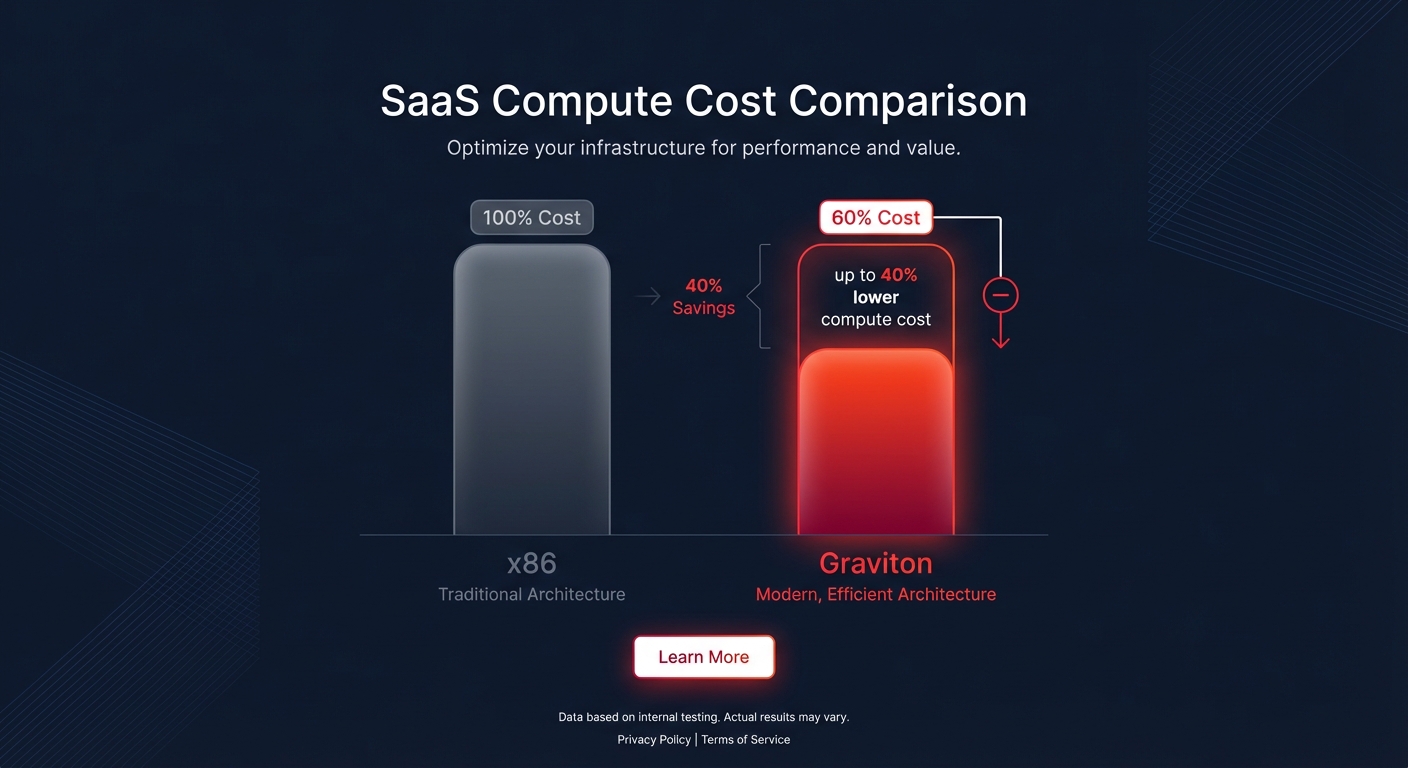
Are you still paying the “x86 tax” on your AWS bill? AWS Graviton processors deliver up to 40% better price-performance for cloud-native workloads, but capturing these savings requires a clear understanding of software compatibility. Here is how to evaluate your stack for a successful ARM-based migration.
Architectural fundamentals: ARM vs x86
The performance difference between architectures becomes clear when analyzing AWS arm vs x86 pricing models and hardware designs. Traditional x86 instances typically rely on hyperthreading to present two virtual cores (vCPUs) for every one physical core. In contrast, Graviton maps a single vCPU to one physical core. This 1:1 mapping effectively eliminates resource contention between threads, resulting in more predictable throughput for multi-threaded applications.
Because AWS custom-builds these processors using ARM64 architecture, they operate with superior energy efficiency, consuming up to 60% less power than comparable x86 counterparts. This efficiency translates directly into lower instance costs. In practice, a cost comparison between Graviton and Intel instances often reveals that you can replace ten x86-based instances with just six to eight Graviton instances without any loss in performance, immediately reducing your total infrastructure footprint.
Assessing software compatibility and migration effort
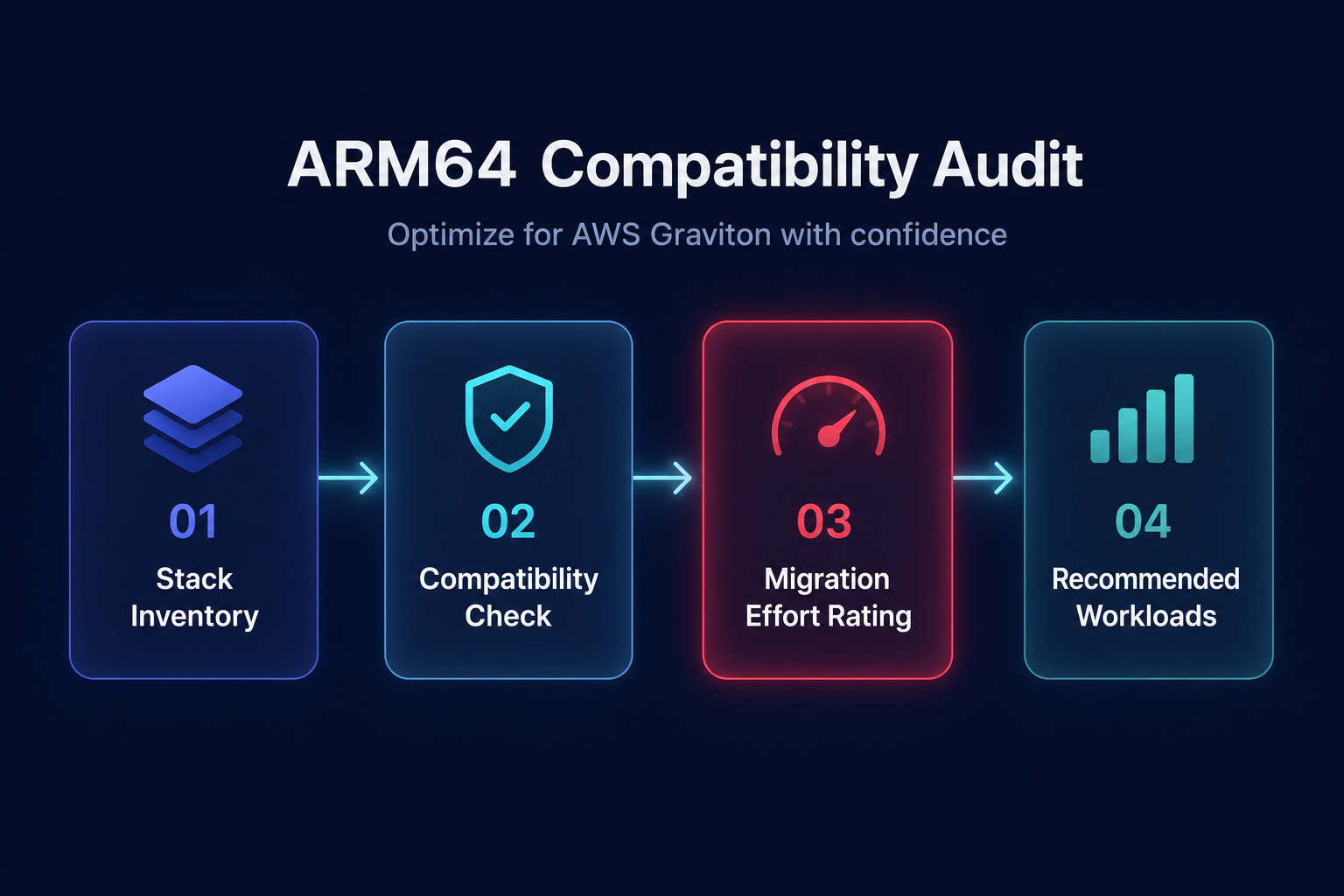
Before you begin migrating applications to Graviton instances, you must audit your stack for ARM64 compatibility. AWS provides several tools to simplify this assessment. The AWS Compute Optimizer can generate specific Graviton recommendations for EC2 instances and Auto Scaling groups, including a “migration effort” rating to help you prioritize workloads with the highest ROI. Additionally, the Porting Advisor for Graviton can analyze your source code for potential incompatibilities or dependency issues before you write a single line of new code.
Language and runtime support
Modern interpreted and bytecode-compiled languages generally work without modification. Python, Node.js, Ruby, and PHP have mature ARM64 support. For organizations running large Java applications, Graviton4 is up to 45% faster than previous generations. When you pair this hardware with high-performance runtimes like Azul Platform Prime, performance can jump another 30% over standard OpenJDK.
Compiled languages such as Go, Rust, or C++ require recompilation for the ARM architecture to run natively. Most major Linux distributions, including Amazon Linux 2, Ubuntu, and RHEL, provide full ARM64 support. However, if your environment depends on Windows Server or proprietary Intel instruction sets (such as AVX-512), migrating those specific workloads may not be feasible.
Managed services and containers
One of the easiest ways to adopt Graviton is through managed services like Amazon RDS, Aurora, ElastiCache, and Lambda. These services allow you to switch the underlying instance type with minimal configuration changes, as AWS handles the architecture-specific optimizations.
In a containerized ecosystem, you can simplify the transition by updating your CI/CD pipelines to build multi-architecture Docker images using tools like `docker buildx`. This approach helps manage the multi-architecture support challenges with Graviton by ensuring the correct image is served to both x86 and ARM nodes during a phased rollout. You should also audit third-party monitoring agents, security scanners, and legacy drivers to ensure they have ARM64 versions available.
Selecting the right Graviton instance family
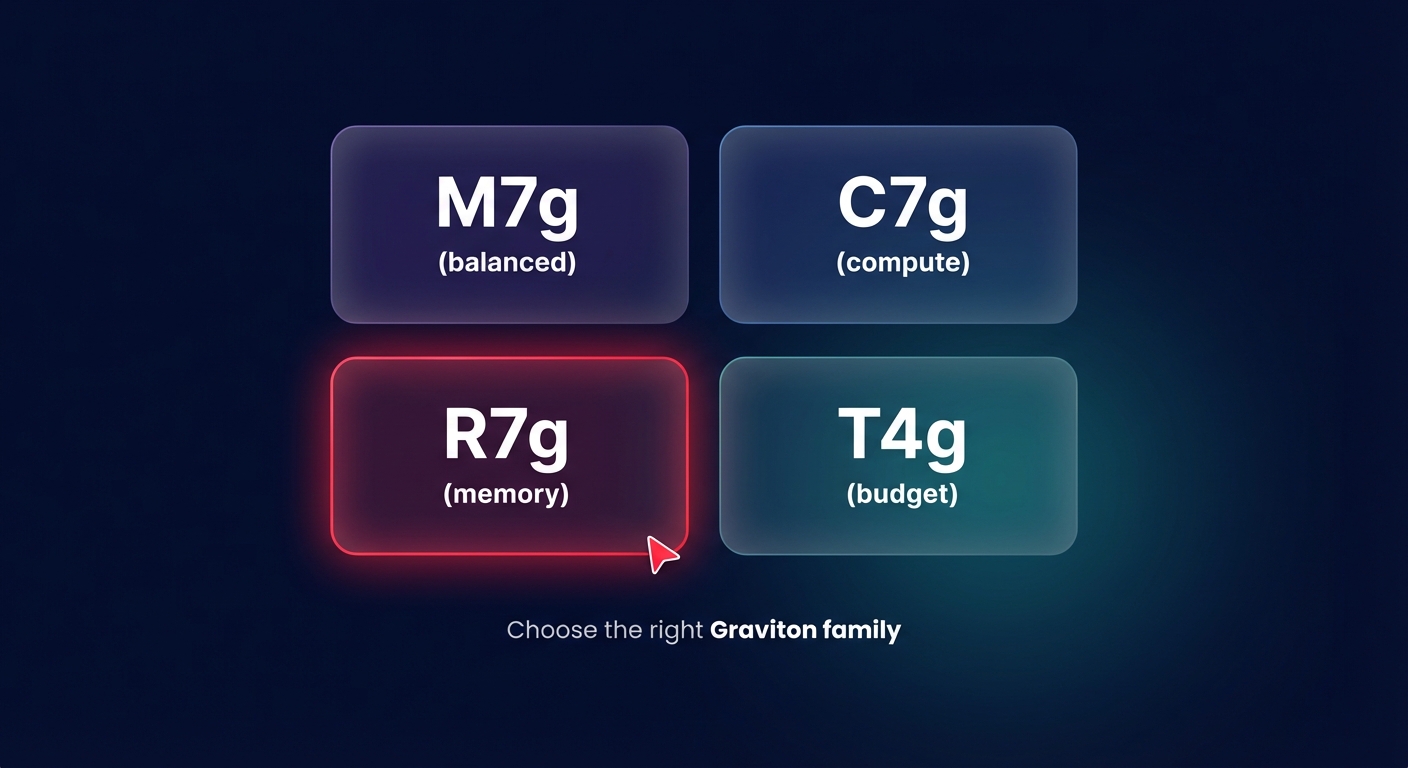
Choosing the correct family is essential for effective EC2 cost optimization. Following best practices for Graviton instances involves matching your workload profile to the specific strengths of each generation.
- General Purpose (M7g/M8g): Ideal for web servers, microservices, and small-to-mid-sized databases.
- Compute Optimized (C7g/C8g): Best for CPU-bound tasks like high-performance computing (HPC), video encoding, and machine learning inference.
- Memory Optimized (R7g): Designed for memory-intensive workloads, providing massive memory bandwidth of up to 120 GB/s for in-memory databases like Redis.
- Burstable (T4g): The most budget-friendly option for development environments and low-traffic applications.
Consulting a detailed guide on AWS Graviton instance types can help you identify which of your current x86 instances are over-provisioned and ready for a more efficient swap.
Accelerating your Graviton transition with Hykell
A typical manual migration can take between 9 and 12 weeks of engineering time, which often delays your projected savings. Hykell helps you accelerate your Graviton gains by using an automated platform to identify the best migration candidates based on your real-world usage patterns. This data-driven approach removes the guesswork, ensuring you only move workloads that are truly ready for ARM.
Our cloud observability tools provide real-time visibility into your Effective Savings Rate (ESR), allowing you to validate performance improvements through comprehensive performance benchmarking for AWS Graviton instances. Hykell also integrates these changes with automated AWS rate optimization, ensuring your Savings Plans and Reserved Instances automatically cover your new ARM-based fleet without manual intervention from your DevOps team.
By combining architectural right-sizing with generational upgrades, you can finally capture that elusive 40% reduction in cloud spend. Hykell operates on a success-based model – we only take a slice of what we save you. If we do not reduce your bill, you do not pay.
See how much you could save by using our cost savings calculator and start your automated audit today.