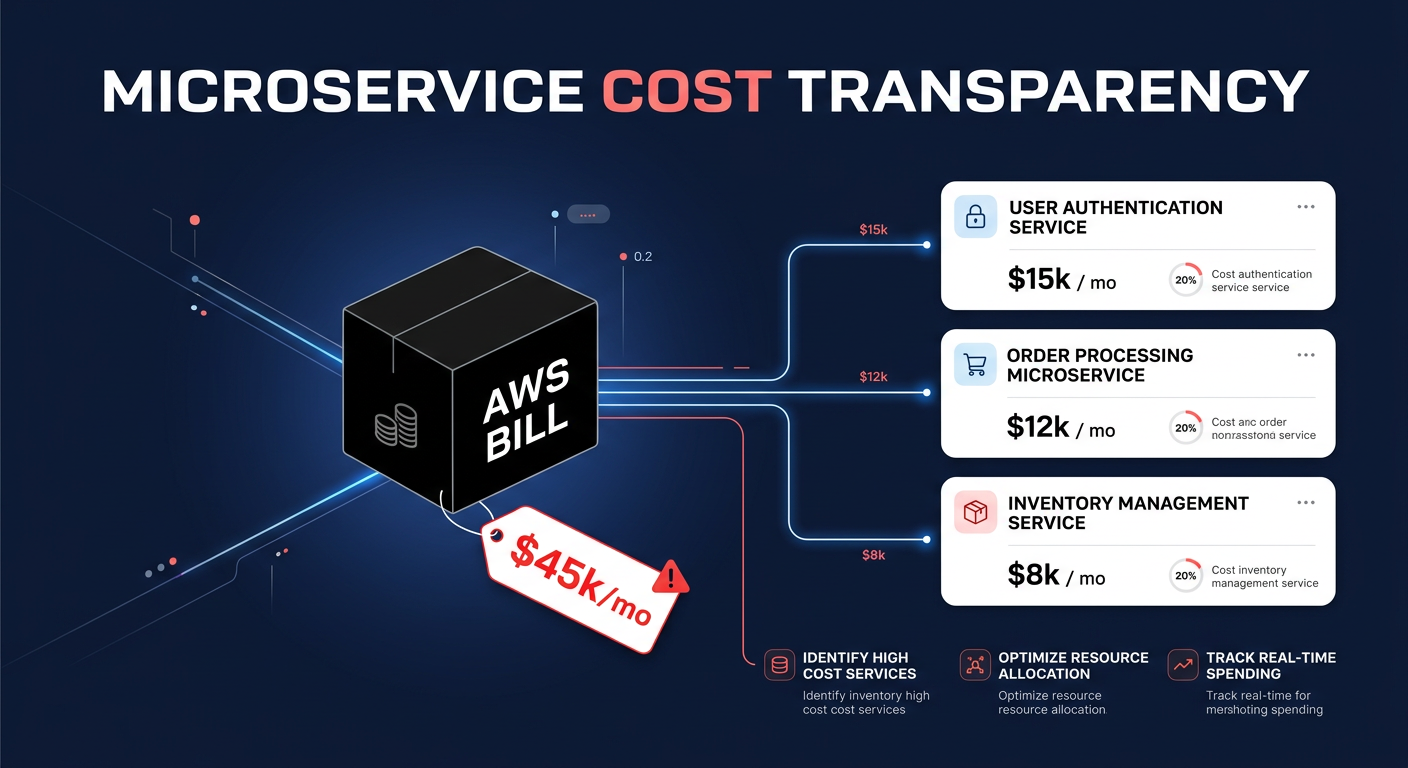
Is your AWS bill growing faster than your user base? Most organizations waste 30% to 40% of their cloud spend because they lack a unified strategy to govern dozens of disparate accounts. Managing cost at scale requires moving beyond individual spreadsheets and into a centralized cloud cost governance framework.
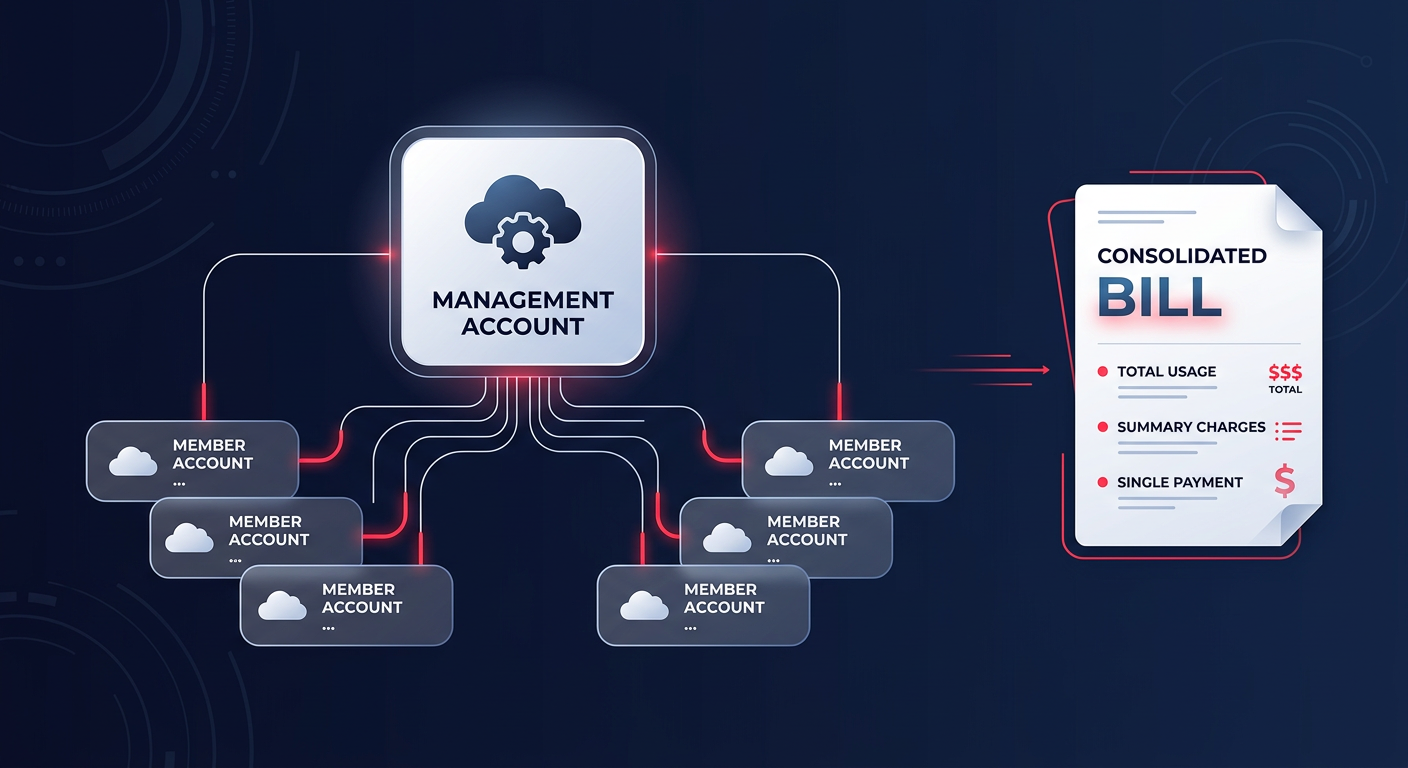
By leveraging AWS Organizations and consolidated billing, you can transform a fragmented infrastructure into a streamlined financial engine. This approach doesn’t just simplify your accounting; it unlocks volume discounts and optimization opportunities that are impossible to achieve in isolation.
The power of consolidated billing and volume discounts
The primary advantage of AWS Organizations is consolidated billing, which aggregates usage across your entire fleet to reach higher discount tiers faster. This is particularly effective for services with tiered pricing, such as Amazon S3, Data Transfer, and EC2. For instance, if you have ten accounts each using 5TB of S3 storage, AWS aggregates this to 50TB, often pushing the entire organization into a lower price bracket that a single account would never reach on its own.
Beyond automatic tiering, centralized management enables you to execute sophisticated AWS rate optimization strategies. Reserved Instances (RIs) and Savings Plans purchased in the management account are applied first to the account that purchased them, with the remainder distributed to other member accounts with eligible usage. This ensures that benefits target the highest-cost workloads first, maximizing your organization-wide Effective Savings Rate (ESR).
Strategic RI and Savings Plan sharing
While sharing discounts is a powerful way to reduce spend, it can create friction between departments if one business unit “steals” a discount purchased by another. To solve this, AWS introduced RISP Group Sharing, which provides granular control over how these benefits are distributed. Using native management tools, you can now define specific billing groups to ensure that commitments stay within defined business units or are prioritized for specific high-growth products.
To maintain high utilization – ideally above 80% – you need a central view of coverage across all linked accounts. Managing this manually is a significant engineering burden that often leads to missed savings or over-commitment. Hykell automates this process by evaluating your algorithmic mix of discounts in real-time, buying and converting instruments as your workloads shift. This ensures you secure up to 72% off on compute workloads without the risk of being locked into unused capacity.
Enforcing governance with Service Control Policies
Visibility alone doesn’t stop waste; you need preventive controls to maintain a lean environment. Service Control Policies (SCPs) allow you to set “guardrails” across your entire organization. For example, you can deny the ability to launch expensive, non-standard instance types in development accounts or mandate that all resources must have specific tags before they can be created.
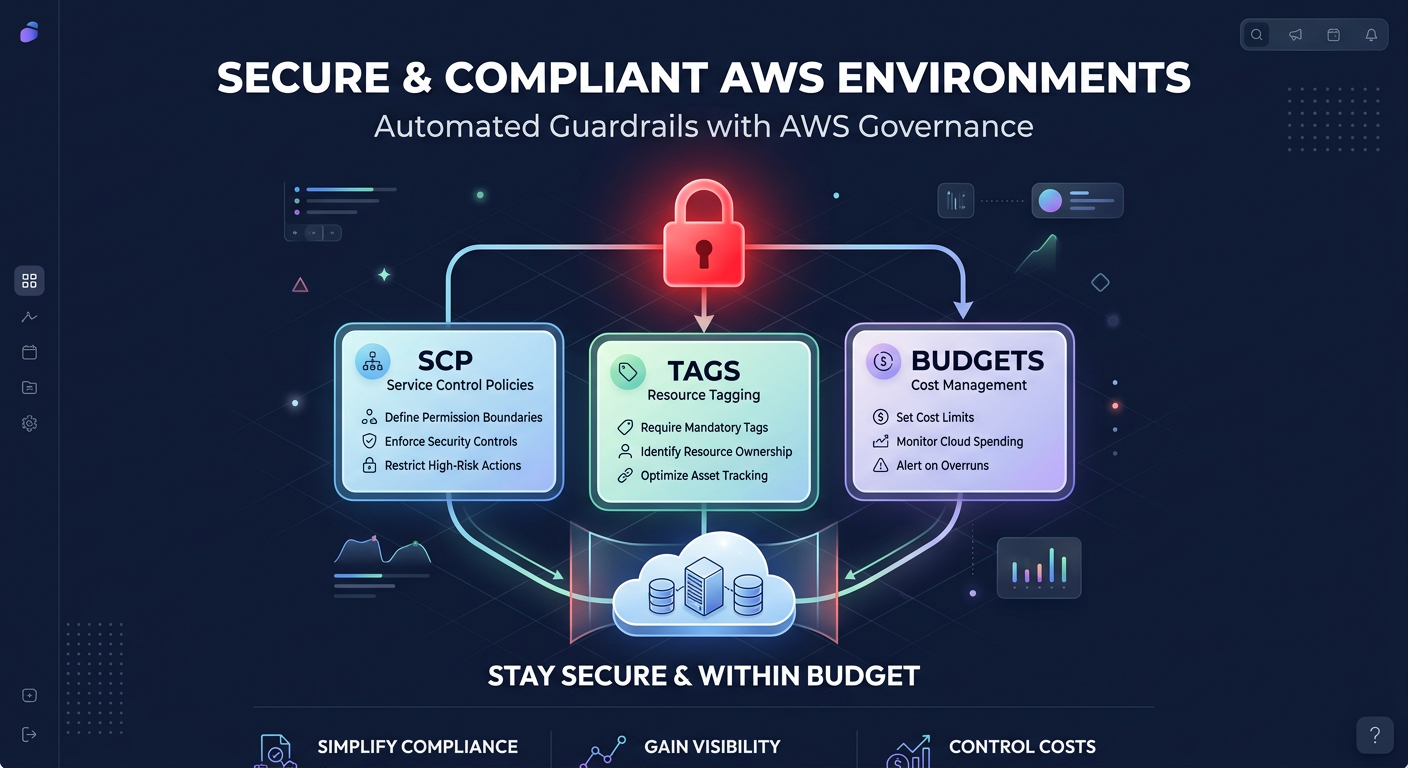
A robust automated tagging strategy serves as the bedrock for multi-account management. Without mandatory cost allocation tags like `CostCenter`, `Environment`, and `Project`, your Cost and Usage Report (CUR) will overflow with unallocated spend, which often accounts for 15% to 30% of total cloud costs. By enforcing these via SCPs and AWS Config, you ensure that every dollar spent is attributable to a specific owner, enabling accurate cloud chargeback and showback strategies.
Advanced attribution with AWS Billing Conductor
For enterprises acting as internal service providers, the standard AWS invoice is often too rigid for departmental accounting. AWS Billing Conductor allows you to create custom billing groups that mirror your internal organizational structure. You can define custom pricing rules, such as adding a percentage markup to cover shared overhead or applying specific credits to certain departments.
This level of detail is essential for FinOps teams trying to align cloud spend with business value. When combined with cloud observability tools, stakeholders from the CFO to the DevOps lead can access role-specific dashboards. Instead of a wall of numbers, they see the metrics that matter, such as unit economics, real-time anomaly tracking, and cost per transaction.
Optimizing resources on autopilot
Multi-account environments are notorious for “zombie” resources, such as orphaned EBS volumes from deleted EC2 instances or snapshots from projects that ended years ago. These hidden costs aggregate quickly; one financial services organization recently recovered $45,000 in annual spend simply by identifying and removing unattached volumes.
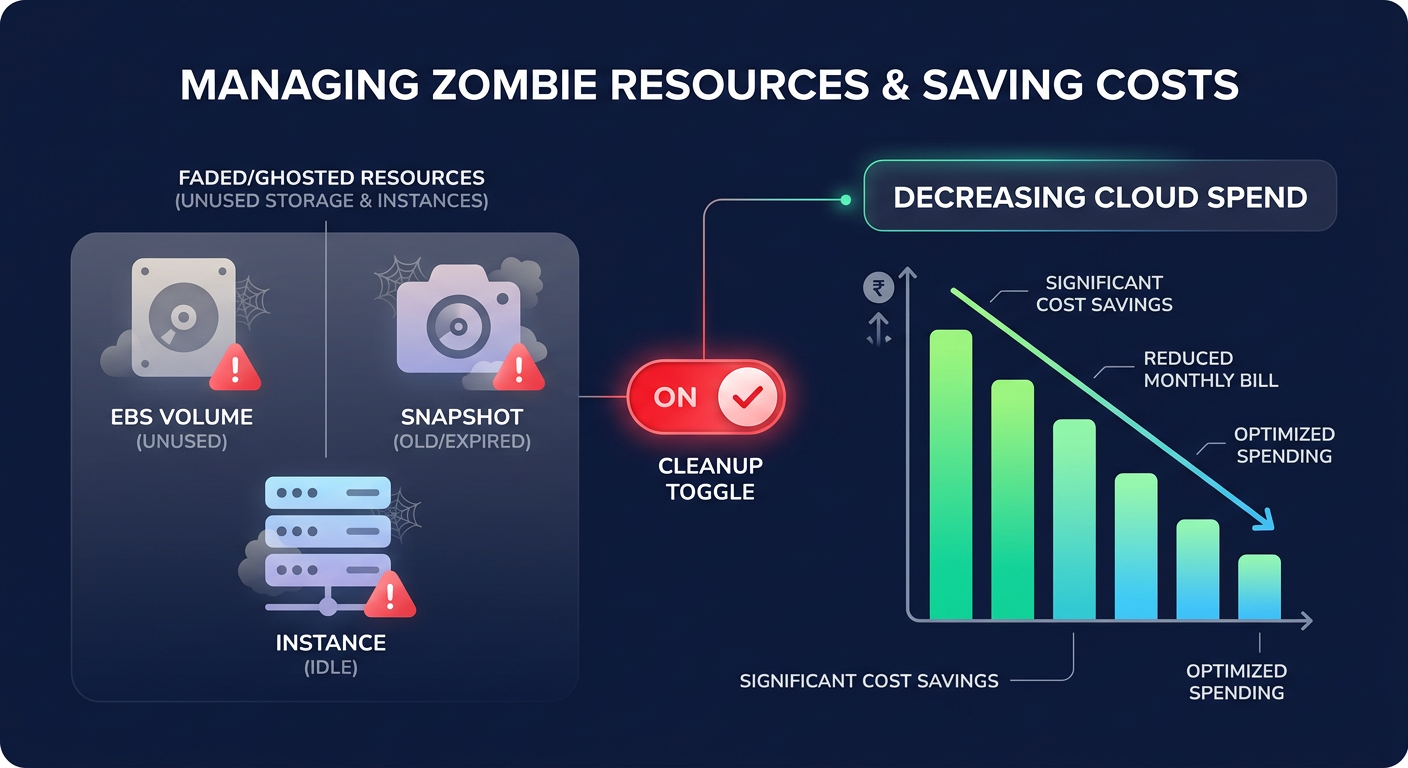
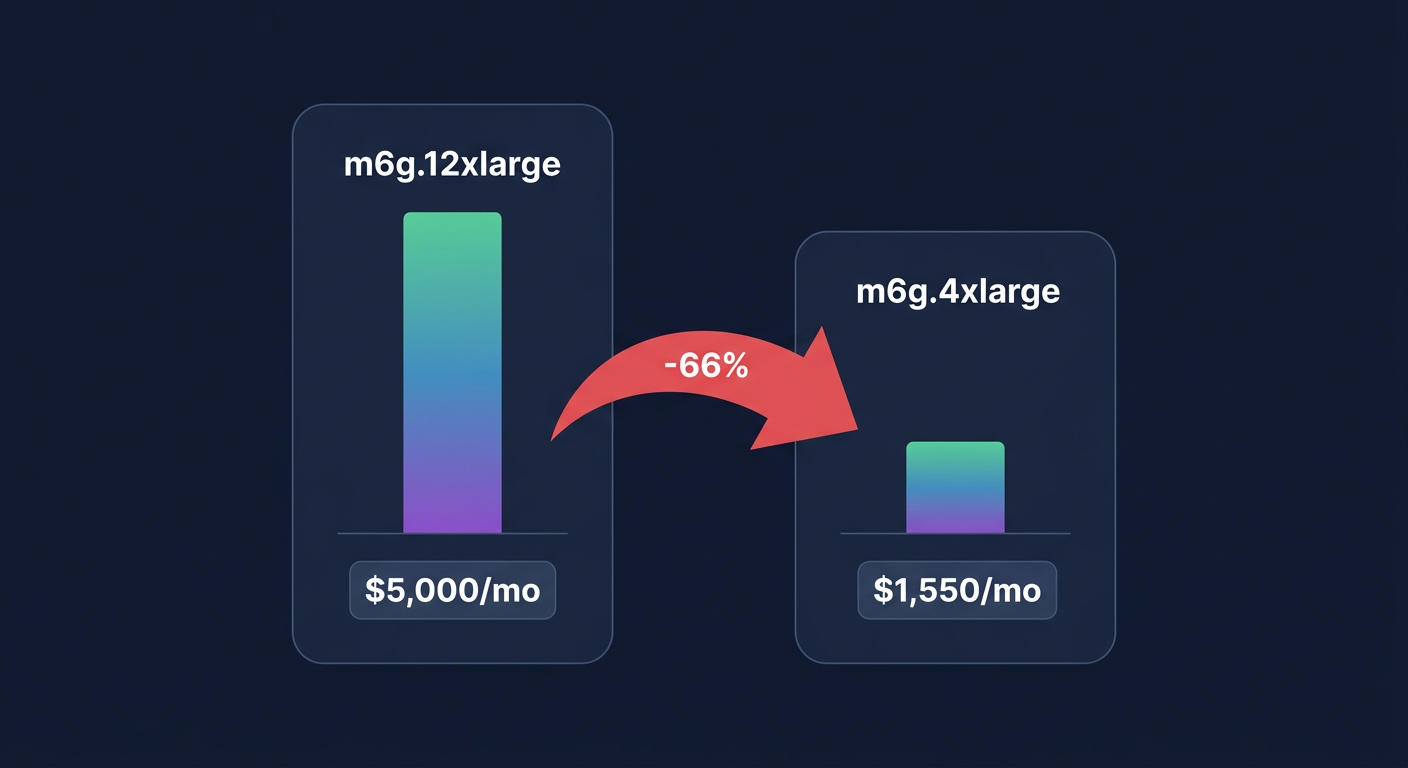
Hykell takes this a step further by operating automated cost optimization on autopilot. Our platform performs continuous AWS cost monitoring, identifying rightsizing opportunities and executing Graviton migrations that can deliver significantly better price-performance. Because we handle the engineering lift, your team stays focused on innovation while we ensure your infrastructure is optimized 24/7.
Managing AWS costs at scale is a continuous journey of visibility, governance, and optimization. By centralizing your billing and automating your commitment management, you can transform your cloud from a growing liability into a competitive advantage. If you are ready to see how much you could be saving across your organization, use our cost savings calculator or contact Hykell today for a comprehensive cloud cost audit. We only take a slice of what you save – if you don’t save, you don’t pay.