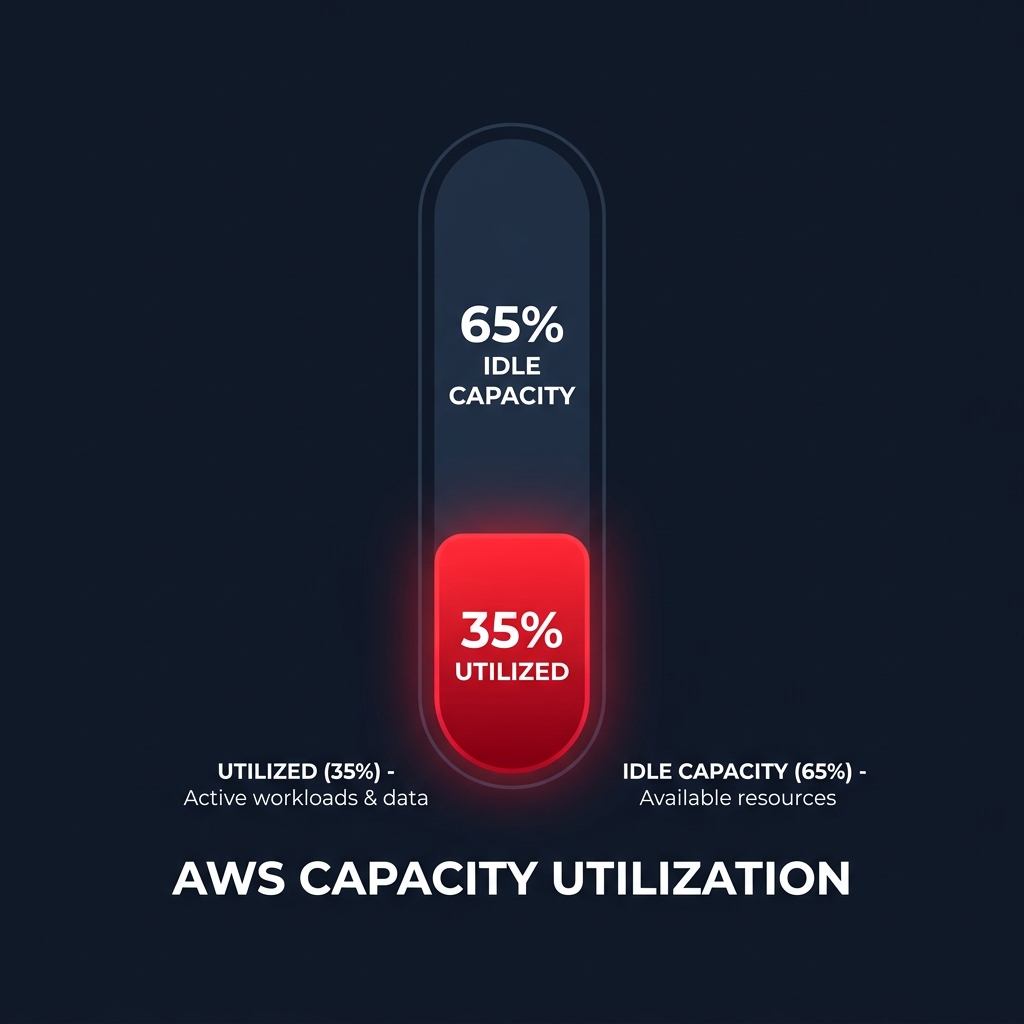
Is your Amazon EKS bill growing faster than your cluster traffic? With approximately 82% of cloud-hosted Kubernetes workloads running on AWS, most organizations overspend by 30–40% on idle capacity. You can reclaim this budget by shifting from manual guesswork to automated, data-driven optimization.
Rightsize pod requests before nodes
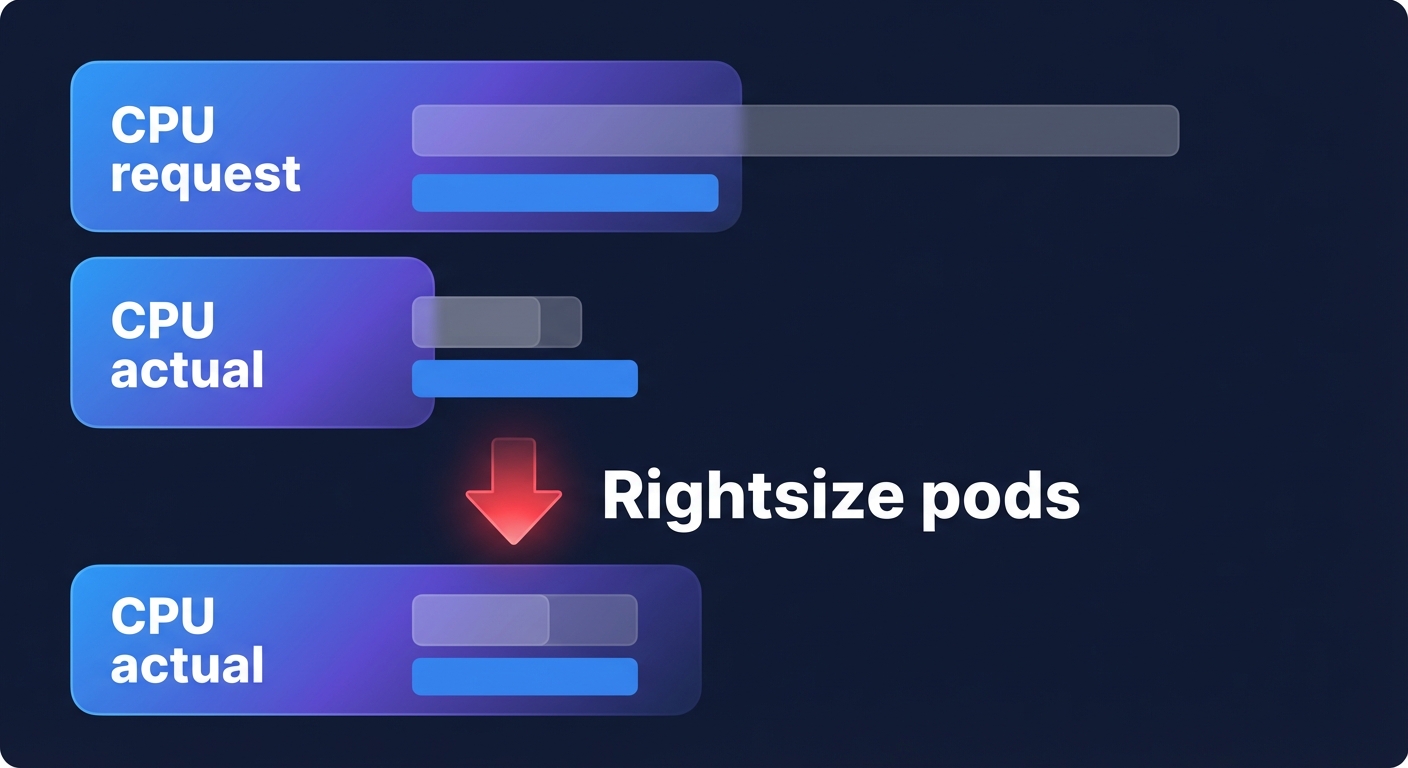
Your EKS cost optimization must start at the pod level. If you provision nodes based on inflated resource requests, you are essentially paying for “ghost” capacity that never sees a single packet of data. Many engineers set 30–50% safety buffers on CPU and memory requests to avoid performance throttles, but this leads to massive cluster fragmentation and wasted spend.
By automatically adjusting CPU and memory requests to match actual P99 utilization, you can reduce cluster costs by 30–50% without affecting application stability. While tools like the Vertical Pod Autoscaler (VPA) exist, they often require disruptive pod restarts that can impact availability. Hykell solves this by continuously fine-tuning resource requests in the background, ensuring your pods only consume what they need to stay performant while maximizing node density.
Accelerate scaling with Karpenter
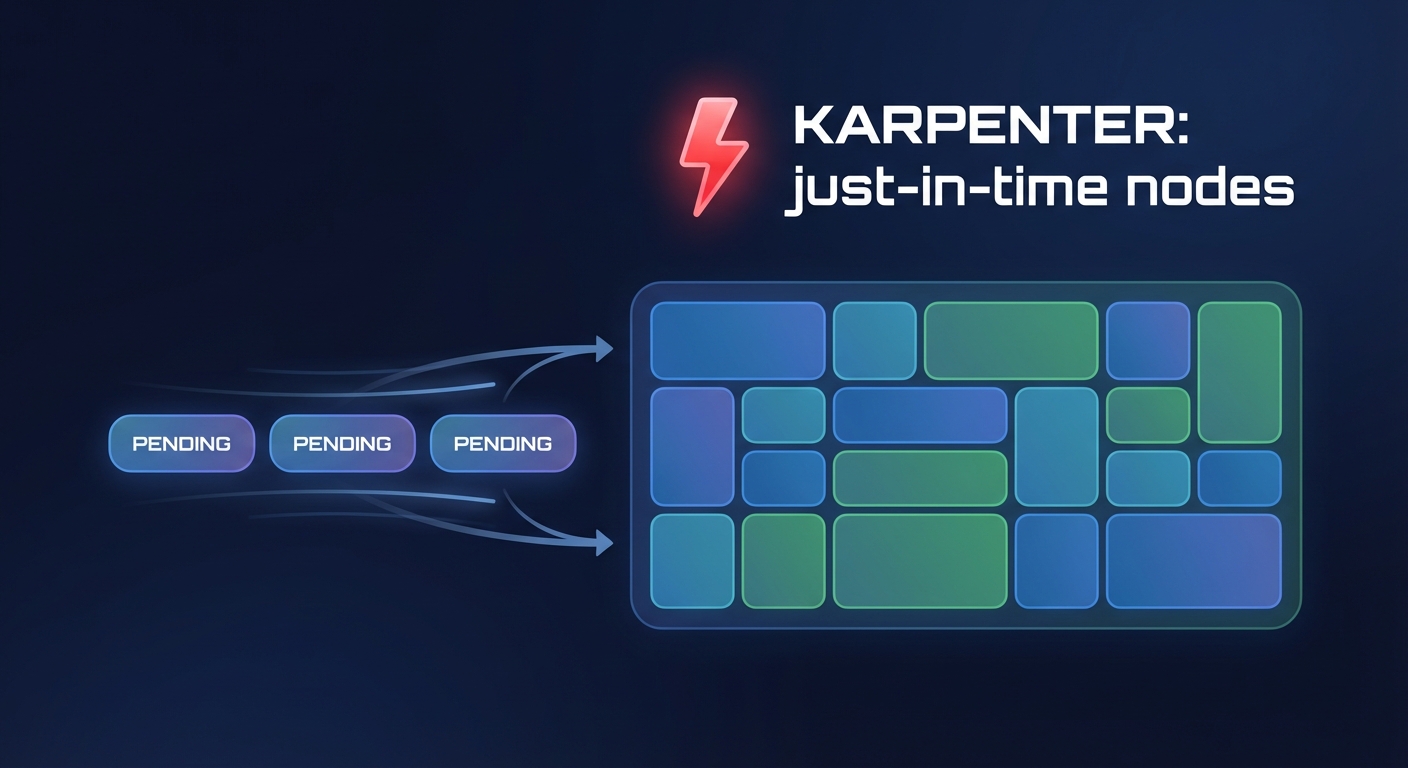
Traditional Auto Scaling Groups (ASGs) often struggle with Kubernetes workloads because they are not “container-aware.” They provision nodes based on average metrics, such as aggregate CPU utilization, rather than the specific, immediate needs of pending pods. This frequently leads to scaling lag, where critical pods sit in a “Pending” state for several minutes while the provider spins up generic hardware.
Switching to Karpenter allows for just-in-time node provisioning that aligns perfectly with your requirements. Karpenter evaluates the aggregate resource requirements of all pending pods and selects the most cost-effective instance type from the entire EC2 catalog. This aggressive “bin-packing” approach ensures that you are not paying for half-empty m5.xlarge instances when a more appropriately sized instance would suffice, significantly reducing your compute overhead.
Leverage Graviton for a 20% price-performance boost
If your workloads are still running on standard x86 Intel or AMD instances, you are likely missing out on significant savings. AWS Graviton instances are custom-built ARM processors that typically offer 15–25% better price-performance compared to comparable x86 generations.
For EKS environments, migrating to ARM-based Graviton instances is often a straightforward process involving updates to your node group configuration and ensuring your container images are built for multi-architecture support. Benchmarks show that Graviton instances cost approximately 20% less per hour while delivering superior throughput for modern microservices and data processing tasks. Making this shift allows you to maintain high performance while instantly lowering your baseline compute costs.
Use Spot Instances for fault-tolerant workloads
You can achieve discounts of up to 90% by shifting non-critical or stateless workloads to Spot Instances. The primary strategy for success with Spot is diversification. Rather than requesting a single instance type, you should configure your EKS node groups to use a wide variety of instance families across multiple Availability Zones to maximize availability.
To mitigate the inherent risk of two-minute termination notices, you should pair your Spot strategy with intelligent scaling tools. These solutions can automatically fall back to On-Demand capacity if Spot availability drops in a specific region, ensuring that your nightly batch jobs, CI/CD runners, or development environments complete their tasks without manual intervention or downtime.
Eliminate “zombies” and idle resources
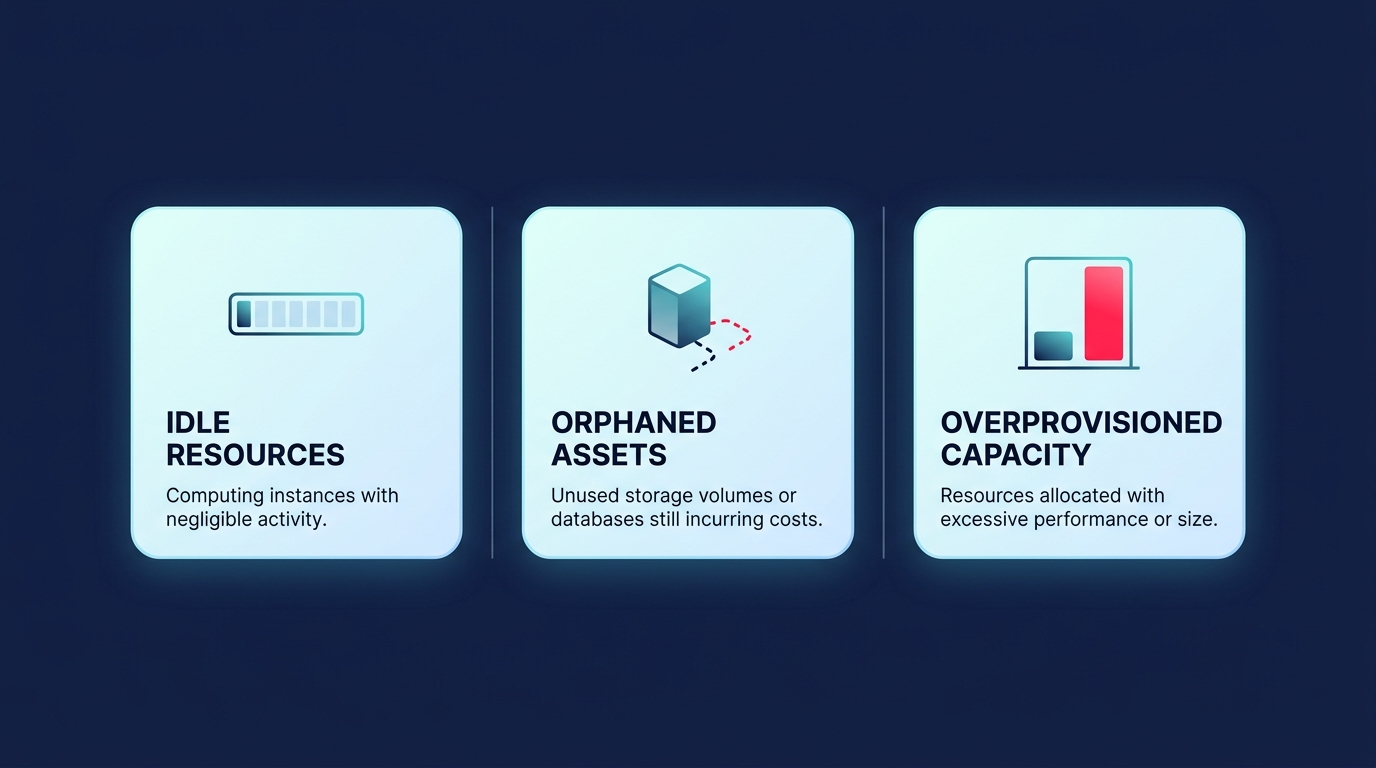
Waste in EKS often hides in the periphery of your infrastructure. These zombie resources, such as unattached EBS volumes, idle load balancers, and orphaned test clusters, can account for 15–30% of your total cloud bill. Identifying and terminating these resources is one of the fastest ways to see an immediate reduction in your monthly spend.
Storage optimization is another high-impact area. Migrating from gp2 to gp3 volumes can reduce storage costs by up to 20% while providing better baseline performance. Networking costs also require scrutiny, as cross-AZ data transfer can represent 15–25% of total Kubernetes expenses. By using topology-aware routing, you can keep traffic within the same zone and avoid unnecessary transfer fees. Furthermore, you should consider consolidating your ingress controllers to use shared Application Load Balancers (ALBs) across multiple namespaces, as even an idle ALB costs roughly $20–30 per month.
Blending commitments for the long term
Once you have rightsized your pods and optimized your node scaling, you can address AWS rate optimization to lock in deeper discounts. It is critical to never buy Savings Plans or Reserved Instances based on unoptimized usage; doing so commits you to paying for waste for the next one to three years.
A balanced approach involves covering 60–80% of your steady-state baseline with Savings Plans, which offer up to 72% discounts in exchange for consistent usage. You can then use On-Demand instances for variable traffic spikes and Spot Instances for everything else. This tiered strategy ensures you achieve the lowest possible Effective Savings Rate (ESR) without losing the flexibility to pivot your architecture as your business grows.
Put your EKS savings on autopilot
Manually managing pod requests, node types, and Spot diversifications is a full-time job that most DevOps teams simply cannot afford to prioritize over product innovation. This is where Hykell changes the game. Our automated platform continuously audits your EKS clusters to identify underutilized resources and executes optimizations in real-time.
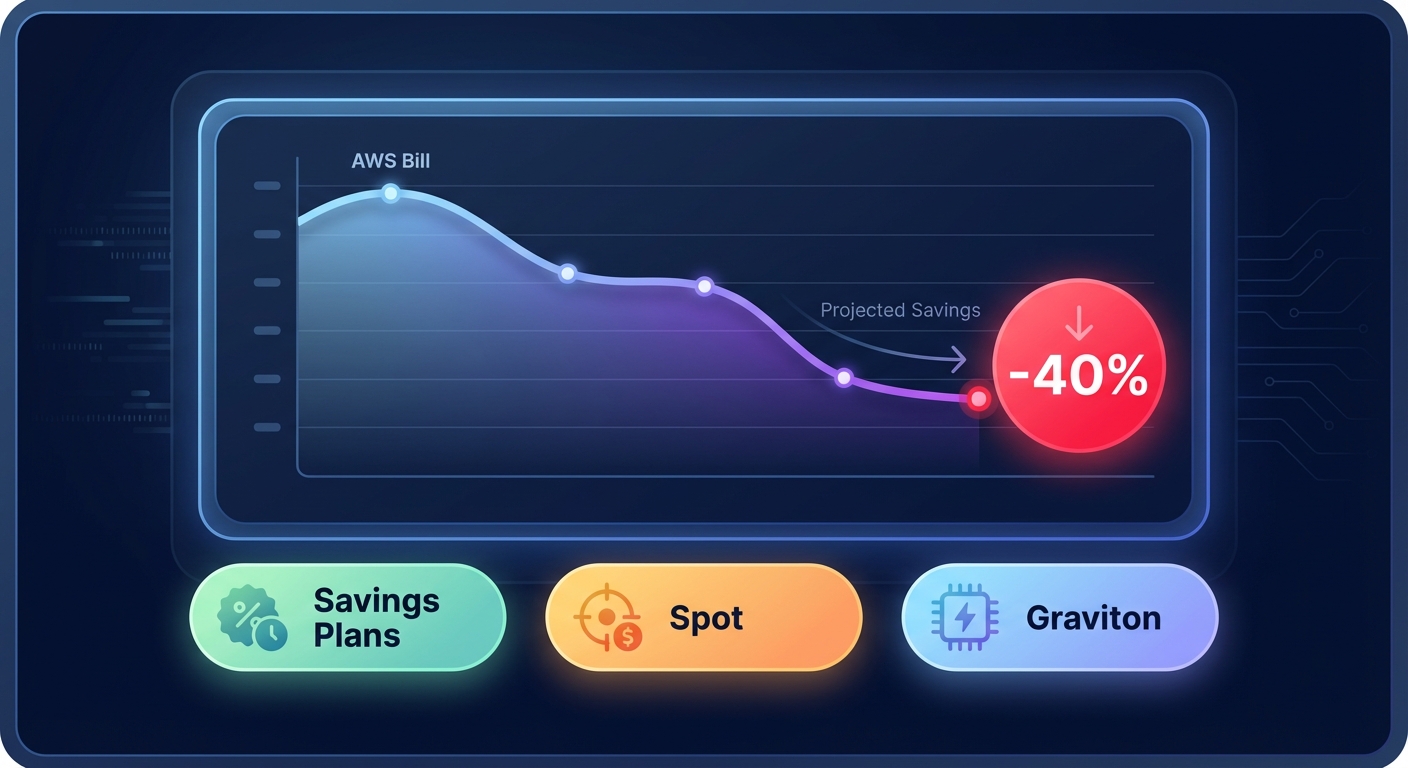
By combining intelligent rightsizing with automated commitment management, Hykell customers typically reduce their total AWS costs by up to 40% with zero ongoing engineering effort. The model is entirely risk-free – Hykell only takes a slice of what you actually save. If we do not find savings for your organization, you do not pay a cent.
You no longer have to guess your resource limits or overprovision “just in case.” Schedule a free cloud cost audit today to see exactly how much your EKS clusters could be saving while maintaining peak performance.