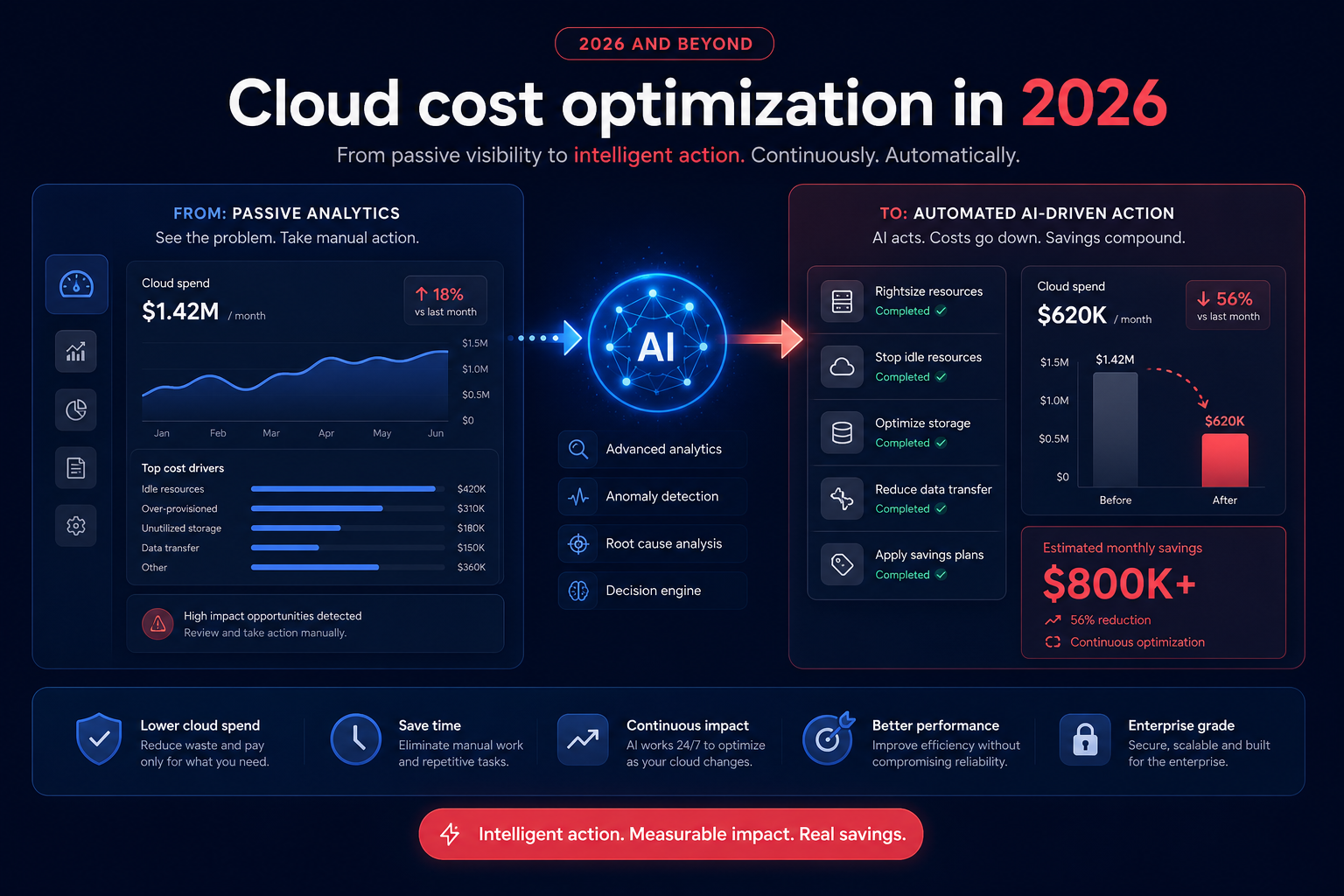
Did you know that most enterprises waste nearly one-third of their cloud budget? As we move into 2026, simply watching a dashboard isn’t enough; you need a strategy that turns visibility into automated action to survive the complexity of modern cloud environments.
AI-driven FinOps and the end of manual firefighting
Artificial intelligence is no longer just a feature in cloud management; it is the foundation. By 2026, the shift from reactive reporting to proactive, machine learning for cloud cost optimization has become the standard for high-growth companies. These models analyze years of historical data to anticipate spend spikes before they happen.
Advanced systems now use AI “copilots” embedded directly into engineering workflows. These tools don’t just tell you that you are overspending; they identify the specific root cause and suggest a fix. For instance, cost anomaly detection now operates with much higher precision, distinguishing between a legitimate traffic surge during a product launch and a misconfigured data pipeline that is draining your budget.
From coverage to Effective Savings Rate (ESR)
In previous years, many teams focused solely on “coverage” – the percentage of their footprint covered by Reserved Instances or Savings Plans. However, 2026 marks the widespread adoption of the Effective Savings Rate (ESR) as the primary north star metric. This KPI measures the actual percentage reduction you achieve versus on-demand prices, accounting for both discounts and the cost of unused commitments.
Relying on static coverage can be misleading because high coverage often hides expensive over-commitments. Mature AWS FinOps strategies now prioritize maximizing ESR by using automated tools to buy, sell, and convert commitments in real time. While the industry average ESR sits around 15%, top-performing teams using automated AWS rate optimization are consistently pushing their savings above 50%.
Solving the Kubernetes waste crisis
Containerization has revolutionized deployment, but it has also created a massive visibility gap. Research indicates that over 80% of container spend is wasted on idle resources. This waste typically stems from two sources: cluster idle (overprovisioned infrastructure) and workload idle (requesting more resources than a pod actually needs).
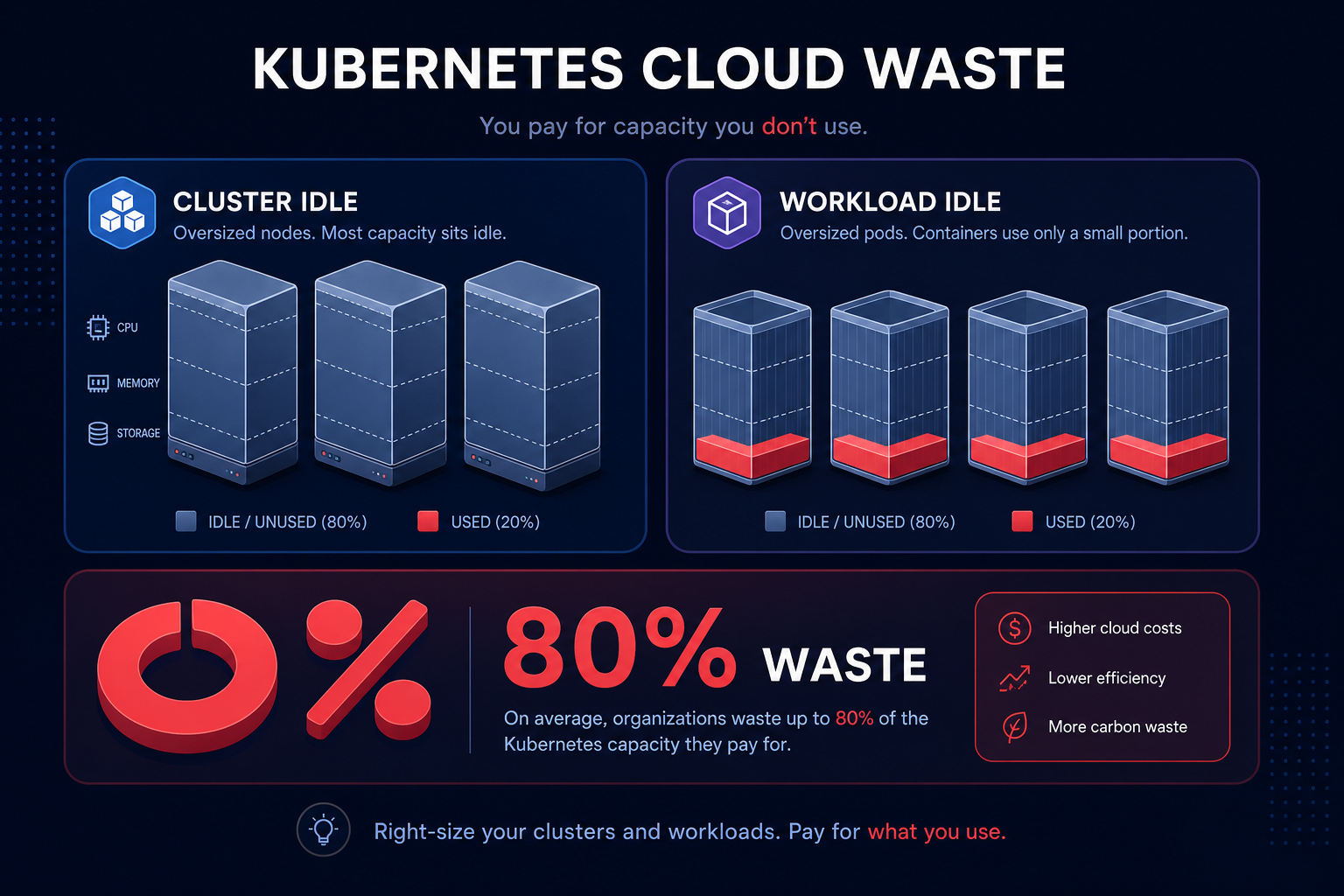
In 2026, businesses are moving toward automated kubernetes cost optimization to solve this. Instead of engineers manually guessing CPU and memory limits, intelligent systems dynamically provision nodes based on actual demand. This “workload-aware” scaling ensures you only pay for the capacity your applications are currently using, rather than maintaining “zombie” pods or oversized clusters.
Hardware-driven optimization with AWS Graviton
The push for better price-performance has led to a major shift in hardware choices. Organizations are increasingly moving away from traditional x86 architecture in favor of ARM-based instances. AWS Graviton4, for example, offers up to 40% better price-performance compared to previous generations.
Migrating to ARM is no longer a manual, multi-month project. You can now accelerate your Graviton gains by using automated platforms that identify compatible workloads and execute the transition without code changes. This trend is driven by the realization that architectural efficiency is often the fastest way to slash compute costs without sacrificing the speed of your applications.
Real-time observability and the “shift-left” movement
The 24-hour delay in standard cloud billing data is becoming unacceptable for modern DevOps teams. The trend in 2026 is toward real-time cloud observability that maps spend directly to specific business units, APIs, or even individual deployments as they happen.
By moving cost awareness earlier into the development pipeline – a practice known as “shift-left” – developers can see the financial impact of their architecture choices before they reach production. This cultural change is supported by finops KPIs and metrics that treat “cost” as a first-class performance metric, similar to latency or uptime.
Sustainability and GreenOps
Sustainability is no longer just a corporate social responsibility goal; it is a fiscal priority. Cloud providers are offering more granular data on the carbon footprint of specific workloads, leading to the rise of “GreenOps.” In 2026, cost optimization and carbon reduction are two sides of the same coin.
Optimizing for cost almost always results in a lower environmental impact. By migrating workloads to regions powered by renewable energy or using more energy-efficient instance types, you can reduce your AWS bill while simultaneously meeting sustainability targets. Modern cloud cost optimization tools now include carbon-aware dashboards to help you make these dual-impact decisions.
Dynamic forecasting and rolling budgets
Static monthly budgets are being replaced by continuous, automated cost forecasting. Using near-live usage inputs and rolling ML models, businesses can now predict their end-of-month spend with much higher accuracy.
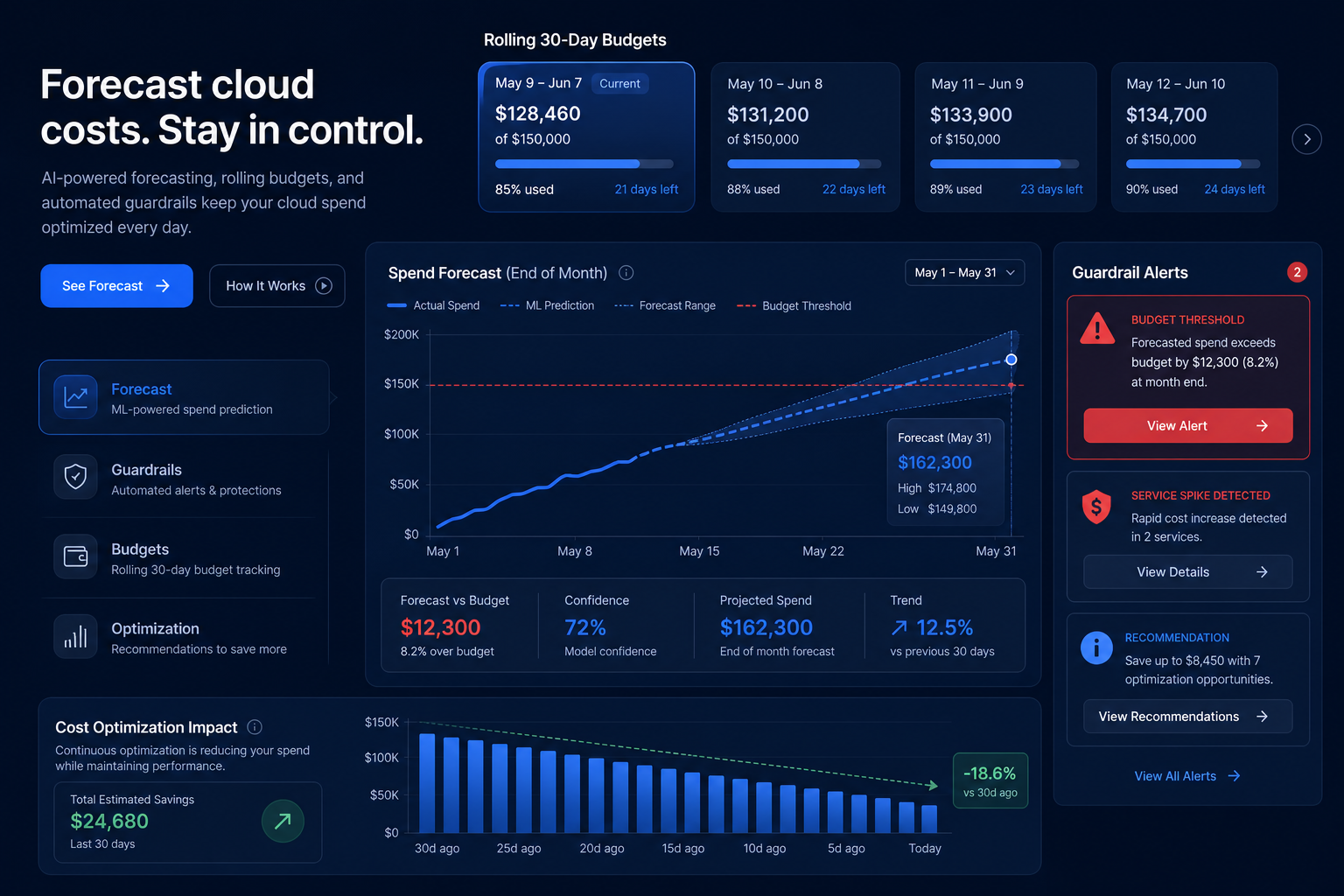
This dynamic approach allows finance and engineering teams to pivot quickly. If a new feature launch causes costs to trend higher than expected, automated guardrails can trigger resource rightsizing or schedule shutdowns for non-production environments. This level of agility ensures that cloud spending remains aligned with business growth rather than scaling out of control.
Mastering cloud efficiency on autopilot
The common thread among all 2026 trends is the move away from manual effort. As cloud environments grow more complex, the “human-in-the-loop” model for cost management is becoming a bottleneck. Successful organizations are turning to automated platforms to handle the heavy lifting of rightsizing, commitment management, and waste elimination.
Hykell helps you stay ahead of these trends by operating your AWS optimization on autopilot. From precision rate strategies to automated Kubernetes scaling, we help you reduce your AWS bill by up to 40% without requiring ongoing engineering effort.
See how much your organization could be saving by using our cloud cost savings calculator today.