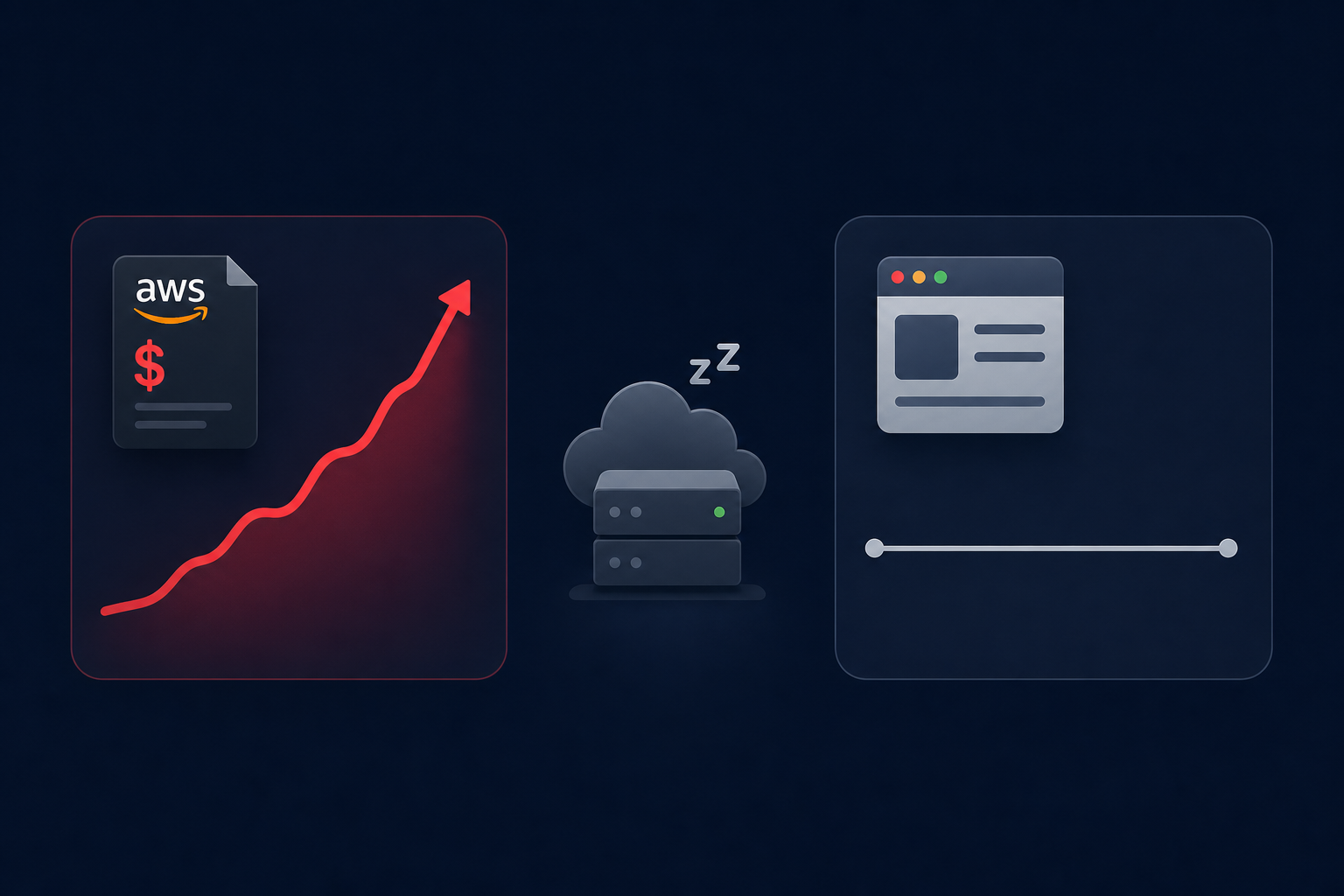
Is your AWS bill climbing while your application performance stays flat? You are likely paying for “zombie” infrastructure – idle resources that perform no meaningful work but still consume up to 40% of your cloud budget every month.
Identifying the three main types of cloud waste
Most AWS waste is not a single large expense but a collection of small, forgotten resources that accumulate over time. To effectively identify cloud waste on AWS, you must look for three specific categories of inefficiency:
- Idle resources: These are active services that are performing no meaningful work, such as an EC2 instance sitting at 1% CPU utilization for weeks.
- Orphaned (zombie) assets: These are resources left behind after a parent resource is deleted, such as unattached EBS volumes or orphaned snapshots that continue to rack up storage costs.
- Over-provisioned capacity: This occurs when you choose a resource size that is far larger than the actual workload requires, leading to low utilization across the board.
Practical methods to detect idle resources
To clean up your environment, you need a systematic approach to detection. You can start by leveraging native tools like AWS Cost Explorer recommendations to spot historical trends, but deep optimization requires looking at specific performance metrics.
Hunting for idle EC2 and RDS instances
According to AWS Well-Architected guidance, an instance is typically considered idle if its CPU utilization remains below 10–20% for a sustained period. You should also monitor Elastic Load Balancers (ELBs) for a RequestCount of zero over the last seven days. This metric indicates the balancer is no longer routing traffic to active targets and can likely be decommissioned.
Finding orphaned EBS volumes and snapshots
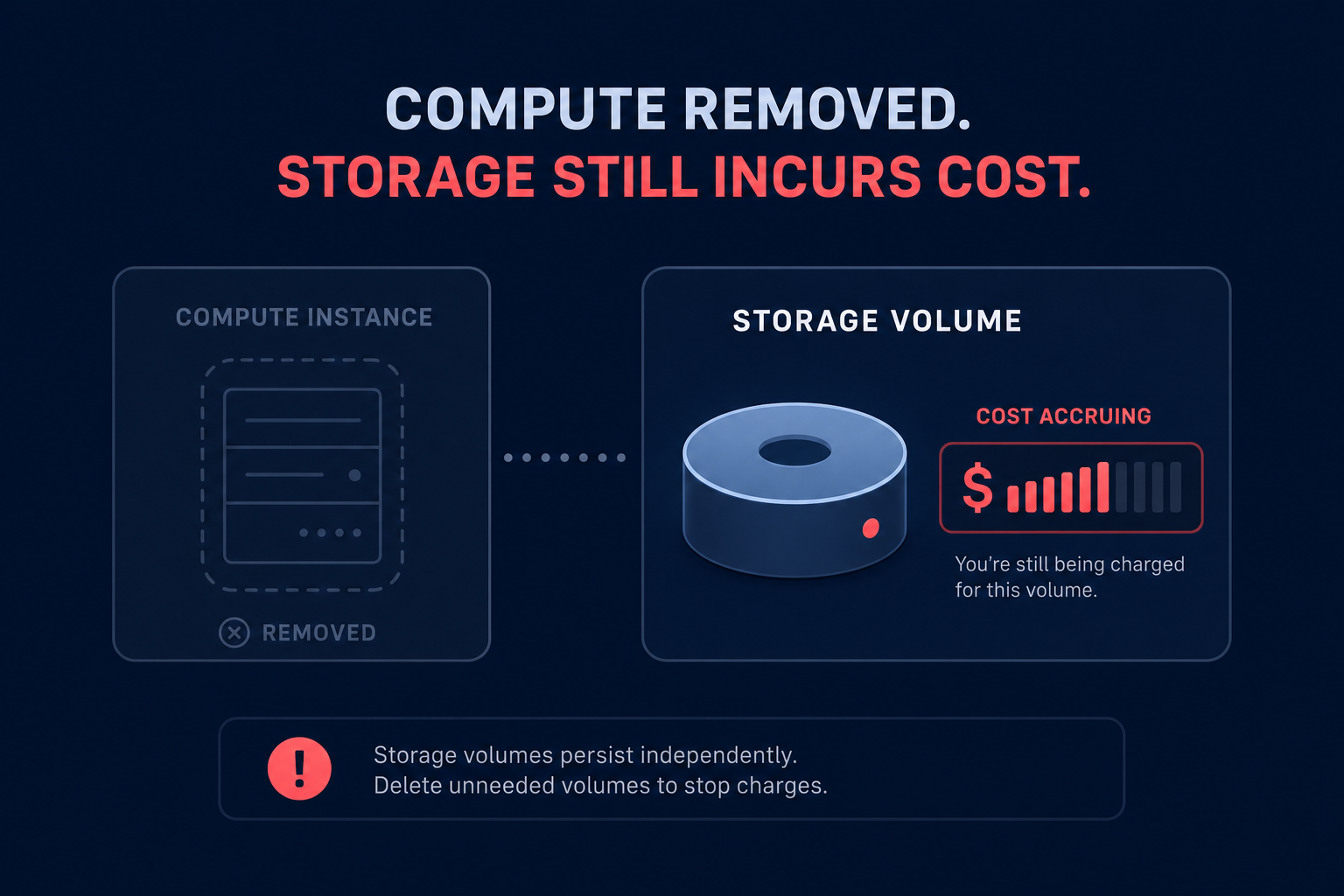
Storage waste is one of the easiest “quick wins” in a cloud cost audit. When you terminate an EC2 instance, the attached EBS volume often persists in an “available” state, continuing to bill you for provisioned capacity and IOPS despite being detached. Using AWS Config can help you identify these unattached volumes and check for tagging compliance to ensure every resource has a clear, accountable owner.
Leveraging AWS-native tools for detection
AWS provides several built-in services that use machine learning to highlight potential savings and operational waste:
- AWS Compute Optimizer: This tool uses machine learning to analyze CloudWatch metrics and provide idle resource recommendations for EC2, EBS, and Lambda.
- AWS Trusted Advisor: This service flags obvious waste, such as low-utilization EC2 instances and idle RDS DB instances, as part of its cost optimization checks.
- AWS Cost Anomaly Detection: By using ML-based baselining, this tool identifies sudden spend spikes that might indicate a runaway process or a newly launched resource without proper oversight.
Turning observability into automated execution
While native tools provide visibility, they often fail to solve the core problem of implementation. Engineering teams frequently spend 10-15% of their time on manual cloud cost management, which is neither scalable nor sustainable for high-growth businesses.
Hykell’s observability platform reimagines this process by integrating directly with your AWS environment via a secure, read-only IAM role. Instead of merely giving you a list of problems, it provides a drill-down capability that allows you to trace spend spikes to a specific resource ID in seconds.
Once you have identified idle resources, the next logical step is automated AWS rightsizing. Hykell evaluates P99 utilization data to safely downsize over-provisioned instances or migrate workloads to more cost-effective hardware, such as AWS Graviton, which can offer up to 40% better price-performance than standard x86 instances.
Achieving sustainable cloud efficiency
Identifying idle resources shouldn’t be a one-time event; it must be an ongoing discipline within your infrastructure management. Combining open-source cloud cost management tools like Karpenter for Kubernetes scaling with automated cost visibility ensures that waste is eliminated as soon as it appears.
Hykell helps you stop the “monthly bill shock” by putting your AWS rate optimization and waste elimination on autopilot. Our platform identifies up to 40% in immediate savings by uncovering hidden inefficiencies in your compute, storage, and Kubernetes configurations. We operate on a performance-based model, which means we only take a slice of what you actually save. If you don’t save money, you don’t pay.
Ready to see how much of your AWS budget is currently going to idle resources? Calculate your potential savings today or contact our team for a detailed cost audit.