Are you tired of opening your AWS bill only to find “Data Transfer” has become a top expense? For mid-sized enterprises, egress is a silent budget killer that spikes after minor architectural shifts. Here is how to regain control and stop the bleeding.
Decoding the complexity of AWS data transfer pricing
AWS pricing for data transfer is rarely straightforward because it depends entirely on where the data starts and where it ends. While data transfer into AWS from the internet is generally free, moving data out or even between internal components carries varied costs that can quickly spiral. These charges are often tiered, meaning your per-unit cost may decrease as your volume grows, but the baseline remains a significant burden for high-growth companies.
The most common pricing tiers you will encounter include:
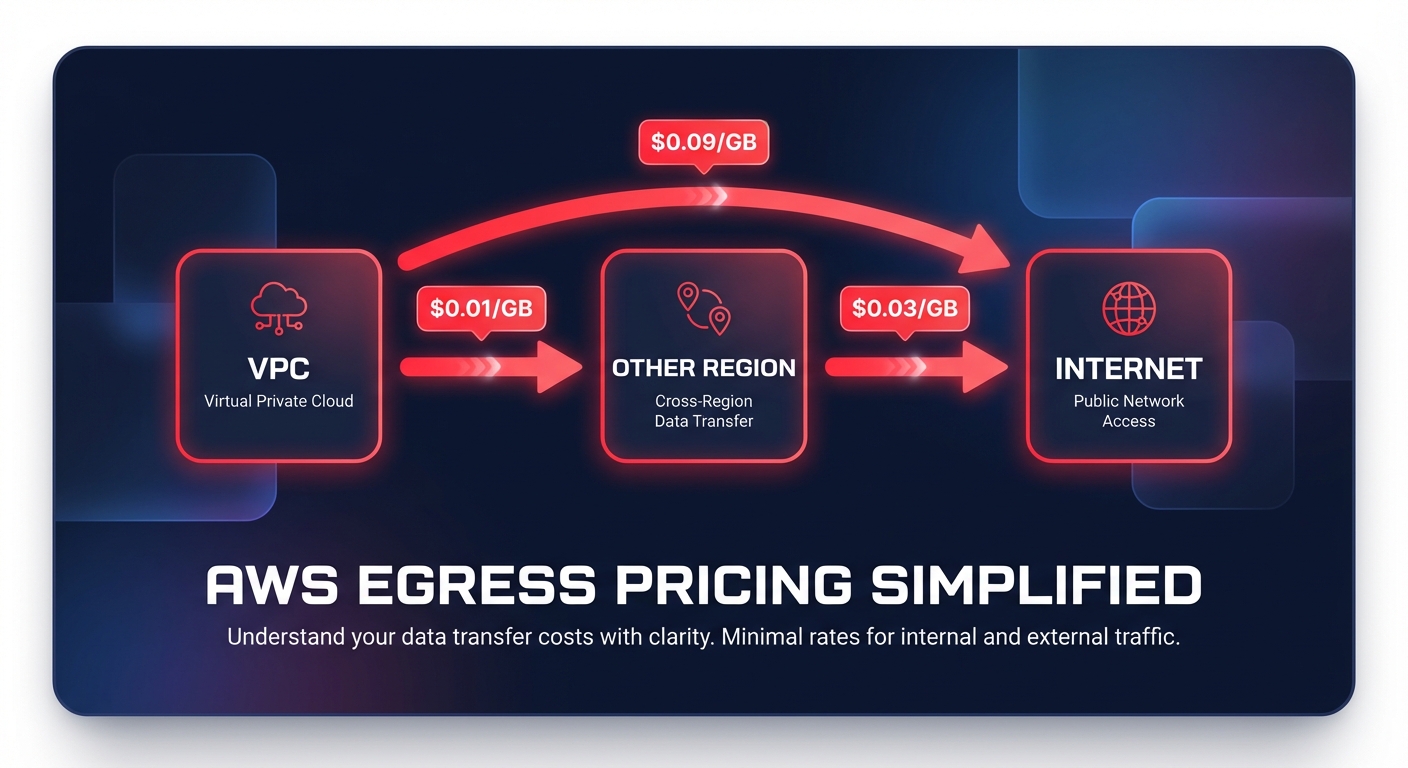
- Data Transfer Out (Internet): This is the most expensive tier. For the first 10 TB per month, you typically pay approximately $0.09 per GB.
- Inter-Region Data Transfer: Moving data between AWS regions, such as from US East to US West, generally costs between $0.02 and $0.05 per GB, depending on the specific region pair.
- Inter-Availability Zone (AZ) Transfer: Many teams assume traffic within a region is free, but crossing AZ boundaries costs approximately $0.01 per GB in each direction.
- Direct Connect: If you use a dedicated connection to your data center, AWS Direct Connect pricing varies by location and can range from $0.02 to over $0.19 per GB for data transfer out.
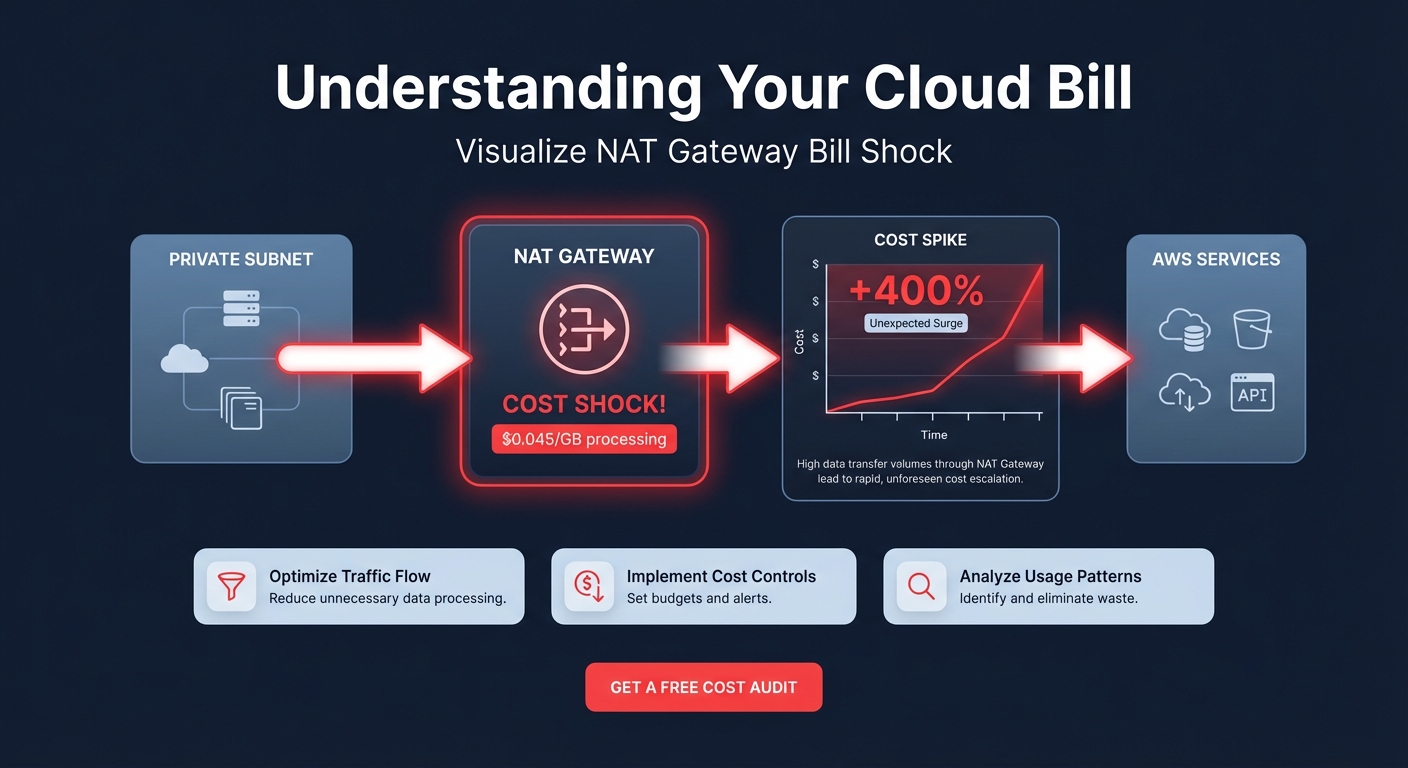
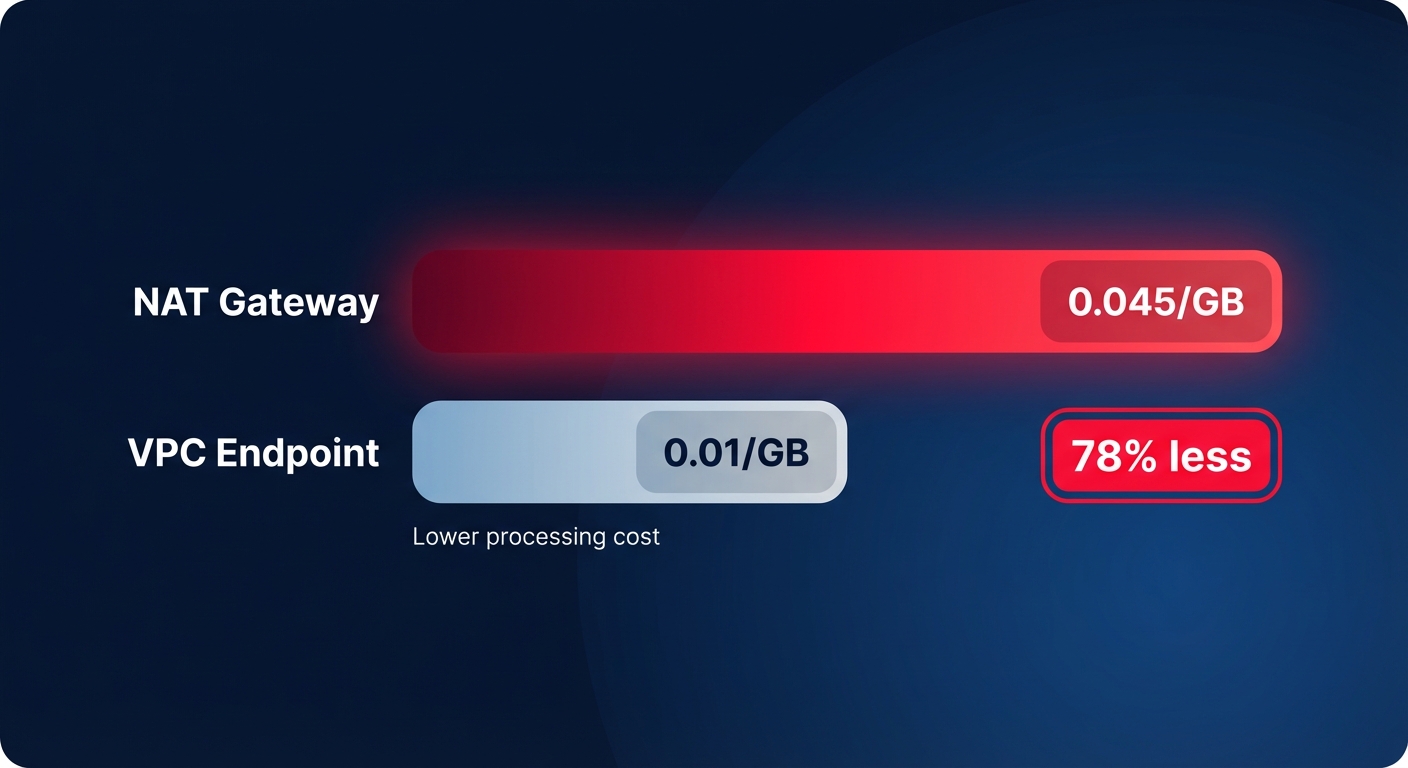
One of the most persistent contributors to “bill shock” is the NAT Gateway. AWS charges a processing fee of $0.045 per GB for all data passing through a NAT Gateway, which is applied on top of standard egress rates. For example, a containerized workload pulling 178,000 GB of images from ECR through a NAT Gateway can rack up over $8,010 monthly in processing charges alone.
Why unexpected egress charges happen
Unexpected spikes in data transfer costs are rarely the result of a single error. Instead, they usually stem from architectural patterns that were efficient at a small scale but became expensive as traffic increased. Cross-AZ traffic is a frequent culprit; if your application servers in one zone are constantly querying a database in another, every gigabyte of that traffic incurs a fee that accumulates silently throughout the billing cycle.
Similarly, misconfigured cross-region replication for S3 buckets or RDS databases can background-process terabytes of data, leading to thousands of dollars in unmonitored charges. Another common failure point is what some call the “convenience tax” of routing all traffic through a NAT Gateway. When private subnets need to reach AWS services like S3 or DynamoDB, sending that traffic through a NAT Gateway is often the default configuration. However, as noted in our guide on AWS NAT Gateway cost optimization, this path is significantly more expensive than using native AWS VPC Endpoints.
Practical strategies to reduce egress costs
Controlling egress requires a mix of architectural discipline and proactive monitoring. The first step is to keep traffic as local as possible by aligning your architecture so that compute and storage resources reside in the same Availability Zone whenever high-availability requirements allow. Since NAT Gateways are AZ-specific, deploying one per zone and keeping routing local can prevent unnecessary cross-AZ transfer fees.
For traffic that must leave your VPC to reach other AWS services, leverage VPC Endpoints. Gateway Endpoints for S3 and DynamoDB are free and eliminate the NAT Gateway processing fee entirely. For other services, Interface Endpoints (powered by AWS PrivateLink) cost roughly $0.01 per GB to process. This represents a 78% reduction in data processing costs compared to the standard NAT Gateway fee.
If you are serving content to the public internet, Amazon CloudFront can also provide relief. While CloudFront has its own pricing structure, it often provides lower data transfer out rates than standard EC2-to-internet egress. By caching content closer to your users, you reduce the total amount of data that needs to leave your origin, effectively lowering your overall egress bill.
Monitoring and detecting egress anomalies
You cannot improve what you cannot measure. While the AWS pricing calculator guide is excellent for pre-deployment estimates, you need real-time visibility to catch runaway costs before the end of the month. Engineering teams should utilize a tiered monitoring approach that combines historical analysis with proactive alerts.
Essential monitoring tools
- AWS Cost Explorer: Use this for retrospective analysis to identify which services, regions, or usage types are driving the highest spend.
- AWS Budgets: Set specific alerts for data transfer usage. By following AWS billing best practices, you can receive notifications when egress spend hits 50% or 80% of your expected monthly limit.
- Cost Anomaly Detection: This ML-driven tool helps identify “spiky” behavior, such as a misconfigured script suddenly transferring terabytes of data. For more details, see our guide on detecting and managing AWS cost anomalies.
For a deeper comparison of how to use these tools effectively to avoid overspending, see our breakdown of AWS Cost Explorer vs AWS Budgets.
Automating egress control with Hykell
Managing egress costs manually is a time-consuming task that often takes your best engineers away from building core product features. This is where Hykell provides a decisive advantage. We offer automated AWS cost optimization that works in the background to identify and remediate networking inefficiencies without requiring ongoing manual effort.
Hykell’s platform doesn’t just show you a graph; it provides the observability needed to trace spend anomalies back to specific resource IDs in seconds. Our technology can automatically identify where VPC Endpoints should replace expensive NAT Gateway routes and ensure your AWS rate optimization strategies are actually aligned with your real-world traffic patterns.
Most importantly, Hykell operates on a performance-based model: we only take a slice of what we save you. If we don’t find savings, you don’t pay. This allows your team to reduce cloud spend by up to 40% with zero financial risk and zero engineering lift. Stop letting egress costs dictate your cloud budget and use our pricing model to see how much you could save by putting your AWS optimization on autopilot.