Managing AWS costs often starts as a part-time responsibility for a DevOps lead or a finance analyst. In the early stages, you might catch low-hanging fruit by setting up automated AWS budget alerts or scanning the AWS Cost Optimization Hub for idle resources. However, as your cloud footprint scales, the math of Reserved Instances (RIs), Savings Plans, and multi-cluster Kubernetes environments can quickly outpace manual oversight.
The challenge for high-growth companies is no longer determining if they should manage costs, but rather identifying the most efficient way to do so. Deciding whether to hire a dedicated FinOps practitioner or lean on automated platforms like Hykell depends on several critical factors: your total annual spend, the complexity of your architecture, and the potential ROI of a full-time salary.
Calculating the ROI of a dedicated FinOps hire
The most direct way to justify a dedicated cost manager is to evaluate the investment against potential savings. In the United States, the average salary for a FinOps Manager is approximately $110,022, with senior roles frequently ranging between $124,950 and $169,050. When you account for benefits and overhead, a dedicated headcount often represents a $150,000 to $200,000 annual commitment.
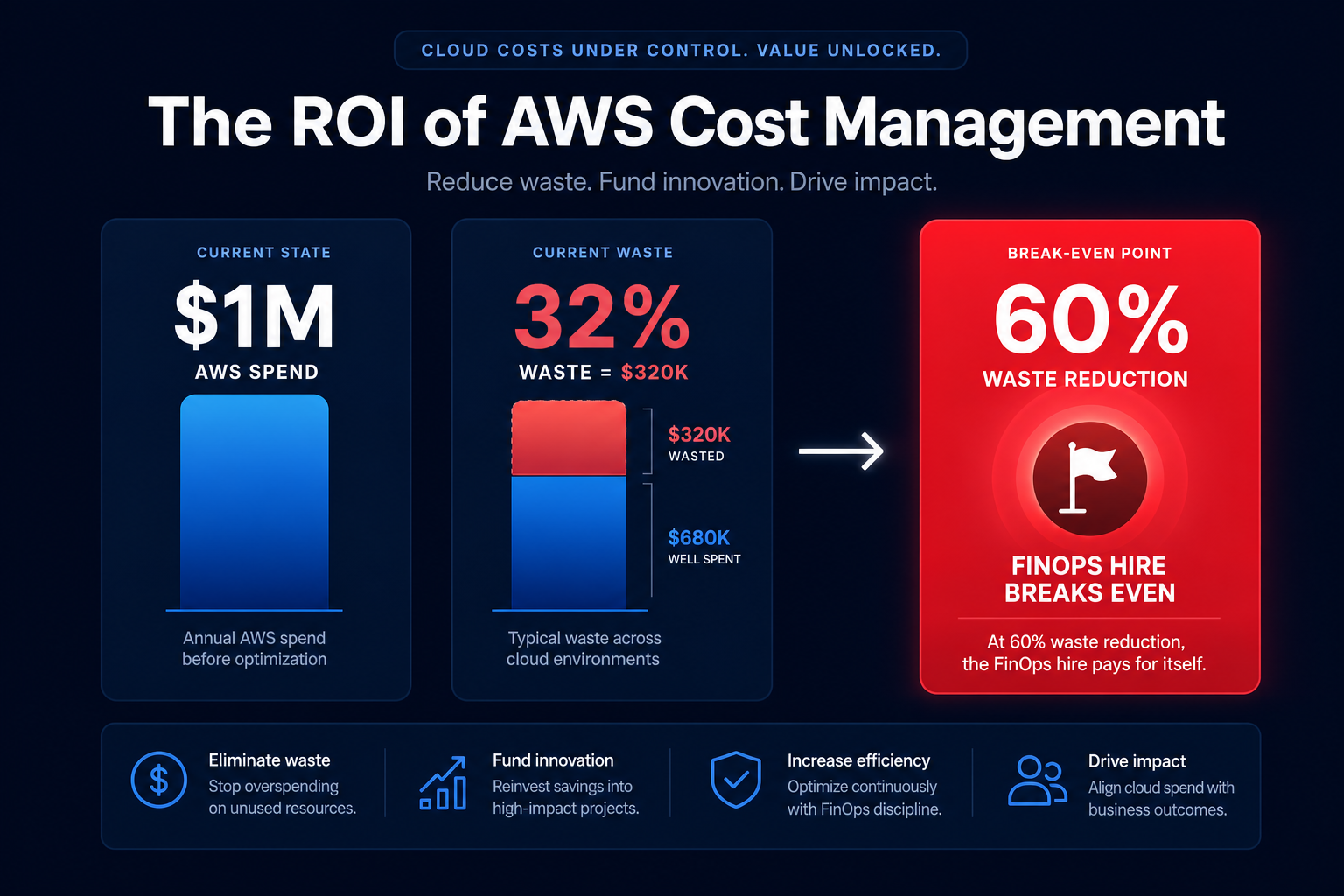
Industry research indicates that organizations typically waste roughly 32% of their cloud budget due to poor governance and underutilized resources. If your annual AWS spend has reached $1 million, that waste translates to $320,000 in lost capital. In this scenario, a dedicated manager only needs to eliminate about 60% of that waste just to break even on their own salary.
Many businesses eventually hit a “middle-ground” trap where the math is less clear. If your annual spend is $500,000, the potential waste is roughly $160,000 – nearly equal to the cost of the hire. In these cases, paying for a full-time specialist may not yield a positive return on investment. This is where AWS rate optimization through automation becomes the logical choice, as it delivers the necessary savings without the high fixed cost of additional headcount.
Complexity signals that go beyond the bill
Total spend is a significant indicator, but organizational complexity often dictates the need for dedicated oversight more than the dollar amount alone. You should consider a dedicated owner or team if your infrastructure triggers specific operational challenges:
- Multi-account fragmentation: When you operate across dozens of accounts within AWS Organizations, tracking spend and enforcing automated tagging becomes a permanent governance task rather than a periodic cleanup.
- Kubernetes and container waste: Identifying inefficiencies at the pod or namespace level in EKS requires deep, specialized visibility. Without a dedicated eye, AWS cost monitoring for containers often falls through the cracks, leading to cluster waste as high as 30–50%.
- Chargeback and showback requirements: As your company matures, finance teams will eventually require precise data on which product team is driving specific cost spikes. Implementing cloud chargeback strategies requires a bridge between engineering and accounting that a part-time developer rarely has the bandwidth to maintain.
The Effective Savings Rate as your north star
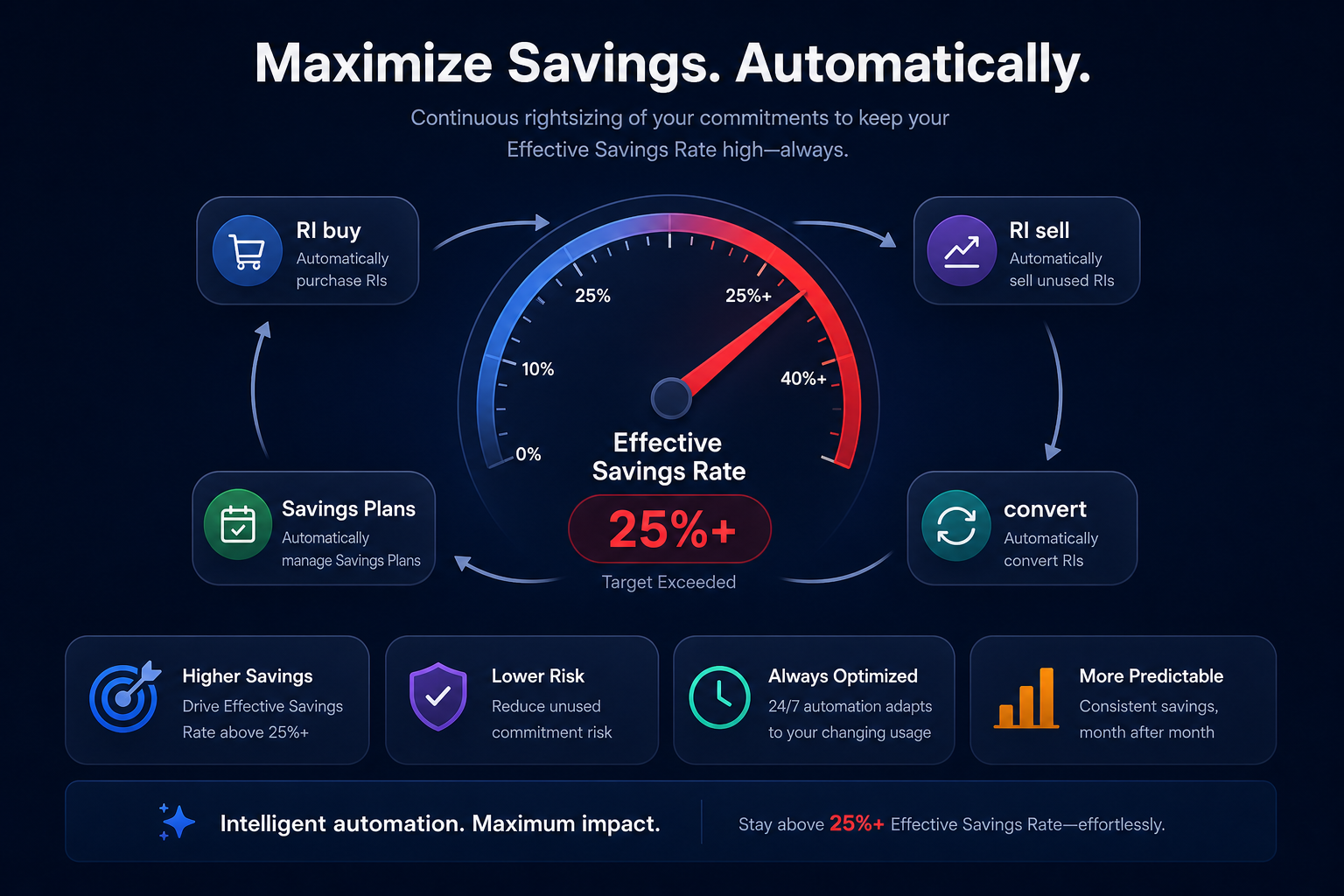
Whether you choose to hire a specialist or deploy an automated platform, you must measure success through the Effective Savings Rate (ESR). This metric provides a true look at your efficiency by calculating the actual percentage reduction you achieve versus standard On-Demand pricing.
Top-performing cloud teams consistently aim for an ESR of 25% or higher. Reaching this benchmark manually requires a relentless cycle of buying, selling, and converting RIs and Savings Plans to match shifting workloads. For many organizations, the labor required to maintain a high ESR is simply too intensive to perform manually. This reality is why even large enterprises spending over $50 million annually are increasingly adopting automated AWS FinOps strategies to handle the heavy lifting of commitment management on autopilot.
Automation versus headcount: finding the balance
Hiring a dedicated manager is a strategic move for cultural change, but it should not be viewed as a prerequisite for saving money. A human manager provides the most value when focusing on high-level strategy – aligning stakeholders, defining FinOps KPIs, and architecting for value. They should not have to spend their workdays manually clicking through dashboards or managing the lifecycle of Convertible RIs.
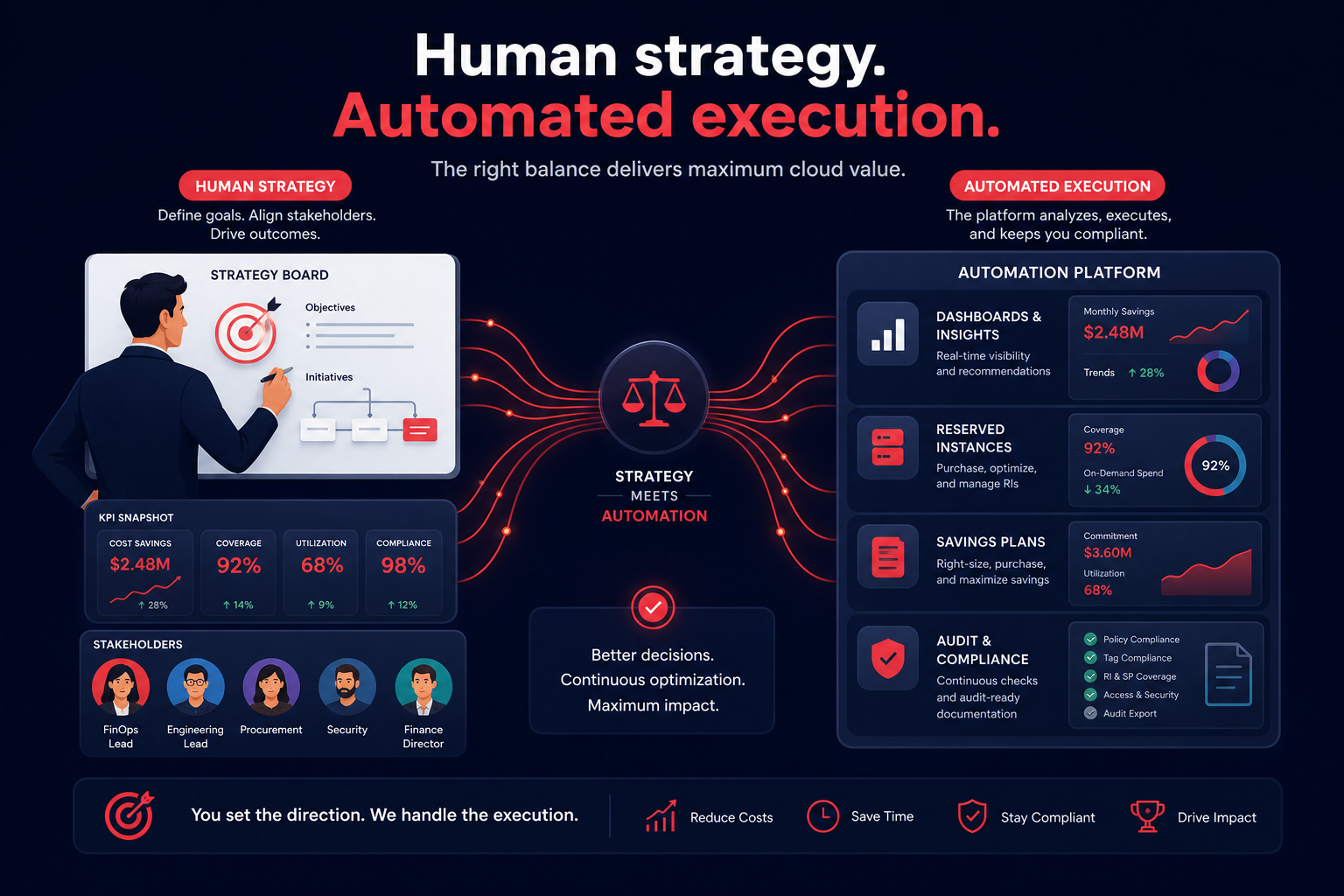
Hykell fills the execution gap by providing the technical precision that a manager would otherwise have to perform by hand. Our platform proactively reduces AWS costs by up to 40% without requiring ongoing engineering effort from your team. By managing RIs and Savings Plans in real-time and performing continuous cost audits, we ensure your infrastructure is optimized while your specialists focus on innovation.
If you are unsure if your current cloud spend justifies a new hire, you can use our cloud cost calculator to determine your potential savings. Hykell operates on a performance-based model, which means we only take a slice of what you save. If we do not deliver savings, you do not pay.
Take the first step toward reclaiming your cloud budget by using our savings calculator to see your potential 25–40% reduction, or contact the Hykell team for a comprehensive cost audit.