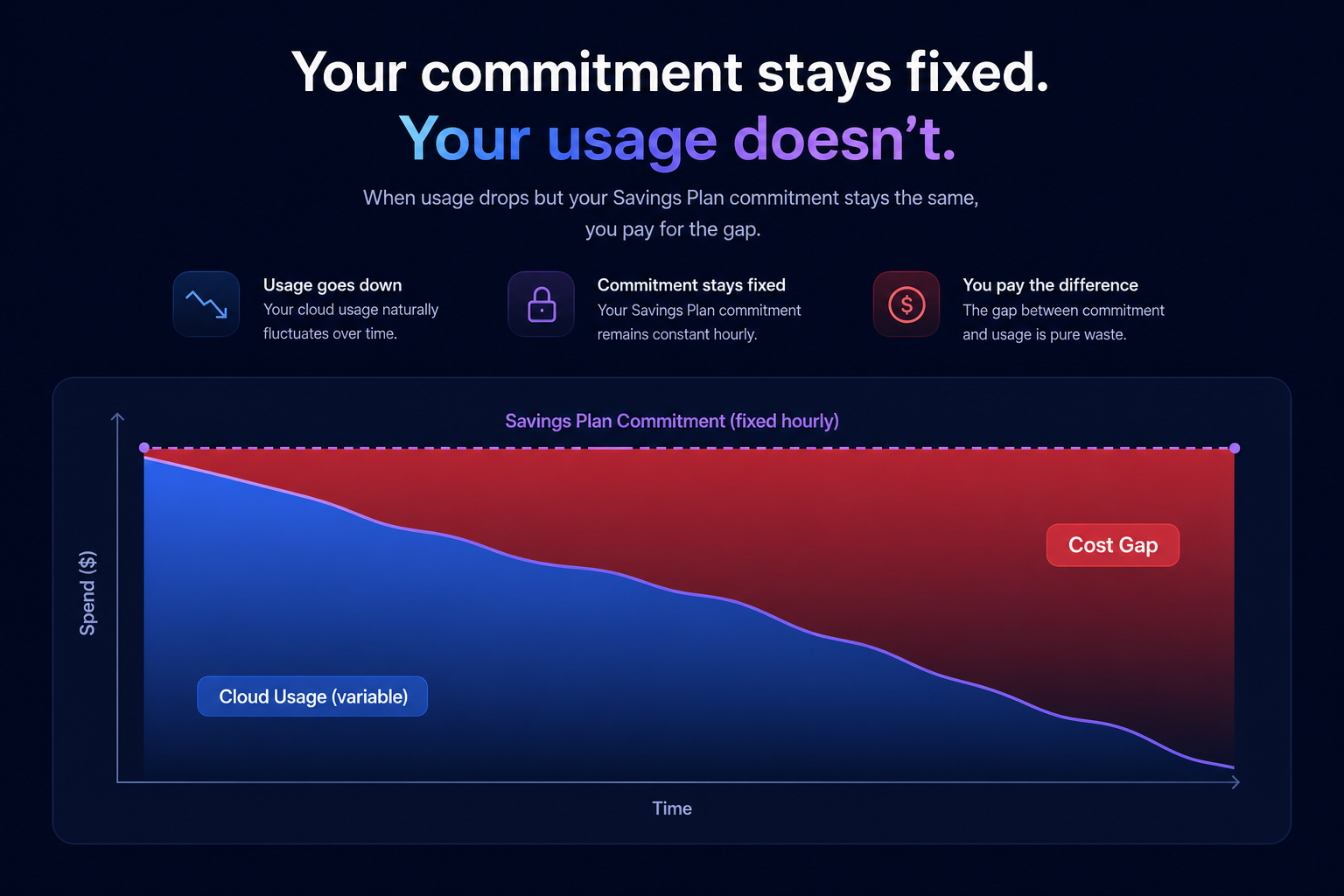
What happens to your AWS bill when your traffic drops but your Savings Plan commitment remains the same? It is a common financial trap: you find yourself paying for compute power you no longer use because AWS Savings Plans are “use it or lose it” hourly contracts.
If you scale down your infrastructure, your Savings Plan commitment remains a fixed cost. Unlike On-Demand instances, which you can terminate to stop billing immediately, a Savings Plan is a legal commitment to pay a specific dollar amount per hour for a one- or three-year term. If your actual usage falls below that hourly commitment, AWS still charges you the full amount you promised to pay according to the Savings Plans FAQ.
The financial implications of unused commitment
The core mechanism of a Savings Plan is the hourly commitment. Each hour acts as an independent bucket. If you commit to $10.00 per hour but only run $8.00 worth of compute, you lose that $2.00 difference. It does not roll over to the next hour, nor can you “credit” it against future spikes in usage.
When businesses scale down – perhaps due to a shift in architecture, a successful initiative for right-sizing your infrastructure, or a seasonal dip – the utilization of the Savings Plan drops. You can track this through the AWS Savings Plans utilization report, where 100% means you are using every penny of your commitment. Anything lower represents pure waste. Recent research indicates that 21% of enterprise cloud infrastructure spend is wasted on underutilized resources, and rigid commitments are a primary driver of this inefficiency.
Flexibility constraints and the lock-in effect
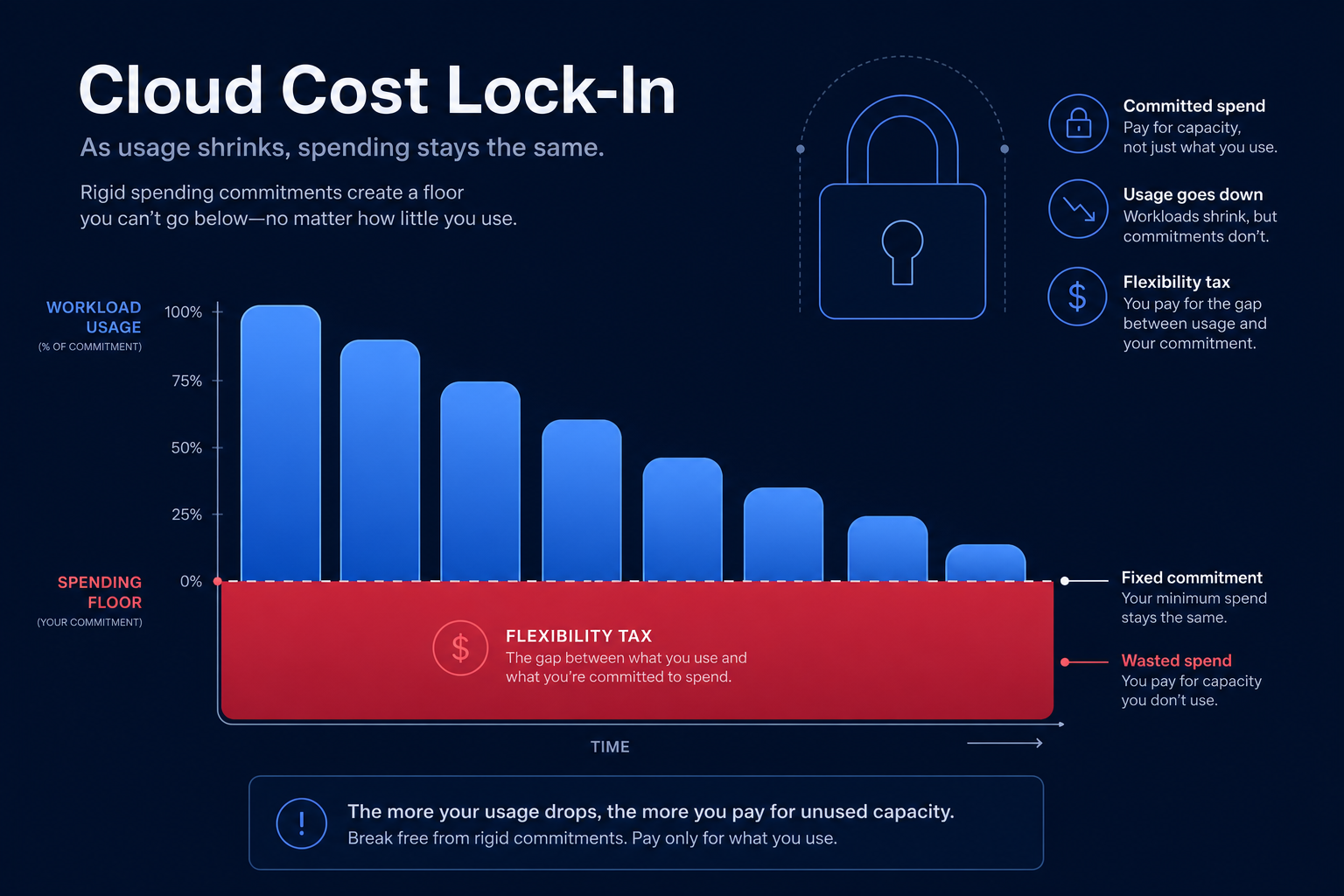
One of the biggest hurdles for FinOps teams is that you cannot modify, exchange, or cancel Savings Plans after the initial purchase window. While AWS recently introduced a 7-day window to return Savings Plans, you are locked into that spend for the duration of the 12- or 36-month term once those 168 hours have passed.
This creates a significant “flexibility tax.” While a Compute Savings Plan offers the flexibility to change instance families or shift from EC2 to Fargate, it offers zero flexibility regarding the total volume of spend. If your business needs to cut costs by 30% by reducing its footprint, a Savings Plan acts as a floor that prevents those savings from reaching your bottom line. Furthermore, unlike Standard Reserved Instances (RIs), which can be sold on the AWS RI Marketplace, there is no secondary market for Savings Plans. You cannot offload an unused commitment to another user.
Why 1-year plans often fail to mitigate risk
Many organizations opt for 1-year plans to mitigate the risk of scaling down, but this often results in a low discount ceiling. These plans typically cap savings at 20–25% for steady workloads, creating a difficult dilemma: you must choose between committing to three years for a 72% discount and risking massive waste, or staying with one-year plans and leaving significant money on the table.
Static commitments struggle to follow dynamic workloads. When you manage these manually via spreadsheets, your AWS commitment management often becomes a choice between paying full On-Demand prices or paying for “zombie” capacity that isn’t actually running.
Breaking the lock-in with automated rate optimization
The most effective way to maintain the ability to scale down without losing money is to move away from static, manual commitments. Hykell helps businesses achieve an Effective Savings Rate (ESR) of 50–70% by using an AI-driven approach to automated AWS rate optimization.
Instead of locking you into a single, rigid Savings Plan, Hykell dynamically blends different discount instruments. By stacking Savings Plans with Convertible and tradable Reserved Instances, our platform buys, sells, and converts commitments as your workloads shift. If you scale down your usage, the system can offload unneeded RIs on the secondary market – a level of liquidity that a standard Savings Plan does not allow.
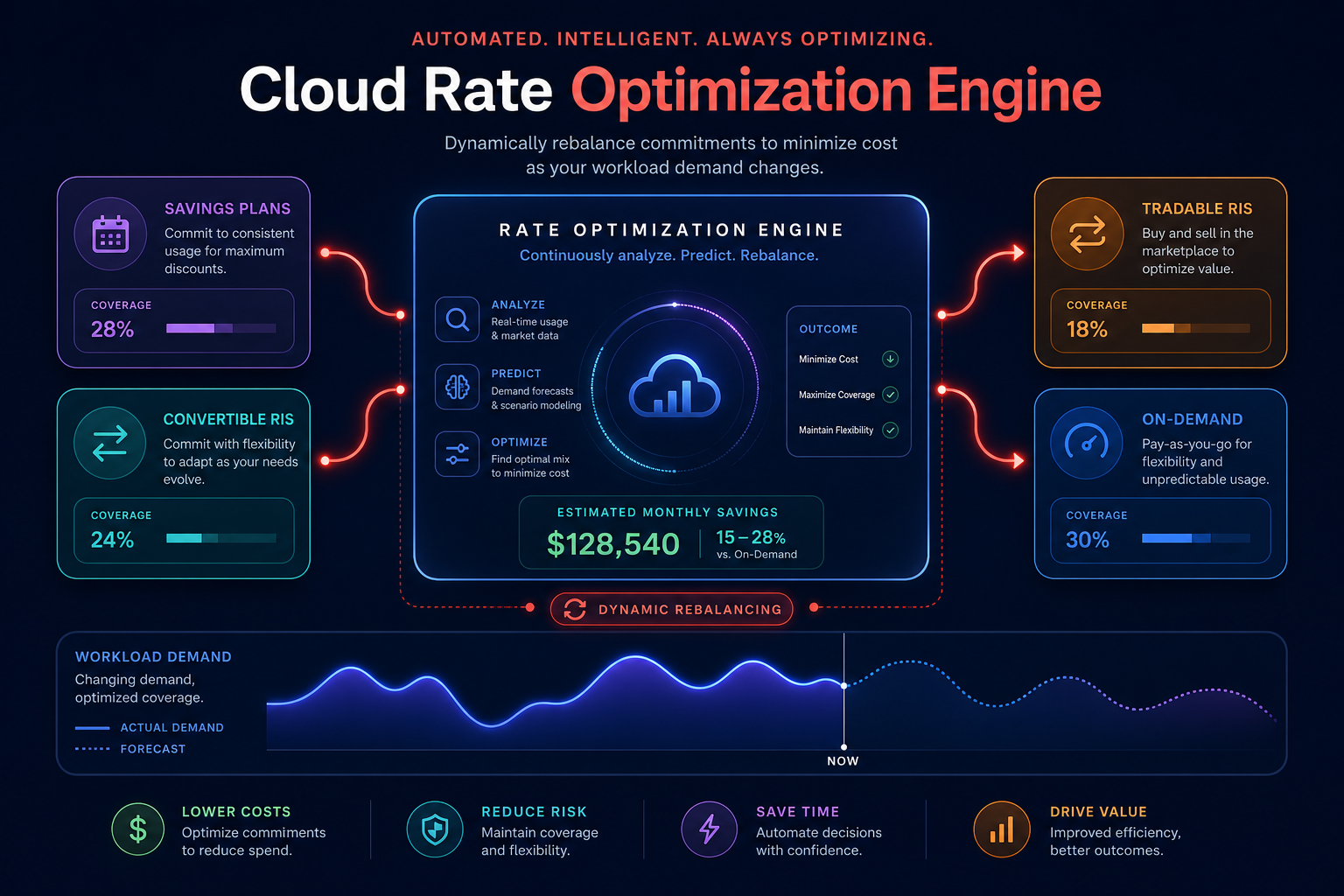
This autopilot approach allows you to:
- Reduce total AWS compute costs by up to 40% without ongoing engineering effort.
- Maintain high discount coverage even as your infrastructure evolves or shrinks.
- Eliminate the flexibility tax associated with long-term, unchangeable contracts.
- Ensure your commitments match your actual usage in real-time.
Don’t let yesterday’s commitments dictate today’s budget. If you are concerned that your current Savings Plan is preventing you from realizing the full benefits of scaling down, use the AWS Savings Plan calculator to see how much you could save by automating your commitment strategy.