Is your AWS bill growing faster than your user base? Most engineering leaders are trapped in a cycle of visibility without action, watching dashboards while 30% of their cloud spend evaporates into idle resources. To stop the bleed, you must move beyond simple monitoring.
Navigating the Gartner framework for cloud financial management
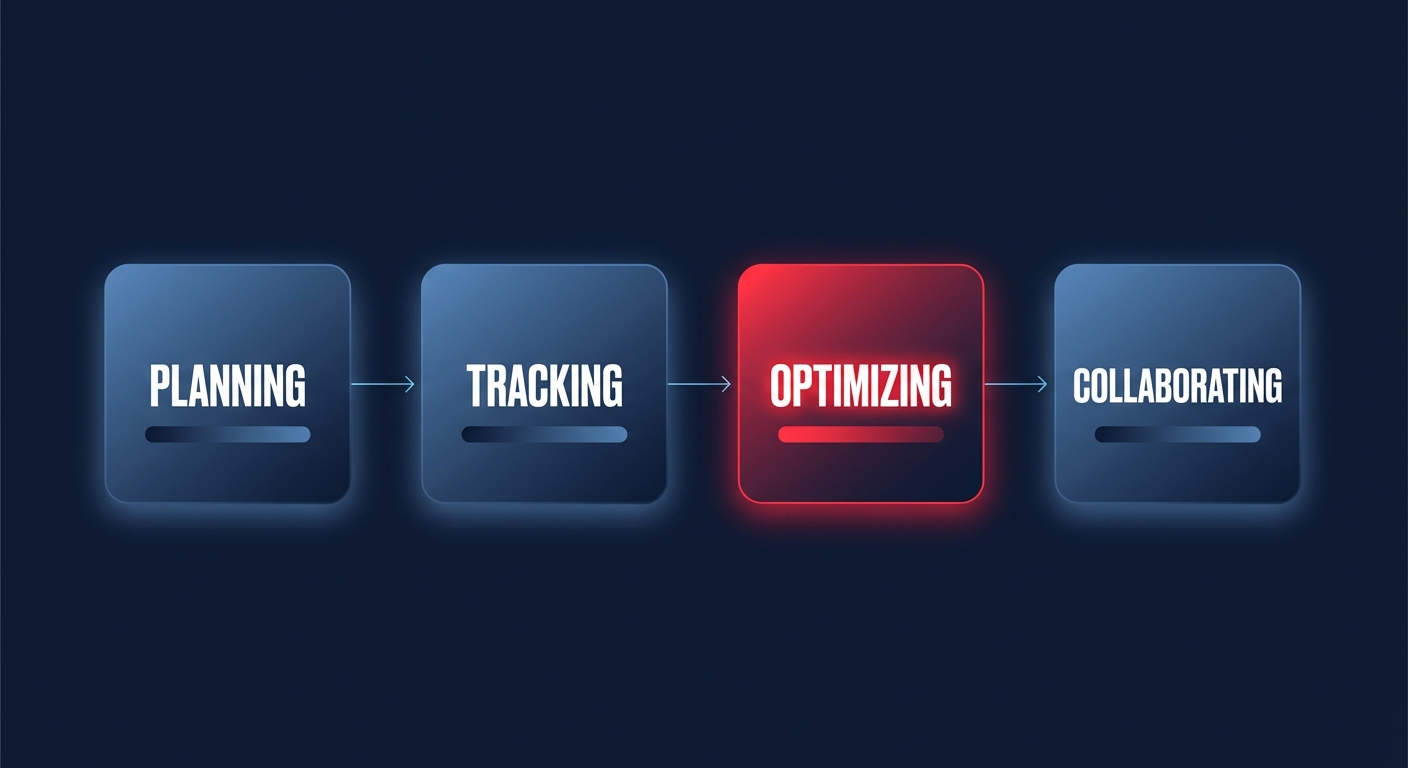
Gartner’s framework for public cloud financial management provides a structured path for FinOps maturity, categorized into four critical stages: planning, tracking, optimizing, and collaborating. While most companies excel at tracking via basic dashboards, the optimizing phase is where the most significant ROI remains locked. In an era where Gartner forecasts worldwide public cloud spending to reach nearly $600 billion, failing to advance past mere visualization means leaving a substantial portion of your budget on the table.
For AWS-centric organizations, the challenge isn’t a lack of data; it’s the transition from insight to execution. Gartner emphasizes that effective cloud cost management platforms must provide more than just reports – they must facilitate cross-team collaboration and drive changes that align with business goals. When you are evaluating tools, you must determine if a solution merely identifies waste or if it provides the automated cloud cost optimization required to remediate it. Moving from awareness to action requires tools that don’t just point out problems but actively solve them through algorithmic precision.
Identifying the engineering gap in AWS-native tools
AWS provides a robust baseline of native tools designed to help you manage spend. AWS Cost Explorer is excellent for retrospective analysis and visualization, offering up to 38 months of historical data to help you understand where your money went. To complement this, AWS Budgets functions as your financial guardrail, alerting you when spending or usage exceeds defined thresholds. While these tools provide a necessary foundation, they often fall short when your infrastructure reaches a certain scale or complexity.
The primary limitation of native tools is the engineering gap – the manual effort required to act on recommendations. For instance, AWS Trusted Advisor and Compute Optimizer can identify oversized instances, but your DevOps team must still manually right-size those resources, migrate EBS volumes, or adjust auto-scaling groups. Furthermore, native billing data often has a 24-hour delay. This latency can be catastrophic during a cost anomaly event where minutes matter. Even with AWS Cost Anomaly Detection, the lack of deep pod or namespace visibility makes it difficult to manage the granular costs of modern Kubernetes environments without significant manual intervention.
Evaluating third-party tools: From visibility to automation
When moving beyond native tools, the market splits into two categories: visibility platforms and automation engines. Visibility platforms like Vantage or CloudHealth provide a single pane of glass for multi-cloud environments. These are essential for CFOs needing to implement cloud chargeback and showback strategies across various departments to ensure departmental accountability. However, visibility alone does not lower the bill; it simply makes the overspending easier to witness.
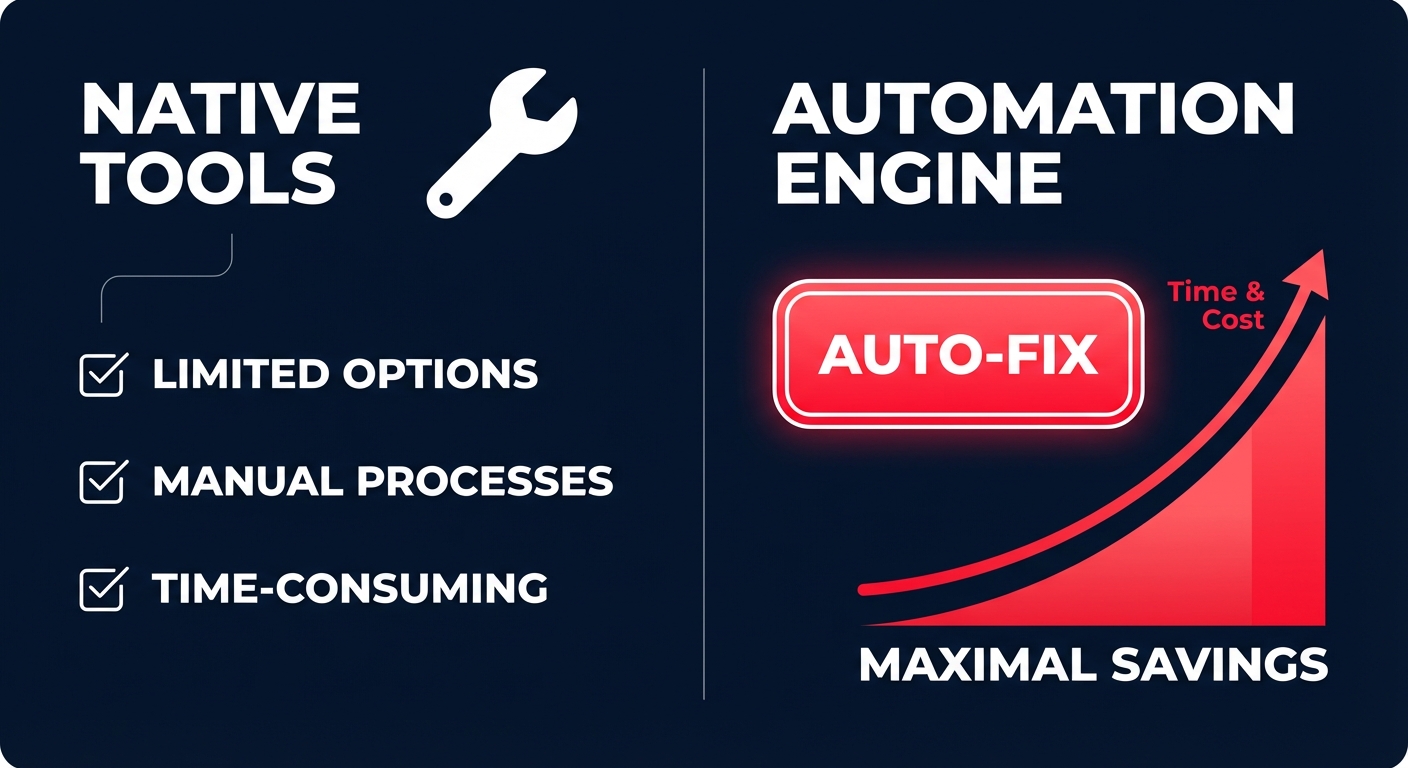
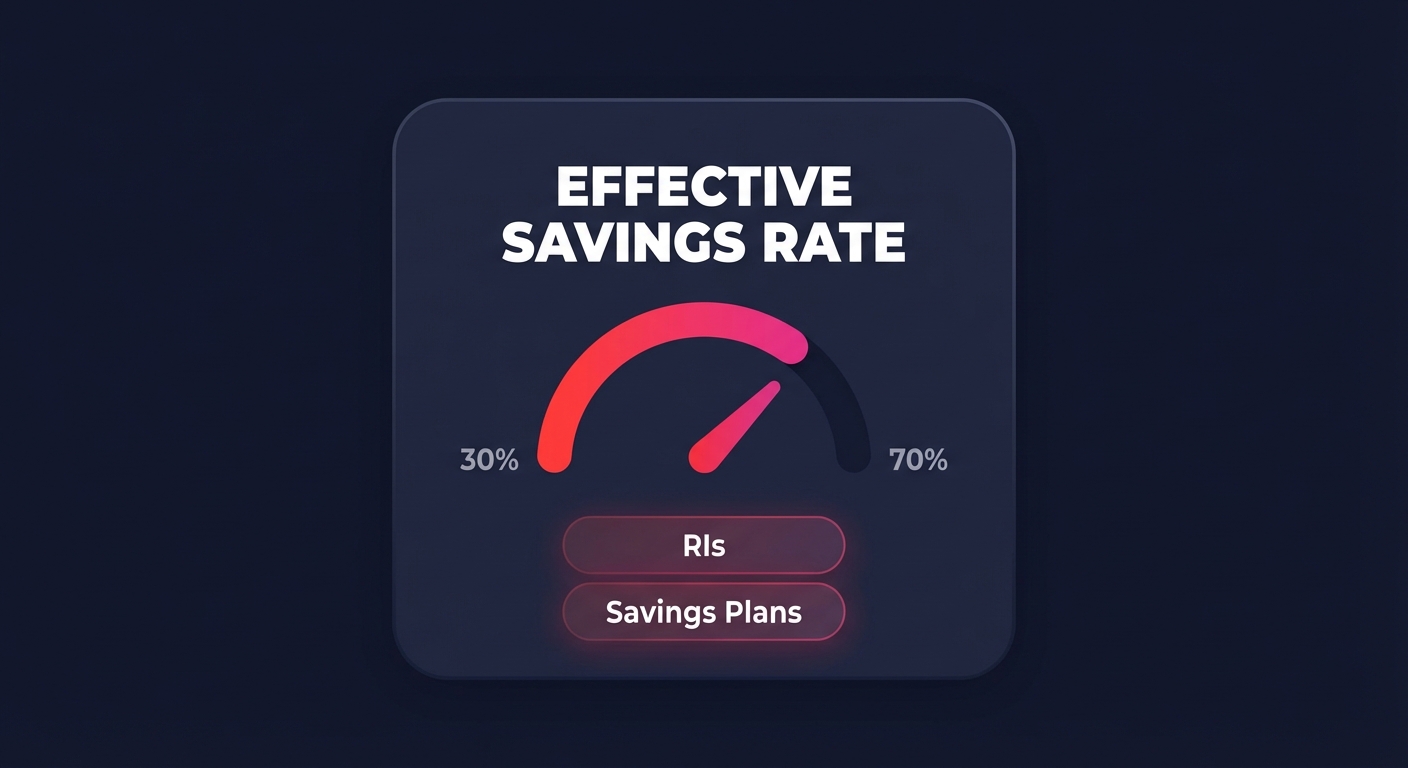
Automation engines represent the next step in FinOps maturity. Instead of handing your DevOps team a to-do list of hundreds of rightsizing tasks, these tools execute the changes on your behalf. This is where Hykell differentiates itself. By focusing on AWS rate optimization, Hykell manages the complex blend of Reserved Instances (RIs) and Savings Plans (SPs) to boost your Effective Savings Rate (ESR) to 50–70%. This automated approach eliminates the manual risk of purchasing commitments that may not align with your future usage patterns.
Why Hykell belongs in your AWS cost optimization stack
Hykell is designed for engineering leaders who want the results of a comprehensive cloud cost audit without the ongoing manual effort. Unlike traditional tools that charge a percentage of your total cloud spend – effectively taxing your growth – Hykell operates on a performance-based pricing model. You only pay a slice of what you actually save, which perfectly aligns our incentives with your financial goals.
Hykell fits into a modern AWS stack by automating the highest-impact levers that engineers typically overlook due to lack of time. Our platform identifies and terminates zombie resources while automatically right-sizing over-provisioned EC2 and EBS volumes. Additionally, because moving to ARM-based processors can offer 40% better price-performance, Hykell helps accelerate your Graviton gains by identifying compatible workloads and managing the transition for you.
To ensure transparency throughout this process, our real-time observability dashboard provides role-specific views for CFOs, FinOps managers, and DevOps leads. This ensures that every stakeholder has the context they need to validate savings as they happen. By putting your cloud cost governance on autopilot, you allow your engineers to focus on shipping features and driving innovation rather than managing instance types and commitment coverage.
Effective AWS cost optimization is no longer about just watching the spend; it is about building a stack that acts on your behalf. If you are ready to stop the manual firefighting and start seeing real results for your business, it is time to move toward an automated approach. Explore how Hykell can reduce your AWS bill by up to 40% with zero upfront risk by checking out our AWS optimization services today.