Did you know that 30% of organizations waste their cloud budget on resources they don’t even use? Most AWS bills balloon because of systemic oversight rather than a lack of engineering effort. Building a governance framework is the only way to stop the bleed.
Why cloud cost governance is the foundation of FinOps
Cloud cost governance is more than just a cost-cutting exercise; it is the foundation for maximizing the business value of every dollar spent on infrastructure. According to the principles of FinOps, effective governance requires a shift from reactive firefighting to a proactive, data-driven culture. Without a framework, engineers often provision resources in a vacuum, leaving finance to struggle with unpredictable invoices. This lack of visibility allows “unallocated” spend to grow until it consumes nearly half of the total budget.
Research shows that the average AWS environment has 35% of its resources underutilized. A practical framework provides the guardrails necessary to identify this waste and ensure that cloud cost budgeting and forecasting remain accurate as your organization scales.
The three pillars of a practical governance framework
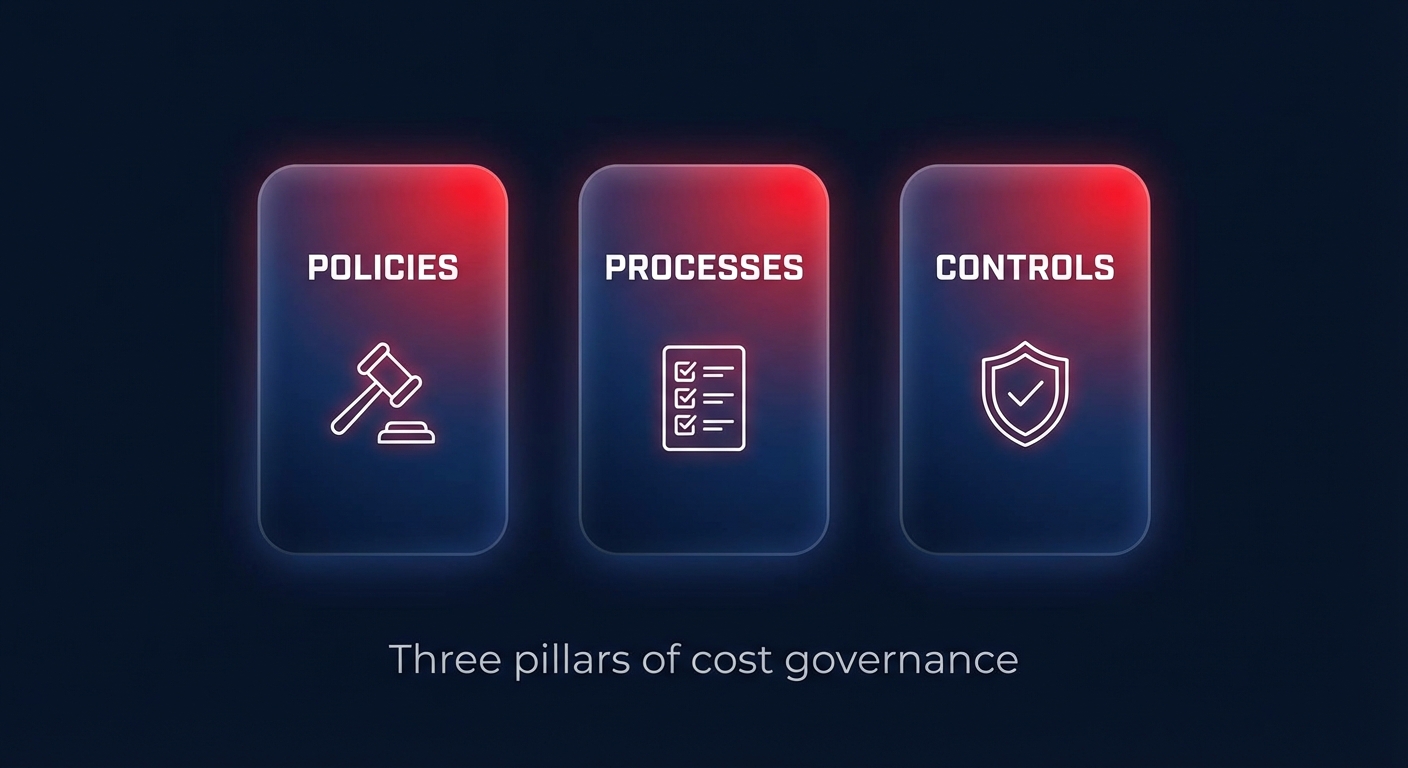
A robust framework consists of three essential elements: policies that define the rules, processes that implement them, and controls that enforce them. Your policies serve as the “laws” of the cloud environment, defining resource provisioning standards, mandatory AWS cost allocation tags, and budget thresholds. For instance, a policy might dictate that any resource lacking an “Owner” or “CostCenter” tag is subject to automatic termination within a specific grace period.
Processes for accountability
Governance fails when treated as a one-time event, so you must establish repeatable processes. This includes performing systematic cloud cost audits to identify cloud cost anomalies and orphan resources. Implementing chargeback and showback strategies also helps direct financial accountability back to the teams driving the spend. Showback is often the best starting point for building awareness before moving to hard financial chargebacks. Furthermore, regular reviews ensure that your Reserved Instance (RI) utilization consistently meets targets, which are typically set above 80%.
Controls and enforcement
Controls provide the mechanisms that prevent policy violations before they impact your bill. This involves using AWS Organizations with Service Control Policies (SCPs) to deny the creation of untagged resources or setting up automated tagging enforcement via AWS Config. These guardrails ensure that the framework remains operational even as deployment speeds increase, moving your team from manual detection to automated prevention.
Essential tools for AWS cost visibility and control
Operationalizing your framework requires a mix of native AWS tools and specialized observability platforms. For retrospective analysis, AWS Cost Explorer remains the standard for identifying long-term drivers of spend and historical trends. Conversely, AWS Budgets provides the proactive alerts necessary to track spend against predefined limits, ensuring that invoices never come as a surprise at the end of the month.
For more specific, actionable steps, AWS Trusted Advisor offers cost optimization recommendations for rightsizing and idle resource cleanup. However, native tools sometimes lack the granularity needed by engineering leaders to make fast decisions. Building automated cost dashboards with Amazon QuickSight or Grafana can bridge the gap between technical metrics and business outcomes, providing a unified view of the entire infrastructure across multiple accounts.
KPIs to measure governance success
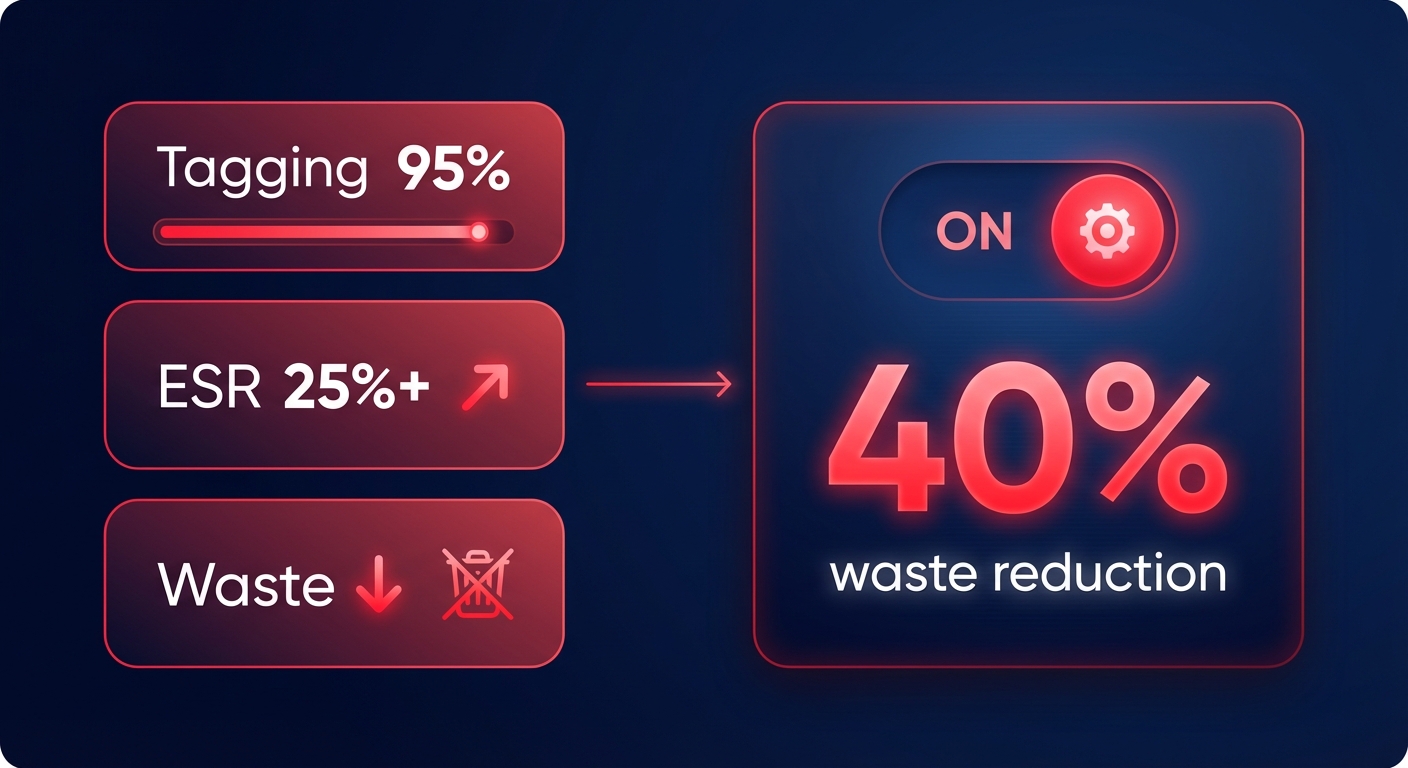
You cannot manage what you do not measure, so a successful governance framework must track specific AWS KPIs to demonstrate ROI. One of the most critical metrics is the Effective Savings Rate (ESR), which measures the actual discount achieved across all compute spend. Mature teams typically aim for an ESR of 25% or higher.
Other essential metrics to track include:
- Tagging compliance, with a target of at least 95% coverage to eliminate blind spend.
- Unit cost, which tracks the cost per business transaction to ensure spend scales efficiently with revenue.
- Waste percentage, representing the ratio of idle or over-provisioned resources to total spend.
- Savings Plan and RI coverage, ensuring you are maximizing available discounts for stable workloads.
Bridging the gap with automated governance
The primary challenge for engineering leaders is the significant “engineering lift” required to maintain governance manually. Chasing engineers to tag resources or rightsize EBS volumes often takes a backseat to shipping new features. This is where automation becomes a force multiplier by handling the most labor-intensive parts of the governance framework.
Hykell automates these tasks by operating on autopilot, continuously monitoring your environment to identify underutilized resources. The platform applies rate optimization strategies without requiring code changes or manual intervention. Whether the goal is accelerating Graviton adoption or rightsizing EC2 fleets, automation ensures your governance policies are enforced 24/7. This allows your team to focus on innovation while Hykell transforms your AWS environment into a lean, value-driving machine.
Effective governance is a continuous cycle of informing, optimizing, and operating. By defining clear roles, utilizing the right tools, and embracing automation, you can eliminate the waste that plagues most cloud budgets. If you are ready to see how much you could be saving, you can calculate your potential savings with Hykell and discover how to reduce your AWS bill by up to 40% with zero engineering effort.