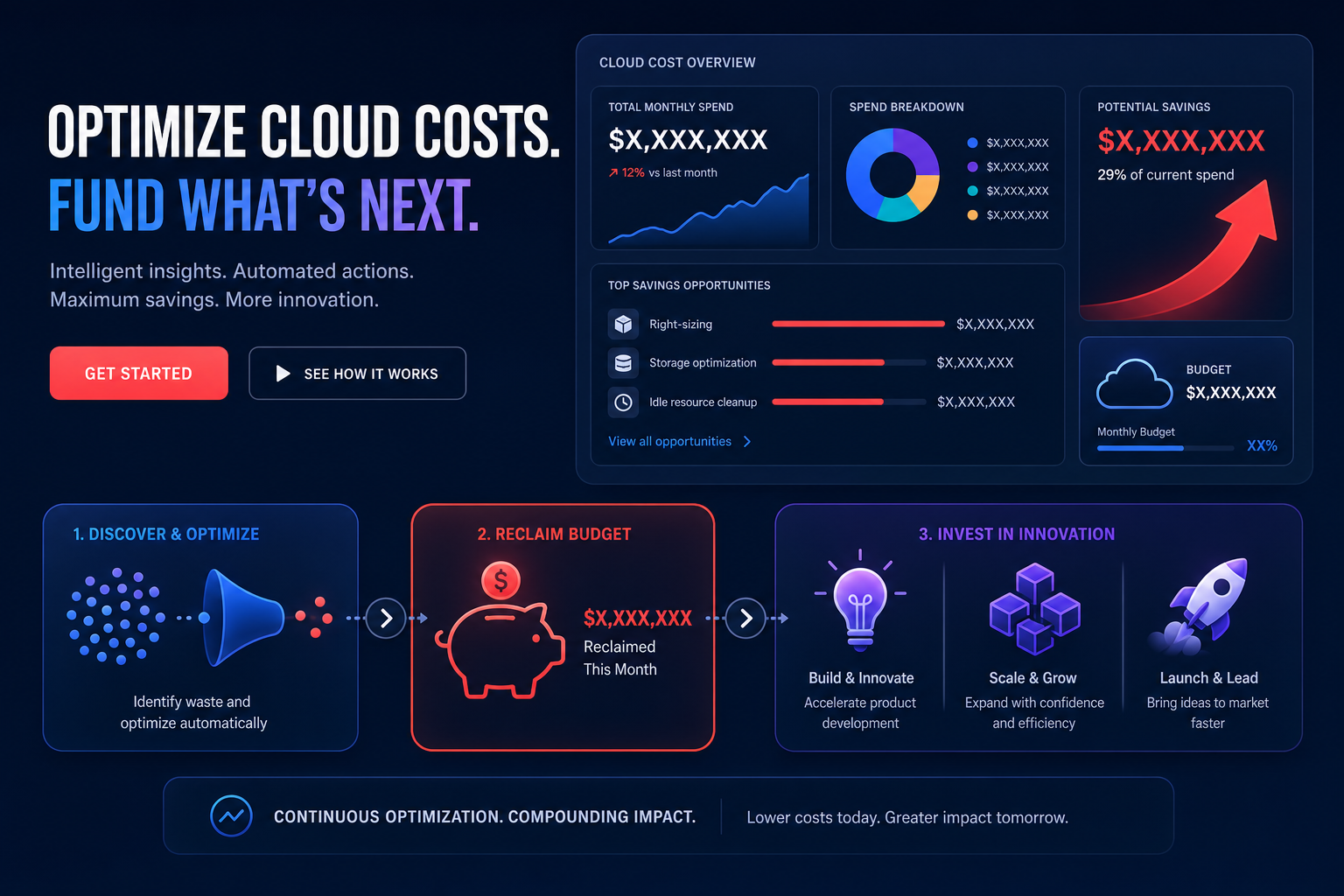
Cloud spending is no longer a line item you can ignore. As organizations scale, the “cloud tax” – the portion of the budget lost to inefficiencies – often grows faster than the business itself. Research indicates that organizations worldwide lose over $160 billion each year to inefficient cloud resource management, with nearly 32% of cloud budgets wasted on idle or over-provisioned resources.
For business leaders, building a business case for AWS cost optimization is not just about cutting expenses; it is about reclaiming capital to fund innovation. To move from reactive firefighting to strategic financial management, you must align financial metrics with stakeholder goals and demonstrate a clear path to return on investment (ROI).
The financial metrics that matter to leadership
A compelling business case begins with the right data. While your AWS bill provides thousands of line items, leadership needs a synthesized view of efficiency. Moving beyond “total spend” allows you to treat cloud costs as a lever for growth rather than a fixed overhead.
- Effective Savings Rate (ESR): This is the “north star” metric for AWS rate optimization. It measures the true percentage reduction you achieve versus standard on-demand prices. While industry averages for mature teams sit around 25%, top-performing organizations leveraging automated commitment blending can achieve an ESR of 50–70% or higher.
- Unit Economics: This involves translating raw AWS spend into business value, such as cost per customer or infrastructure spend as a percentage of revenue. Tracking these metrics ensures that as your user base grows, your infrastructure scales efficiently rather than exponentially.
- Resource Utilization Rate: Most AWS environments operate at an average CPU utilization of only 30–40%. Proving that you are paying for “zombie” capacity that sits idle most of the day is often the strongest justification for investing in automated rightsizing.
- Budget vs. Actual Variance: Consistent overruns create friction between finance and engineering. A strong business case highlights how optimization tools provide the real-time observability needed to bring predictability to the quarterly forecast and identify the drivers of unexpected spikes.
Quantifying the ROI of optimization
To secure buy-in, you must present a realistic ROI projection. High-performing cloud cost strategies generally focus on three main pillars of savings: rate optimization, rightsizing, and architectural modernization. Automated rate optimization offers the most immediate ROI because it requires zero engineering effort. By programmatically managing a blended portfolio of Reserved Instances (RIs) and Savings Plans, Hykell delivers savings of 30–60% on compute without the risk of long-term lock-in.
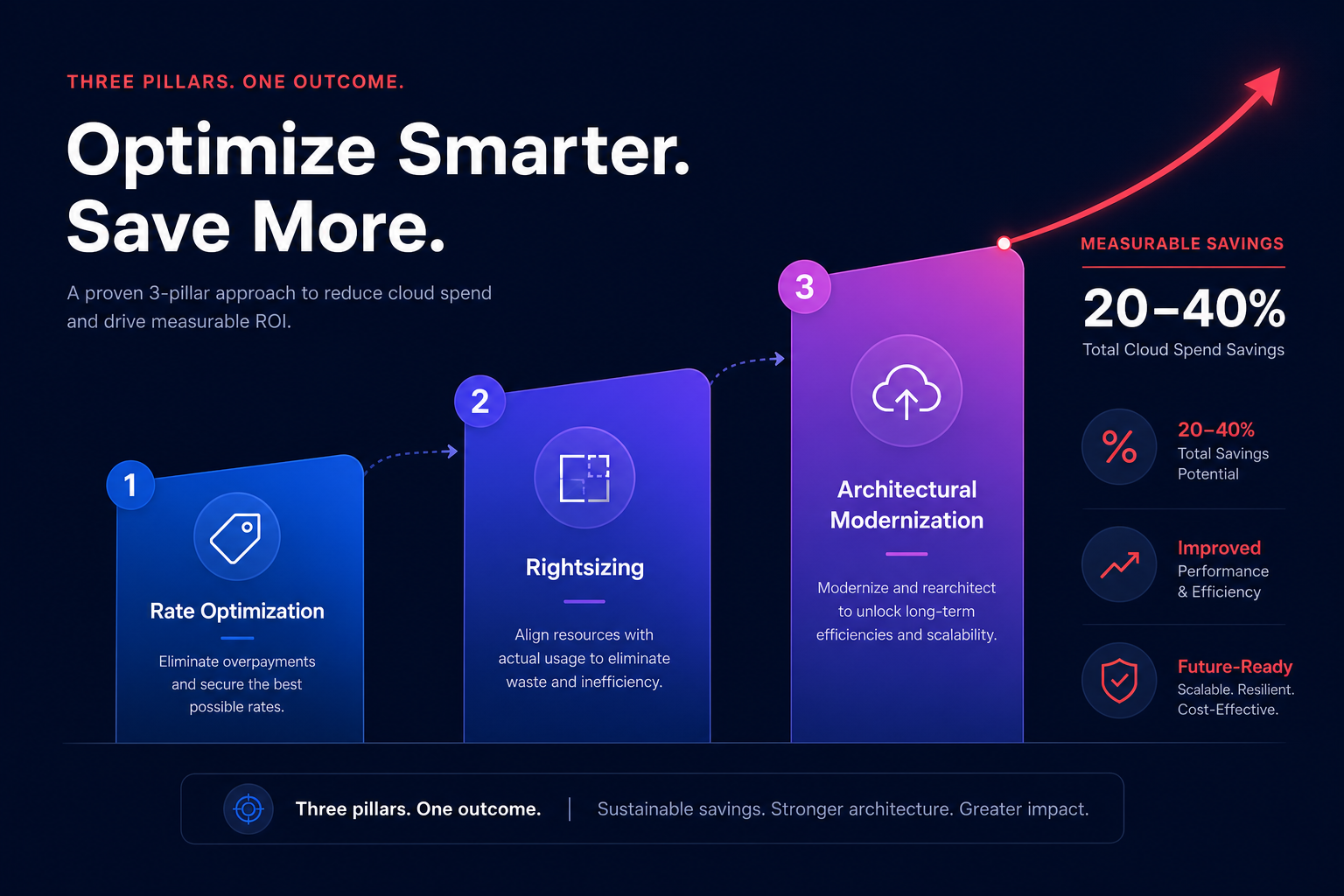
Architectural shifts, such as accelerating Graviton gains, offer a 40% better price-performance ratio over traditional x86 instances. When you combine these gains with storage optimization – such as moving from gp2 to gp3 EBS volumes or implementing S3 Intelligent Tiering – you can reduce your overall AWS bill by up to 40% on autopilot. You can use an AWS cost savings calculator to model these potential returns based on your specific usage patterns and commitment coverage.
Aligning stakeholders across the organization
A business case only succeeds if it solves the primary pain points of every department involved. For the CFO and finance team, the priority is predictability and margin. They want to know that every dollar spent is delivering value. You should frame the conversation around “recovered capital” and the elimination of unallocated line items, which can consume up to 50% of cloud budgets if resources are not properly tagged and tracked.
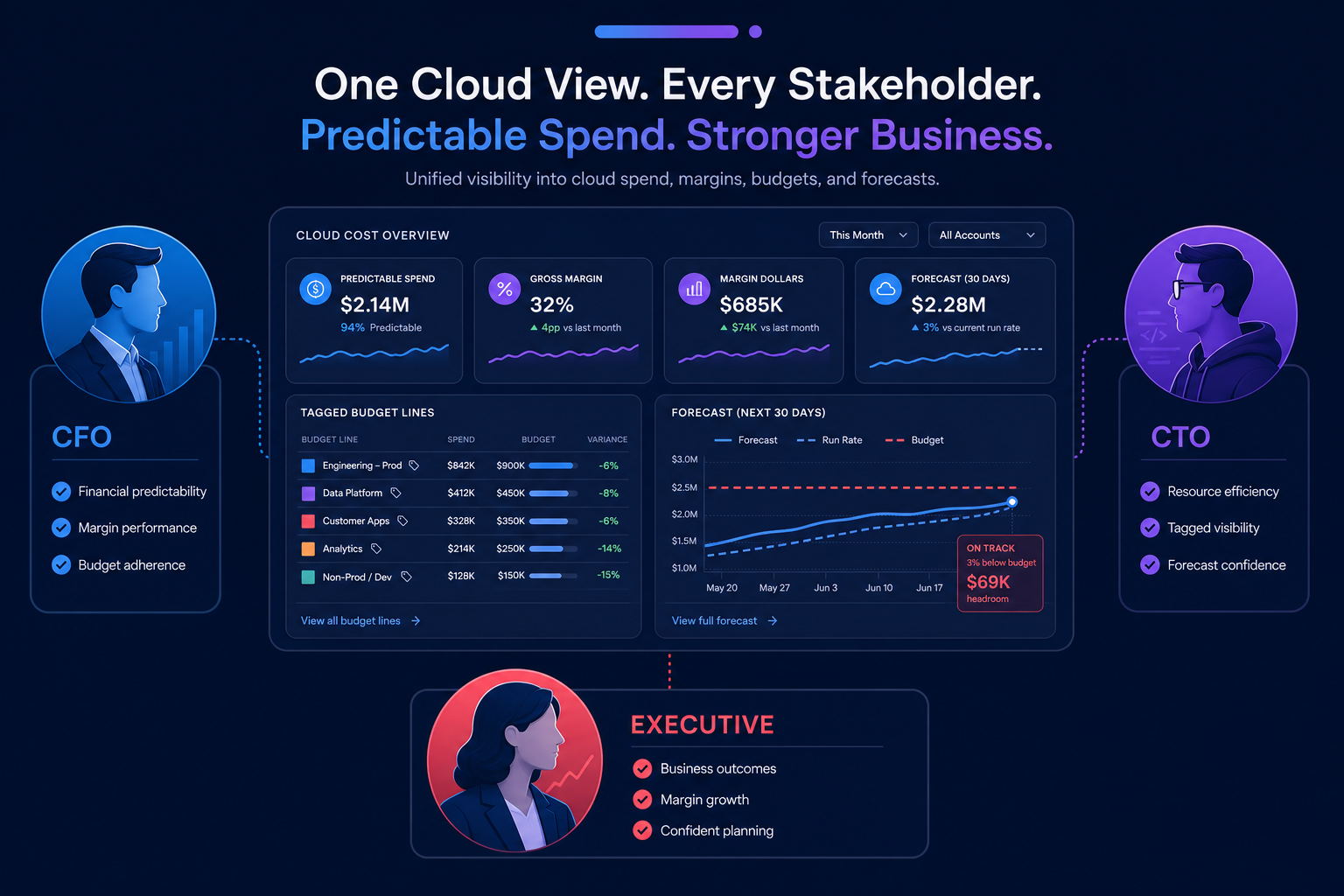
For the CTO and engineering leadership, the concern is usually “engineering lift.” Traditional cost-cutting often requires developers to stop building features to manually rightsize instances or manage storage lifecycles. The business case should emphasize automated cloud optimization services that operate in the background. This “zero-touch” approach allows the DevOps team to focus on scalability and performance while the system handles the financial heavy lifting.
For executive leadership, the focus is on business agility. Efficient cloud spend means having the financial flexibility to pivot, launch new products, or survive market volatility. When you can prove that optimization leads to a more competitive cost structure, the business case becomes a strategic priority rather than a technical chore.
Solving the build vs. buy dilemma
Many organizations attempt to build internal FinOps teams to manage costs manually. However, the manual effort required to manage thousands of instances and fluctuating rates is often unsustainable and prone to human error. Manual optimization is episodic, whereas cloud spend is continuous; by the time a person identifies a saving opportunity, the workload may have already changed.
By leveraging automated AWS cost optimization solutions, you eliminate the delay that leads to waste. Hykell’s approach removes the financial risk of optimization by using a performance-based fee model: we only take a slice of what you actually save. If you do not save, you do not pay. This model simplifies the business case by turning the optimization project into a self-funding initiative that requires no upfront budget.
Building a business case for AWS cost optimization is about more than just a lower invoice; it is about establishing a culture of cloud financial management that supports long-term growth. By focusing on high-impact metrics like ESR and unit economics, you can prove that efficiency is the fastest path to innovation.
Ready to see how much your organization could save? Calculate your potential AWS savings today or contact our experts for a detailed cost audit.