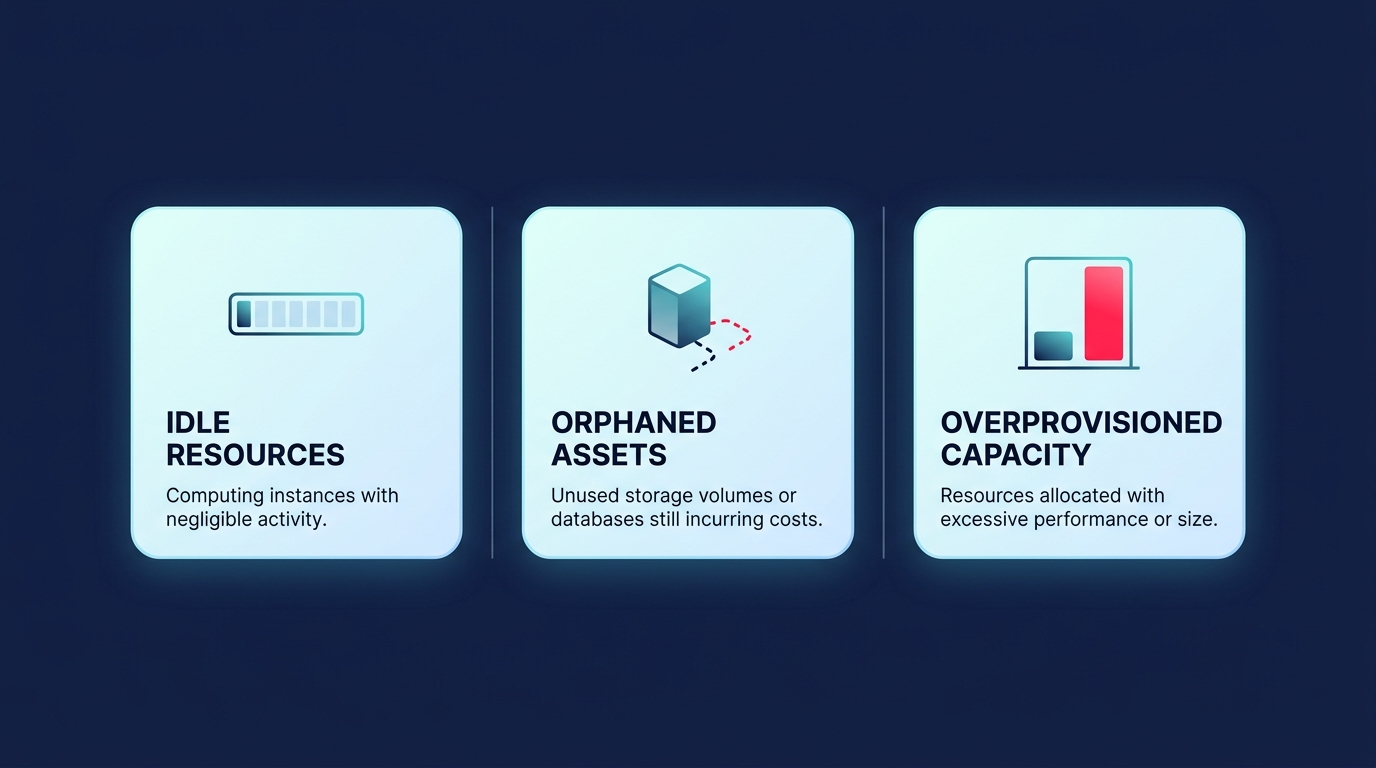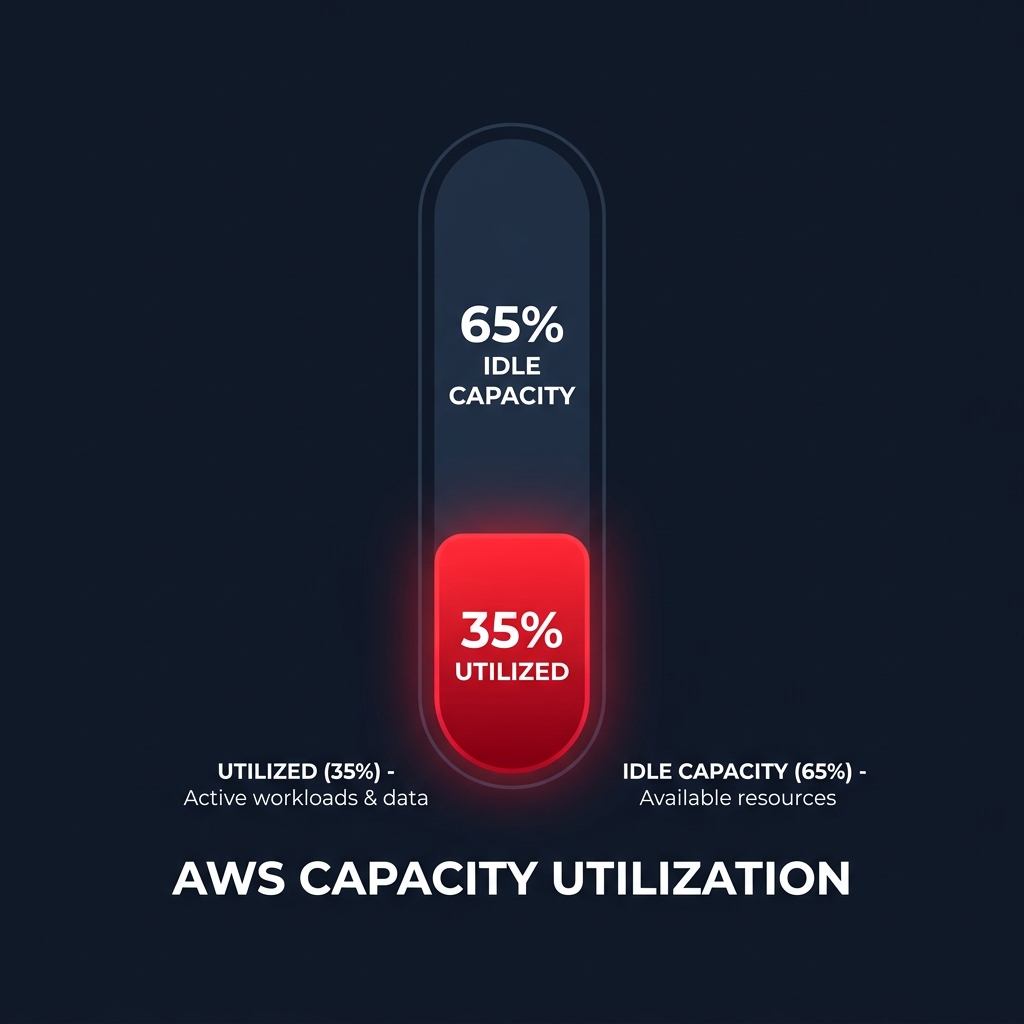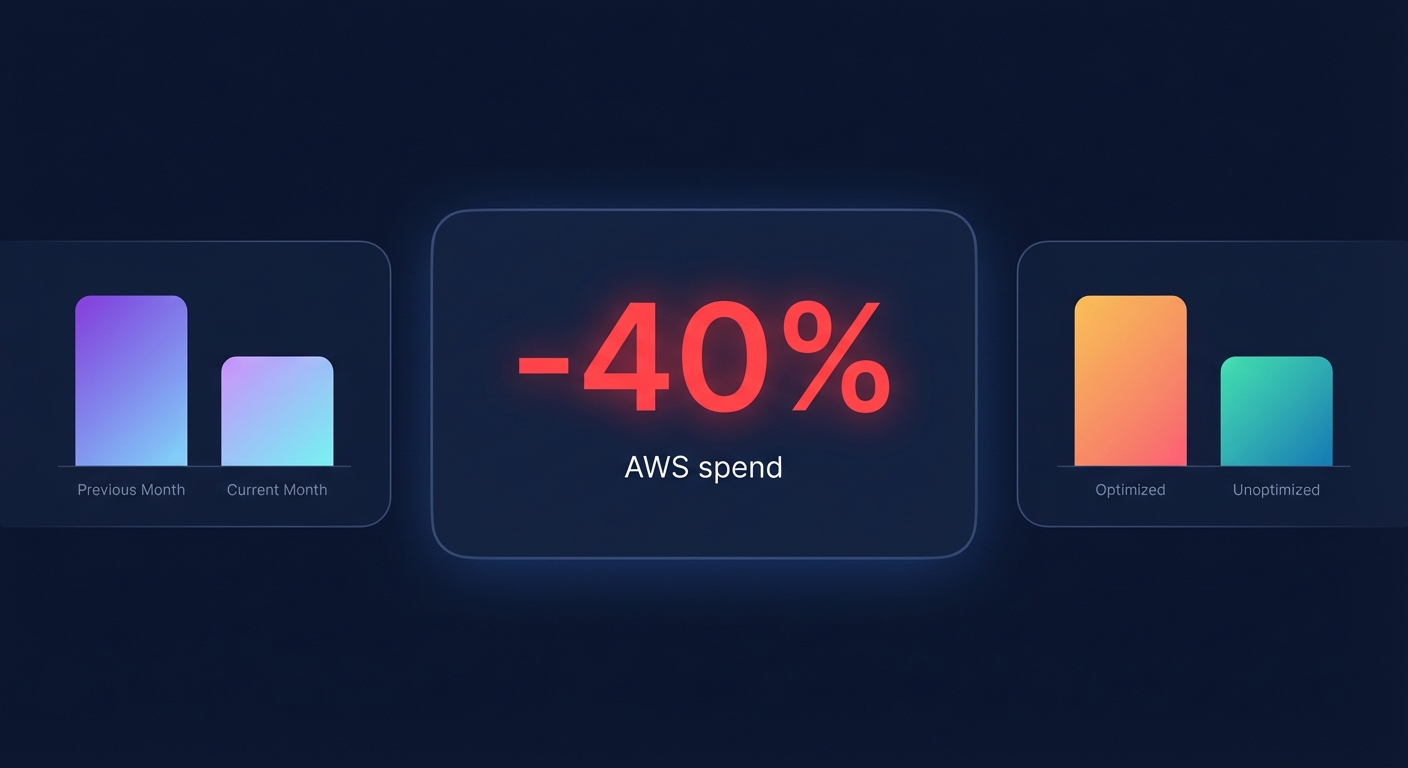
Are you still paying for peak capacity you rarely use? Most organizations waste 30% or more of their cloud budget on idle resources and inefficient pricing models. You can reclaim up to 40% of your spend by shifting from manual tracking to automated cloud cost optimization best practices.
Build a foundation with visibility and governance
Before you can optimize, you must understand where your money is going. Large unallocated line items can consume up to 50% of cloud budgets when teams lack a robust AWS cost allocation tags strategy. By implementing a taxonomy that covers business, technical, and automation tags, you convert a vague invoice into actionable FinOps data. Consistency is crucial here because AWS tags are case-sensitive; a global naming convention ensures that your “CostCenter” tag doesn’t get fragmented into multiple categories, which would obscure your true spending patterns.
Many engineering teams rely on AWS Cost Explorer for retrospective analysis and AWS Budgets for forward-looking alerts. While these tools provide essential visibility, they are primarily informational and do not fix the underlying waste. To move from reactive firefighting to proactive control, you need a cloud cost governance framework that enforces provisioning standards and automated remediation. This structure helps prevent the “zombie costs” often found in AWS CloudWatch Logs pricing, where ingestion fees can represent up to 30% of a monthly bill if logs are stored indefinitely without expiration policies.
Optimize workloads through rightsizing and elasticity
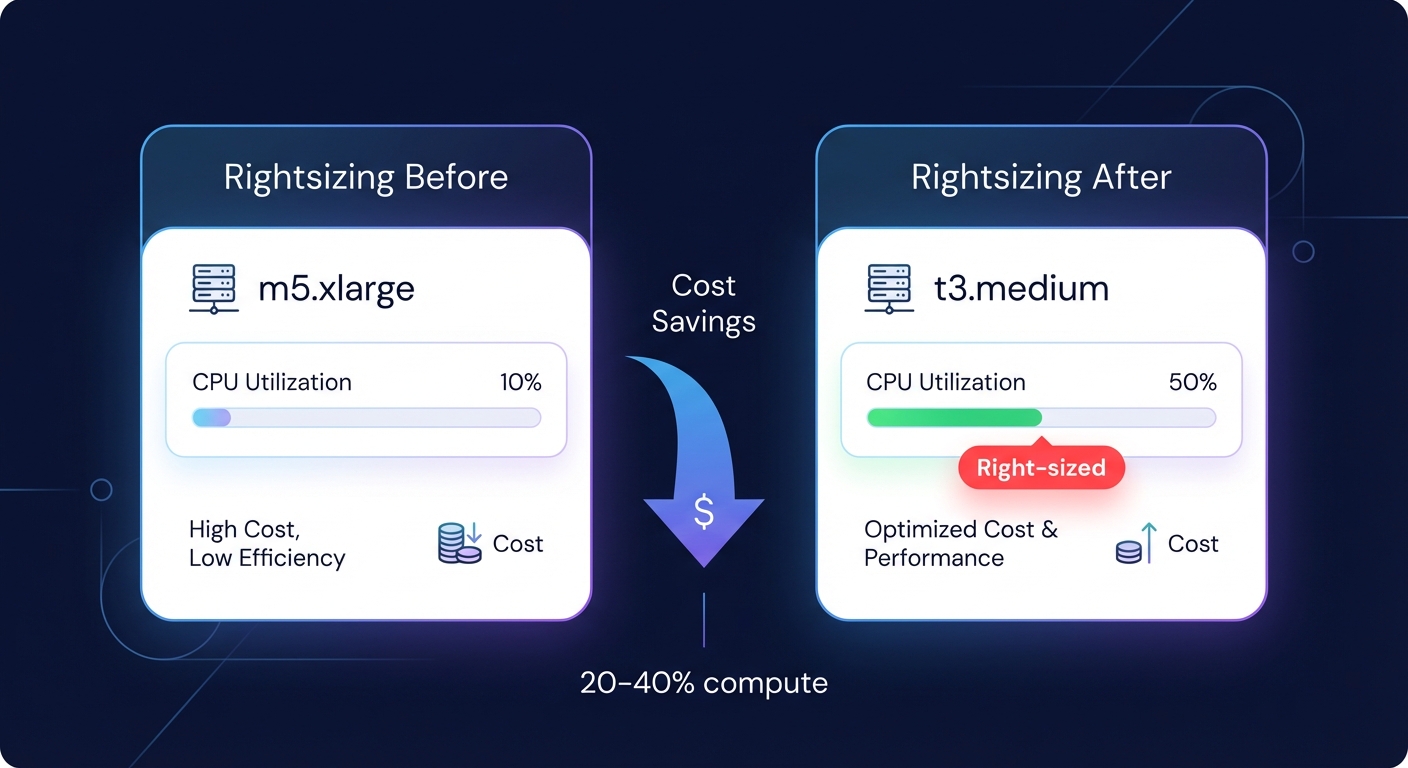
The most direct way to reduce spend is to stop over-provisioning resources. Research shows that roughly 40% of EC2 instances run at less than 10% CPU utilization at peak, indicating significant waste. The impact of right-sizing cloud resources is immediate, often delivering 20-40% savings on compute alone by matching instance types to actual workload requirements. For example, moving a workload from an m5.xlarge to a t3.medium after observing low utilization can provide immediate relief to your monthly invoice without degrading the user experience.
Beyond rightsizing, you must embrace elasticity to ensure you only pay for what you use. Implementing AWS EC2 auto scaling best practices allows your infrastructure to expand during spikes and contract during quiet periods automatically. For non-production environments, scheduling automated shutdowns during off-hours can reduce related compute costs by as much as 70%. When you combine these workload adjustments with technical upgrades – such as accelerating your Graviton gains to achieve a 40% better price-performance ratio over x86 instances – the savings begin to stack significantly.
Master rate optimization and commitment blending
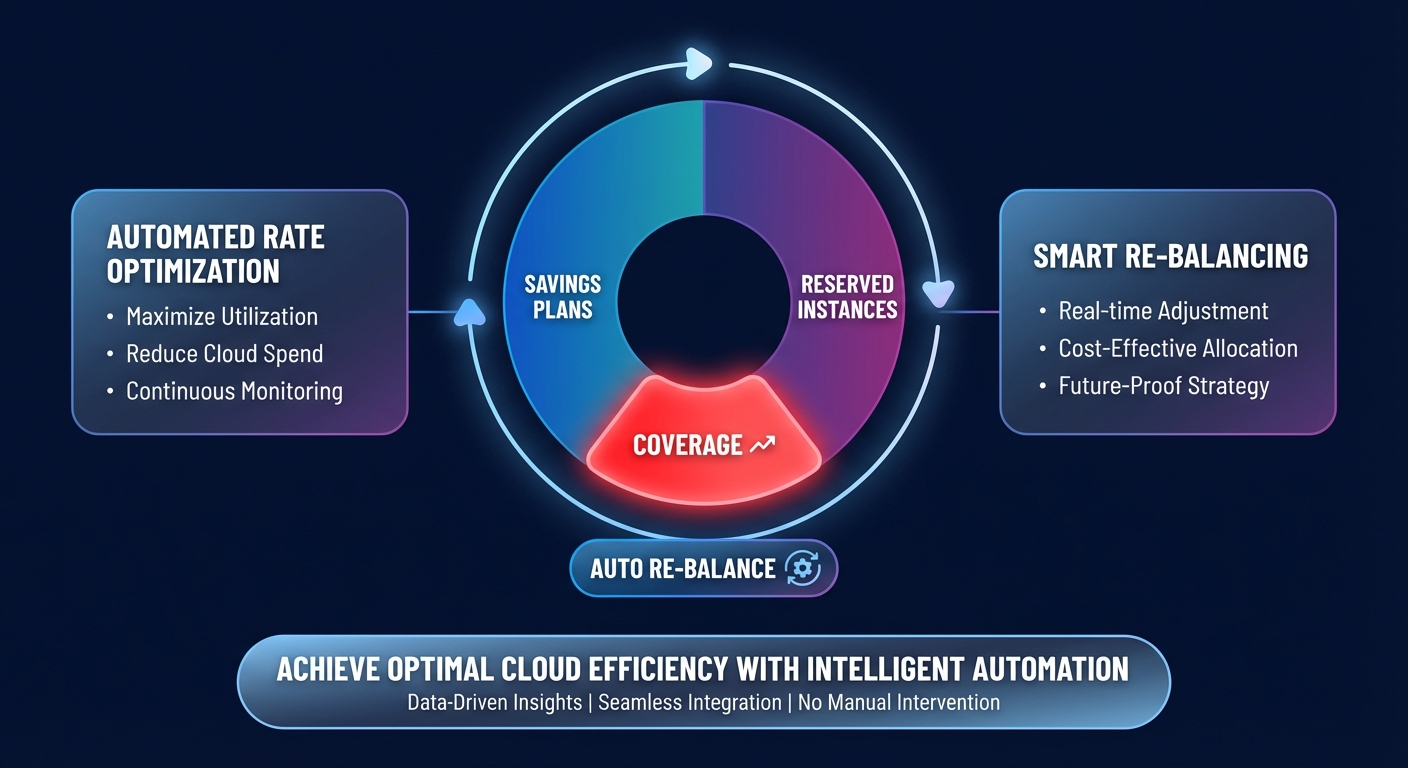
Once your infrastructure is lean, you can address the pricing models you use. AWS rate optimization involves moving away from expensive On-Demand pricing toward discounted models like Savings Plans and Reserved Instances (RIs). The choice between AWS Savings Plans vs Reserved Instances often depends on your need for flexibility versus zonal capacity guarantees. While Compute Savings Plans offer broad flexibility across regions and instance families, Zonal RIs are essential for guaranteeing capacity in specific Availability Zones during high-demand events.
Modern FinOps teams achieve Effective Savings Rates (ESR) of 50–70% by using an algorithmic mix of Compute Savings Plans and Convertible RIs. However, manual commitment management is inherently risky; over-committing leads to paying for unused capacity, while under-committing leaves potential discounts on the table. This is where automated cloud cost optimization becomes a competitive advantage. Automated systems can dynamically rebalance your commitment portfolio as your workloads shift, ensuring you always maintain the highest possible discount coverage without manual intervention from your DevOps team.
Eliminate hidden waste in storage and networking
Data transfer and storage often contain the most overlooked costs in a cloud environment. AWS egress costs can quietly devour your budget through cross-AZ traffic and redundant data exports, which can represent up to 35% of cloud spend for some platforms. By co-locating resources within the same Availability Zone and using Gateway VPC Endpoints to keep traffic private, you can often reduce your data transfer spend by 40%.
Similarly, AWS S3 cost optimization can lower storage bills by 50% without impacting application latency. Moving infrequently accessed data to S3 Glacier Deep Archive is roughly 23 times cheaper than S3 Standard storage. Implementing lifecycle policies ensures that data transitions to lower-cost tiers automatically based on access patterns. For example, transitioning logs from Standard to Standard-IA after 30 days and then to Glacier after 90 days eliminates the “long-tail” effect of storage costs that grow silently over time.
Put your AWS optimization on autopilot with Hykell
Manual audits are merely a snapshot in time, but cloud environments change by the minute. To maintain a consistent 40% reduction in spend, you need a continuous, automated approach that handles the complexity of AWS for you. Hykell bridges the gap between visibility and action by operating as an automated extension of your engineering team, allowing you to focus on innovation rather than infrastructure management.
Hykell performs deep cloud cost audits to uncover hidden savings, then executes optimizations like rightsizing and rate blending with zero engineering lift. The platform provides role-based observability, so your CFO sees high-level KPIs while your DevOps leads receive real-time cost anomaly detection alerts. This multi-layered approach ensures that unexpected spikes, like a misconfigured Lambda function, are caught before they turn into five-figure overspends.
Hykell operates on a performance-based pricing model: the fee is only a slice of what is actually saved. If no savings are found, you pay nothing. Stop guessing your capacity needs and start optimizing your infrastructure with precision. Use our cost savings calculator to see how much your organization could recover, or book a free audit to identify your biggest efficiency gaps today.