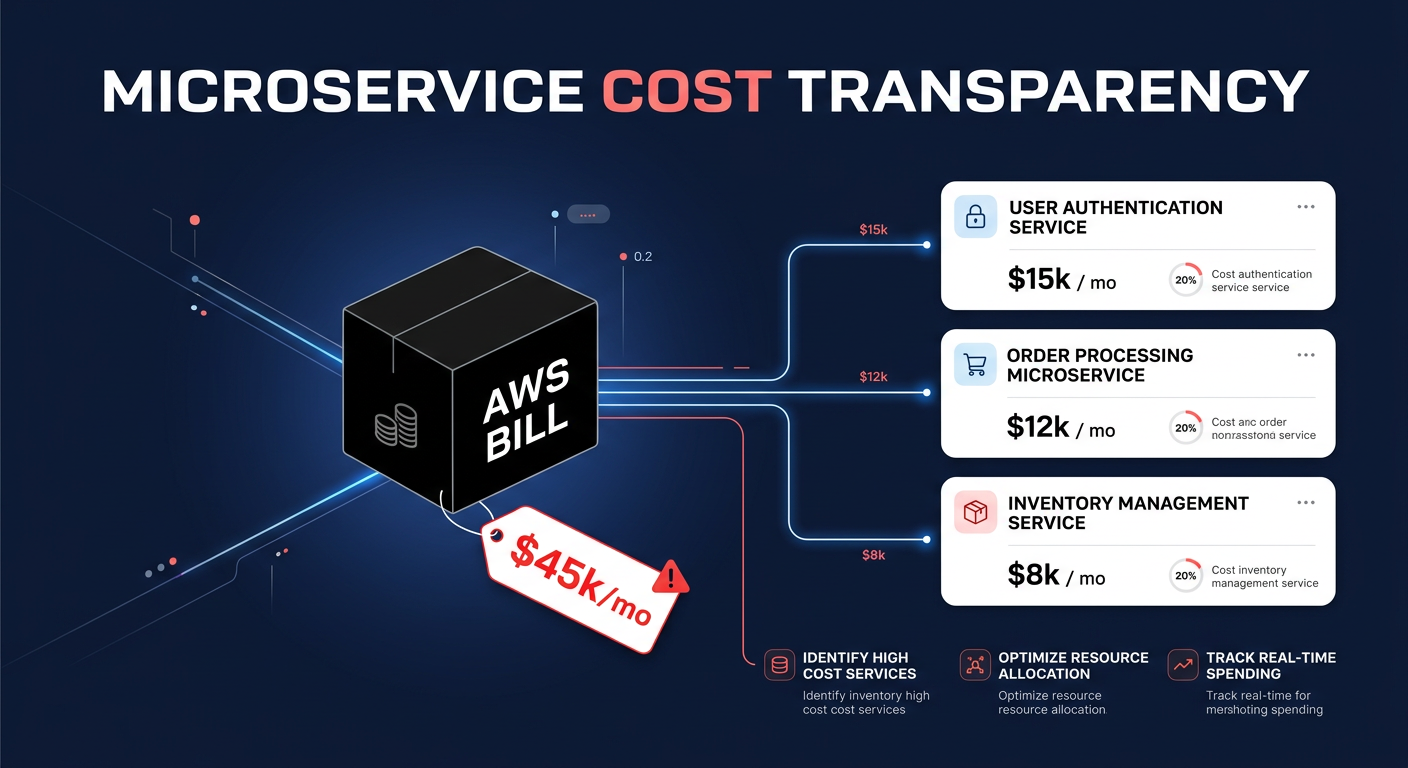
Is your AWS Step Functions bill growing faster than your workload? Many businesses unknowingly choose Standard workflows for high-frequency tasks, leading to costs 40 times higher than necessary. Strategic workflow design is the first step toward reclaiming your budget and achieving true cloud efficiency.
Choosing between Standard and Express workflows
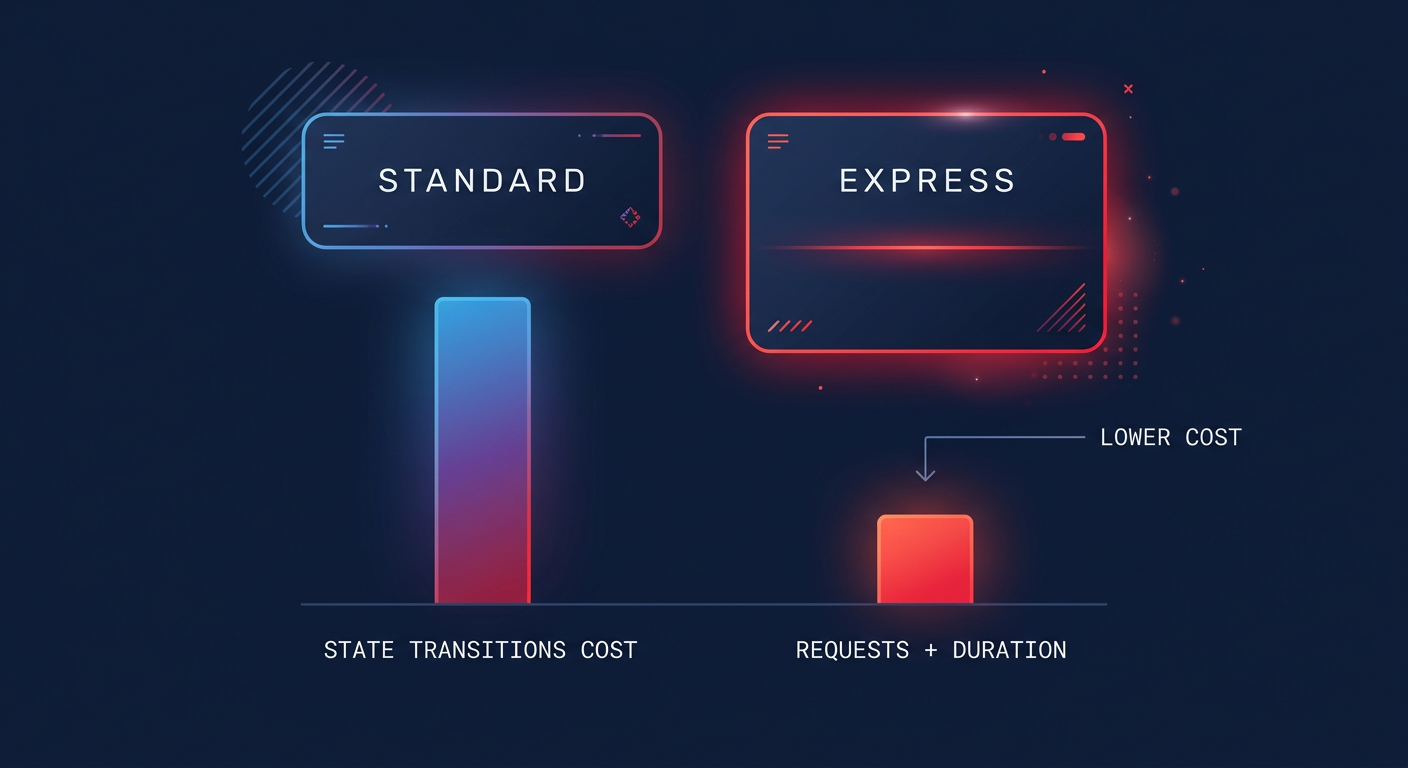
The most significant lever for cost reduction is selecting the correct workflow type for your specific use case. Standard workflows charge $0.025 per 1,000 state transitions, which can accumulate rapidly in complex environments. These are designed for long-running, durable processes that can last up to one year, providing a full execution history for 90 days to support auditing and compliance.
In contrast, Express workflows are purpose-built for high-volume microservices and short-duration tasks lasting less than five minutes. They are priced at a flat rate of $1.00 per million requests plus a fraction of a cent for memory and duration. For high-throughput event processing or IoT data ingestion, shifting from Standard to Express can reduce orchestration costs by 90% or more. This shift is a core component of any comprehensive AWS cost optimization checklist, as it aligns your spending with the actual execution duration of your tasks.
Architectural patterns for leaner workflows
Beyond workflow selection, your state machine structure directly impacts your monthly bill. Because every transition in a Standard workflow represents a billable event, you should implement batching using the Map state whenever possible. By processing 100 items in a single iteration rather than using sequential loops, you effectively reduce transition costs by a factor of 100. For massive datasets, utilizing AWS Distributed Map best practices allows you to process millions of items with optimized concurrency and significantly lower overhead.
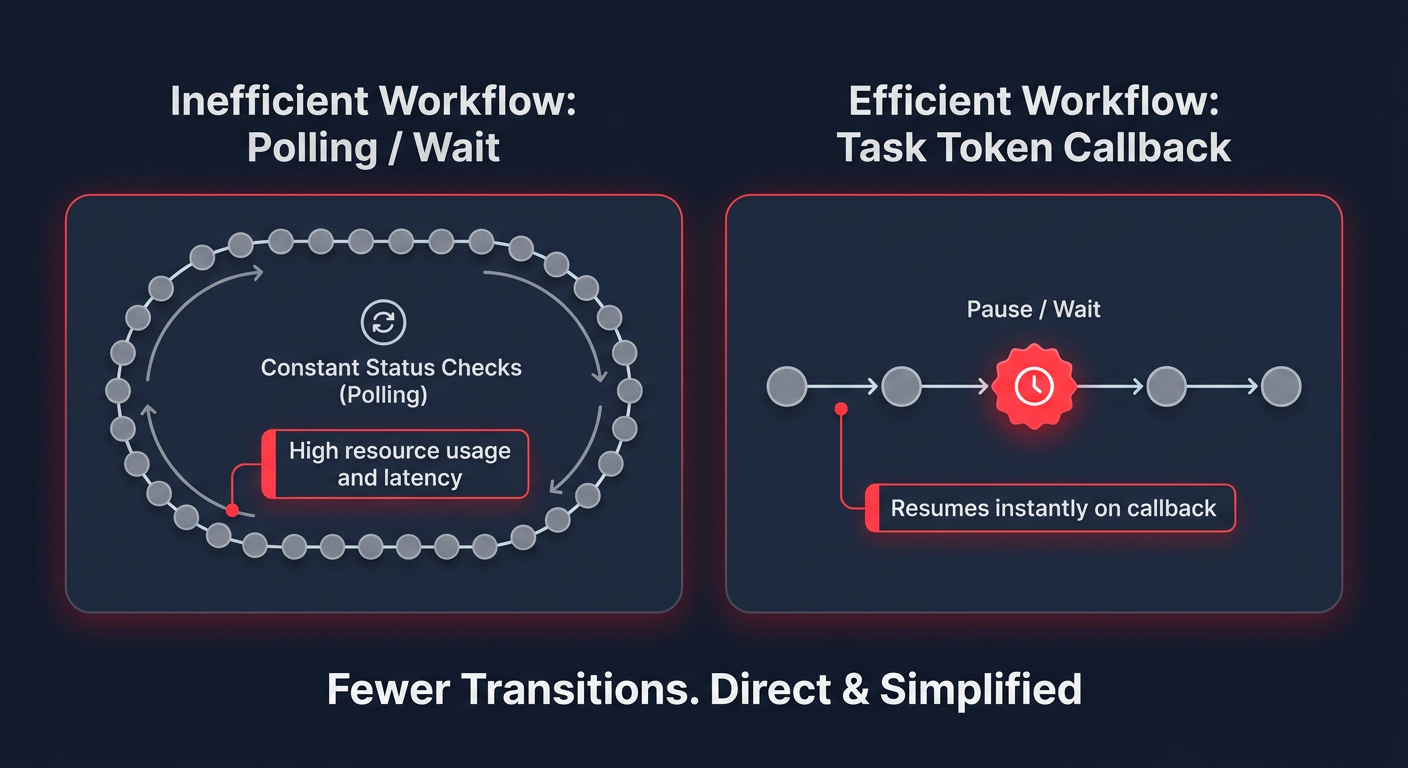
Implementing task tokens is another powerful technique for reducing costs in workflows that involve human intervention or third-party API calls. Instead of using a “Wait” state or a polling loop – both of which rack up unnecessary transitions – you can pause a workflow and wait for an external callback. When a workflow uses task tokens with SQS or EventBridge, it enters a paused state at zero cost until the external service signals completion. This decoupling strategy often reduces transitions by 50% to 80% for long-running business processes.
Optimizing state design and payloads
Efficiency often depends on the technical nuances of your state machine definition. When implementing conditional logic, you should favor the Choice state over Parallel states. While Parallel states enable concurrent execution, AWS bills each branch separately, which can double or triple your transition count for simple logic. Streamlining these paths ensures you only pay for the execution logic you actually need.
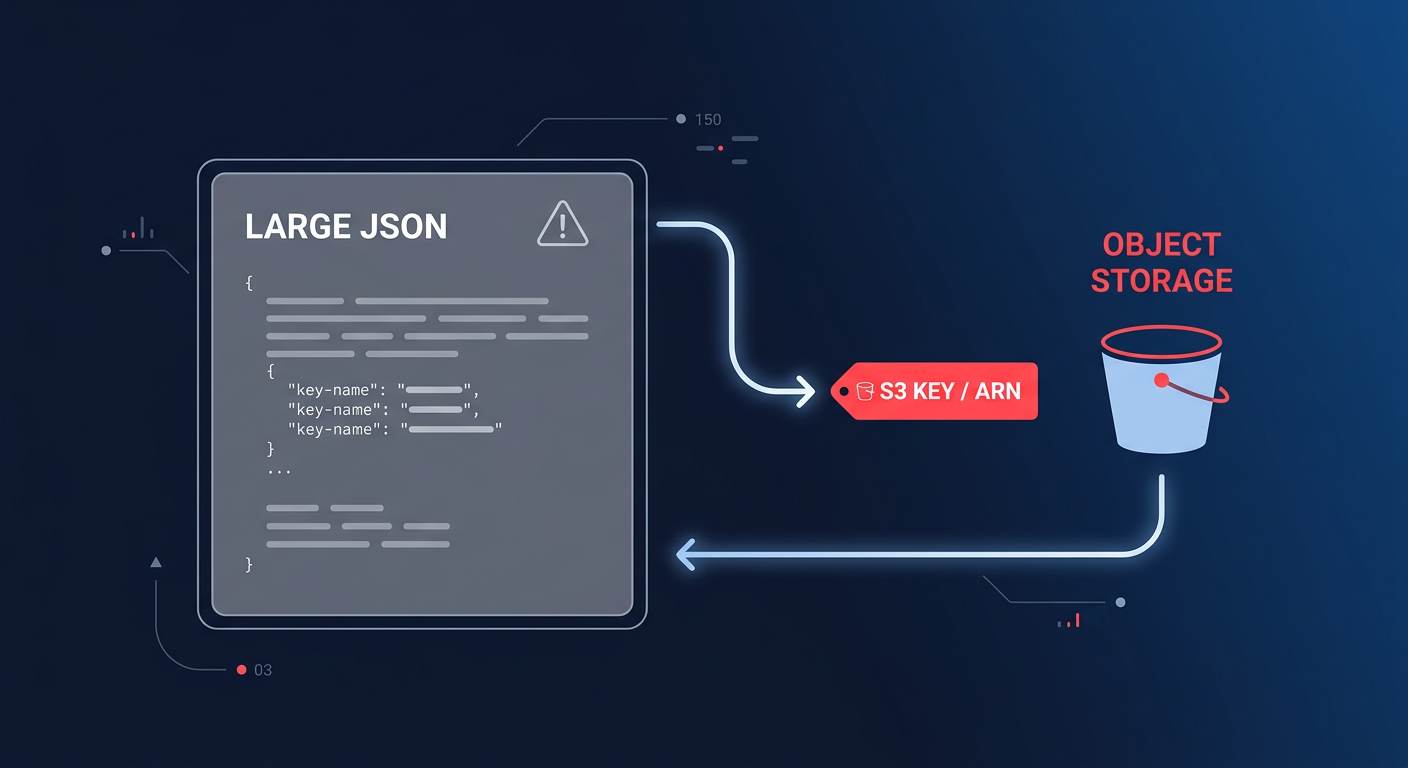
Payload management is equally vital for maintaining a lean cloud budget. AWS bills for the data transferred between states in Express workflows, and large JSON objects over 256KB can increase memory-duration charges and hit throughput limits. To maintain optimal cloud performance tuning, you should store large datasets in Amazon S3 or DynamoDB and pass only the reference ARN or key between states. Keeping your state machine “thin” minimizes your billable data footprint and prevents cost spikes during high-volume data flows.
Integrating compute efficiency
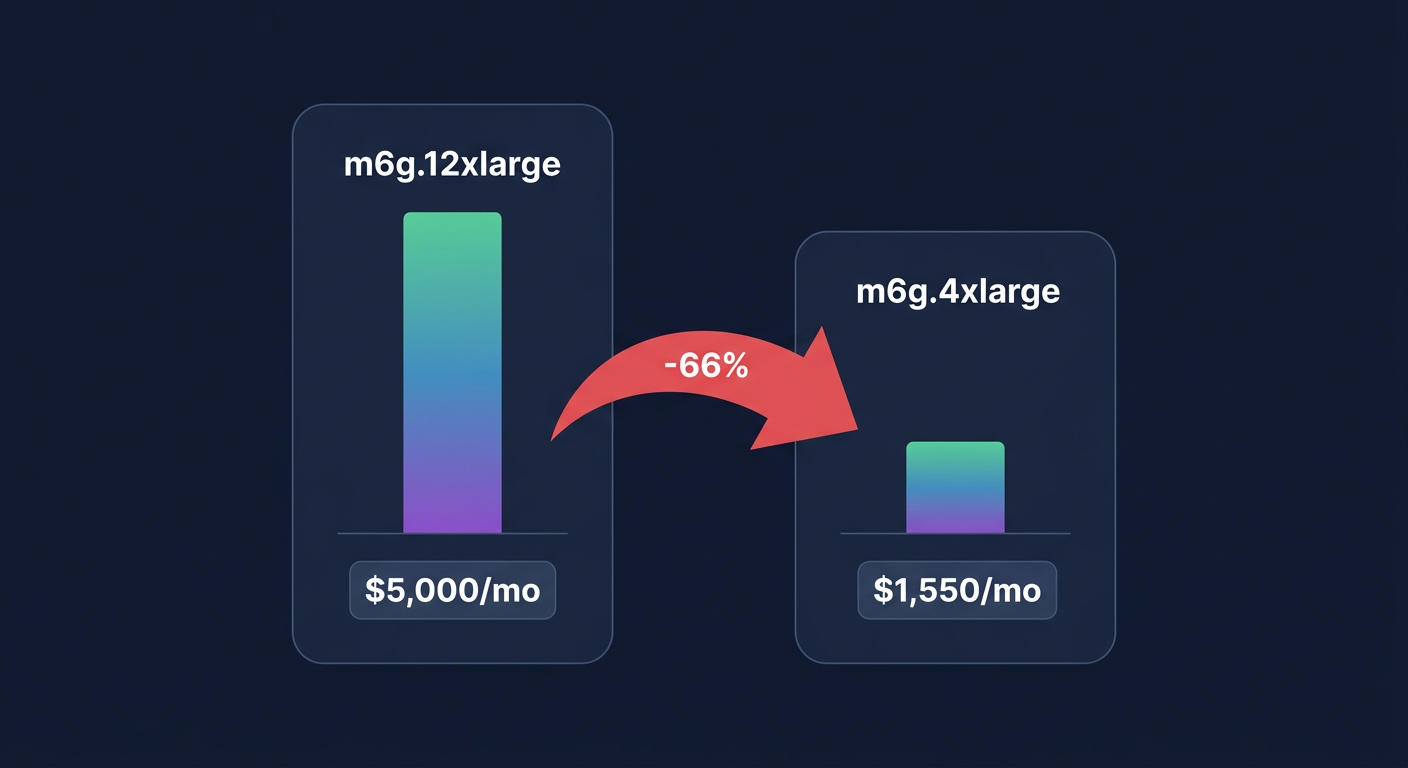
Step Functions frequently orchestrate AWS Lambda functions, creating another opportunity for optimization. High orchestration costs are often compounded by inefficient compute resources. By performing AWS Lambda memory optimization, you ensure that the tasks triggered by your workflow operate at the peak price-performance ratio.
For workflows involving heavy processing, consider shifting tasks to Amazon ECS or Fargate while using Step Functions only as the “glue” logic. This prevents you from paying for expensive transitions when a single container could handle the complex logic more effectively. Additionally, using EventBridge pipes to connect SQS directly to Lambda can replace Step Functions entirely for simple, linear flows, often resulting in 80% orchestration savings. Real-world examples, such as media companies batching Map states, have shown that these architectural shifts can cut monthly bills from $12,000 to $4,000.
Automating your path to savings
Manually refactoring every state machine across a sprawling enterprise environment is a monumental task. Most cloud-native businesses struggle with “opaque” bills where transitions are lumped together, making it nearly impossible to identify which specific workflow is driving up costs. Without deep visibility, identifying these inefficiencies requires significant internal engineering effort.
Hykell takes the guesswork out of the equation by providing automated cloud cost optimization. We dive deep into your infrastructure to identify underutilized resources and inefficient workflow patterns, helping you reduce your AWS bill by up to 40% without requiring ongoing internal manual labor. Our model is performance-based: we only take a slice of what you save. If we do not find savings for you, you do not pay.
Stop overpaying for your cloud orchestration and start scaling your infrastructure efficiently. You can see your potential savings in minutes by using our savings calculator or contact Hykell today for a detailed audit of your AWS environment.