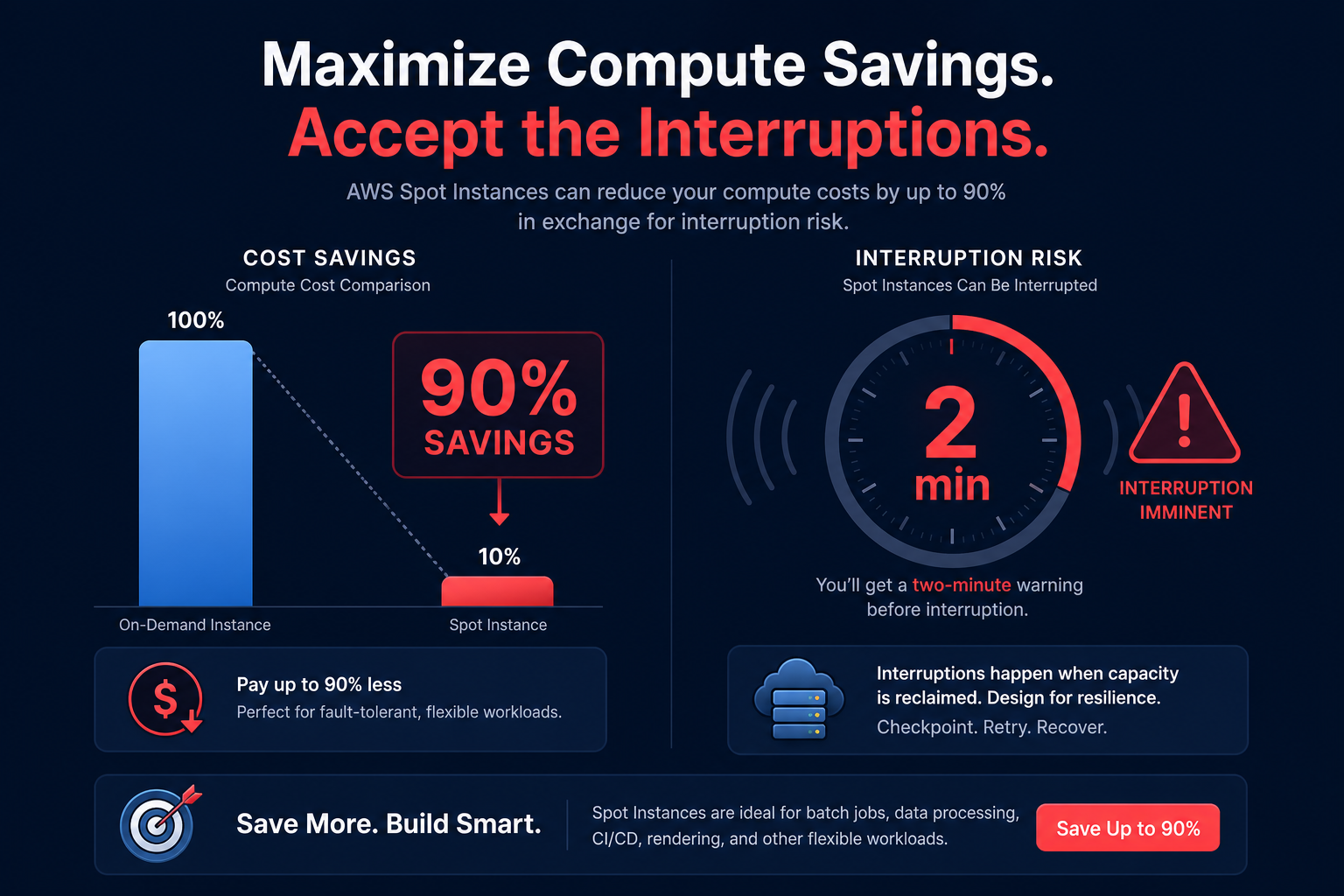
Could you reduce your EC2 bill by 90% without breaking your production environment? AWS Spot Instances offer massive discounts, but Amazon can reclaim capacity with just a two-minute notice. Managing this risk requires shifting from static provisioning to dynamic capacity orchestration.
How AWS spot instance pricing and interruptions work
AWS Spot Instances allow you to tap into spare EC2 capacity at prices significantly lower than On-Demand rates. Unlike the fixed pricing associated with a Reserved Instance, Spot prices are determined by long-term supply and demand trends. This results in more predictable pricing that adjusts slowly over days or weeks, rather than volatile minute-to-minute swings.
The trade-off for these savings – which can reach up to 90% – is the possibility of a Spot Instance interruption. When AWS needs capacity back for On-Demand or Reserved Instance users, your instance will be terminated, stopped, or hibernated. While the average interruption frequency across all regions is historically less than 5%, you still receive a two-minute interruption notice via the EC2 metadata service and Amazon EventBridge. If your application isn’t designed to handle this quick exit, you risk data loss or downtime.
Identifying the right workloads for spot
Not every application belongs on Spot. The most successful implementations focus on fault-tolerant, stateless, or horizontally scalable workloads. Following AWS EC2 auto scaling best practices means prioritizing Spot for containerized microservices, big data processing, CI/CD runners, and batch jobs.
If your workload requires high availability for a single, stateful node, you are likely better off using Compute Savings Plans to secure a discount without the risk of termination. However, for many modern architectures, the cost benefits far outweigh the engineering effort required to make them “Spot-ready.”
Best practices for safe workload management
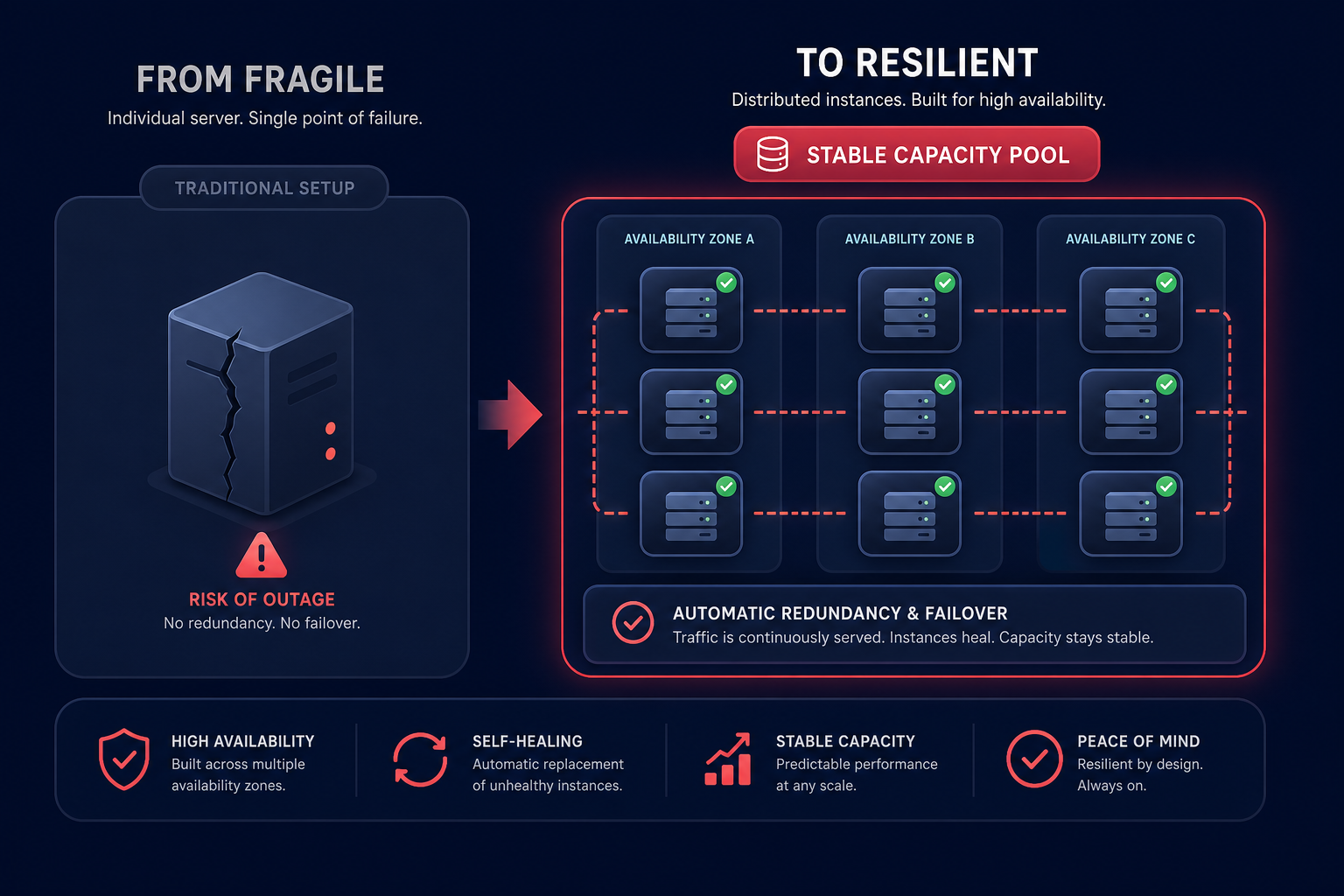
To succeed at running stable workloads on Spot Instances, you must move away from the idea of “stable servers” and toward the idea of “stable capacity.” This involves three core strategies that ensure resilience despite individual instance reclaims.
Diversify your instance types
The most common mistake is requesting a single instance type. If you only request `m5.large` and that specific pool becomes unavailable, your fleet will shrink and potentially fail. AWS recommends being flexible across at least 10 different instance types for every workload. By using attribute-based instance selection and spreading your fleet across multiple Availability Zones, you ensure that an interruption in one pool does not collapse your entire application.
Leverage capacity rebalancing
Modern AWS spot fleet management relies heavily on the “Capacity Rebalancing” feature. This tool monitors EC2 instance rebalance recommendations – a signal sent before the official two-minute notice – allowing your Auto Scaling Group to launch a replacement instance proactively. This gives your application more time to drain existing connections and shut down gracefully before the old instance is terminated.
Implement checkpointing and graceful shutdowns
For long-running tasks like machine learning training or data transcoding, implementation of checkpointing is vital. Saving progress every 10 to 30 minutes to a persistent store like Amazon S3 or DynamoDB ensures that an interruption only results in a minor loss of progress rather than a complete restart. Combined with automated interruption handling via Lambda and EventBridge, your system can detect an upcoming termination and trigger a final state save in seconds.
Optimizing the mix of spot and on-demand
A “Spot-only” strategy is rarely the right move for production. Most organizations find success with a hybrid approach: using Reserved Instances or Savings Plans for their baseline usage and Spot Instances for the elastic “burst” layer. This provides a safety net where critical services remain on stable capacity while the heavy lifting is done at a significant discount.
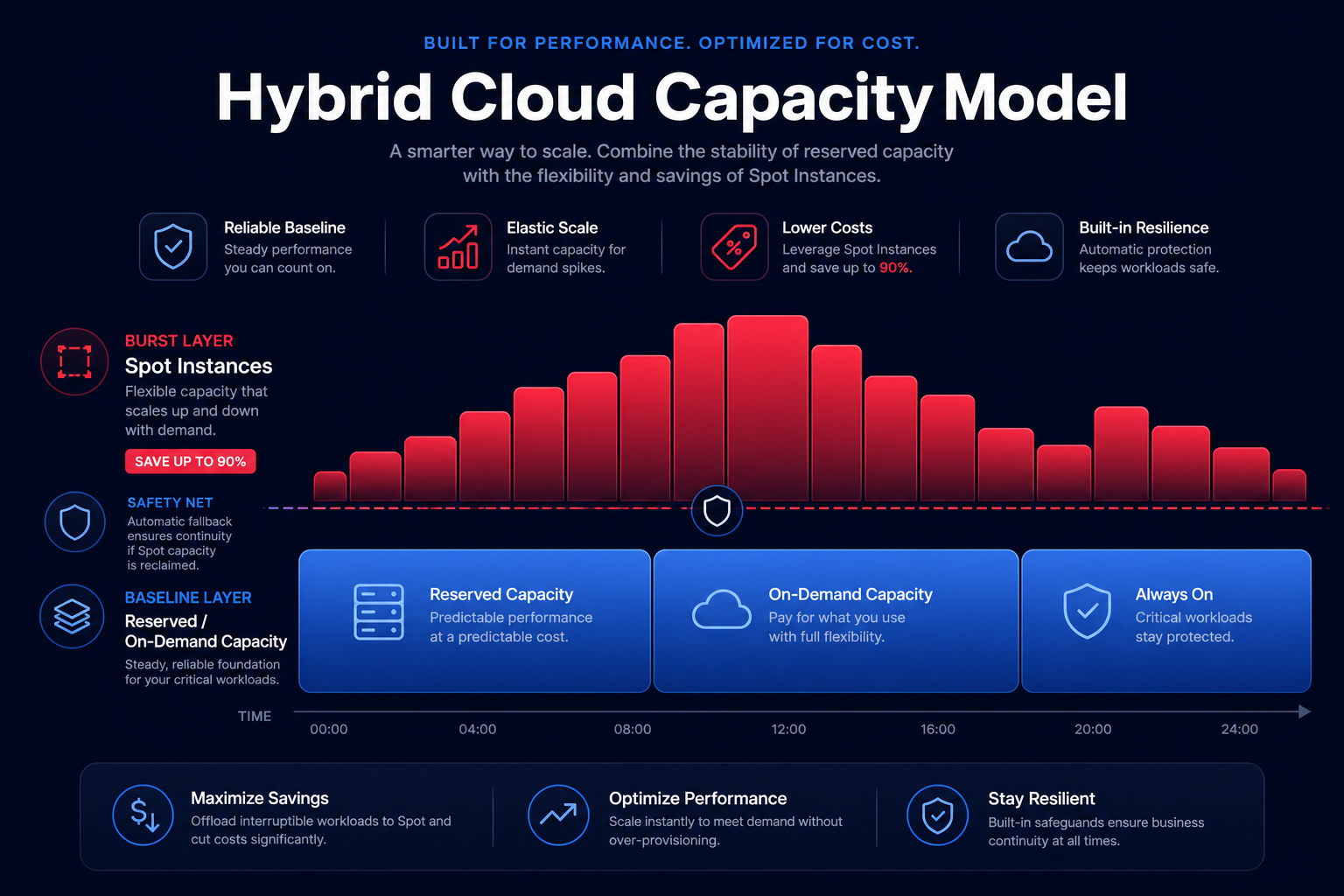
Effective AWS EC2 cost optimization requires constant monitoring of your interruption rates and realized savings. If your weekly interruption rate climbs above 10%, it may be time to further diversify your instance types or shift a larger portion of that specific workload back to On-Demand.
Scaling your savings with automation
Managing Spot Instances manually is a recipe for burnout and human error. The most efficient way to maximize your Effective Savings Rate is through intelligent automation that handles the lifecycle of these instances on your behalf.
Hykell provides automated cloud cost optimization that operates on autopilot, identifying underutilized resources and managing the complex interplay between different AWS pricing models. Our platform bridges the gap between FinOps insights and bottom-line impact, helping businesses reduce their AWS spend by up to 40% without requiring constant engineering intervention. By blending AI-driven rate optimization with workload-aware adjustments, Hykell ensures you get the deepest discounts available while maintaining total performance compliance.
To see how much you could save by automating your AWS infrastructure, use the Hykell savings calculator or contact our team for a detailed cost audit.