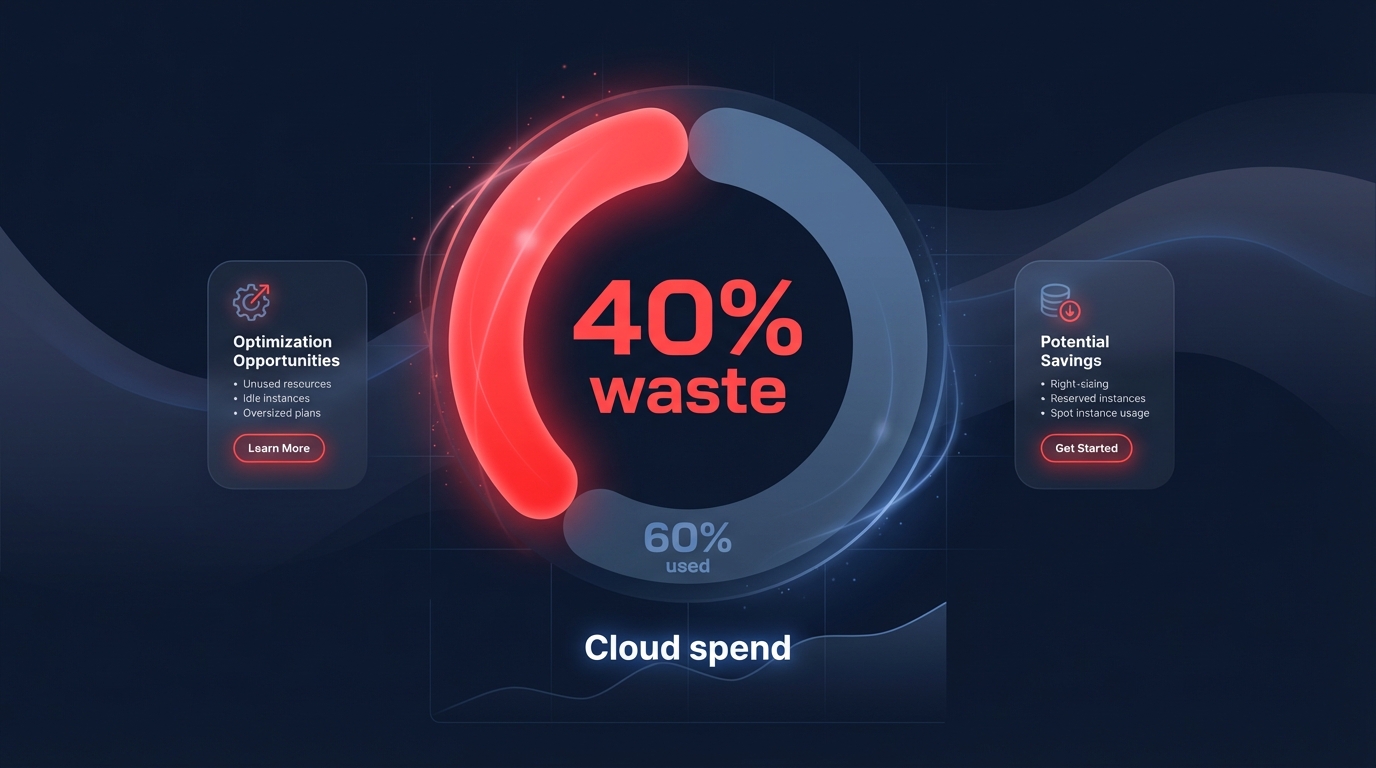
Did you know that over 30% of cloud infrastructure spend is wasted due to poor governance and idle resources? For engineering leaders, managing this sprawl manually is a losing game that drains budgets and steals focus from high-impact innovation.
Gain visibility with the AWS Cost Management suite
You cannot optimize what you cannot see. Establishing a “single source of truth” for your spend is the foundational step of any cloud cost governance framework. Visibility allows you to move beyond high-level totals and understand the specific workloads driving your monthly invoice.
AWS Cost Explorer serves as your primary tool for retrospective analysis, offering up to 38 months of historical data. By filtering across 18 dimensions – including service, region, and instance type – you can identify exactly where your budget is going. For teams requiring immediate intervention, AWS Cost Explorer provides hourly granularity for the past 14 days, which is essential for pinpointing the exact moment a cost spike occurred.
For FinOps teams that need to perform deep-dive forensics, the AWS Cost and Usage Report (CUR) provides the most granular data available. By delivering metadata to an S3 bucket, you can use Amazon Athena to query resource-level details. This level of transparency is critical for identifying which specific microservice is inflating AWS egress costs or creating redundant data transfers across availability zones.
Implement a proactive governance framework
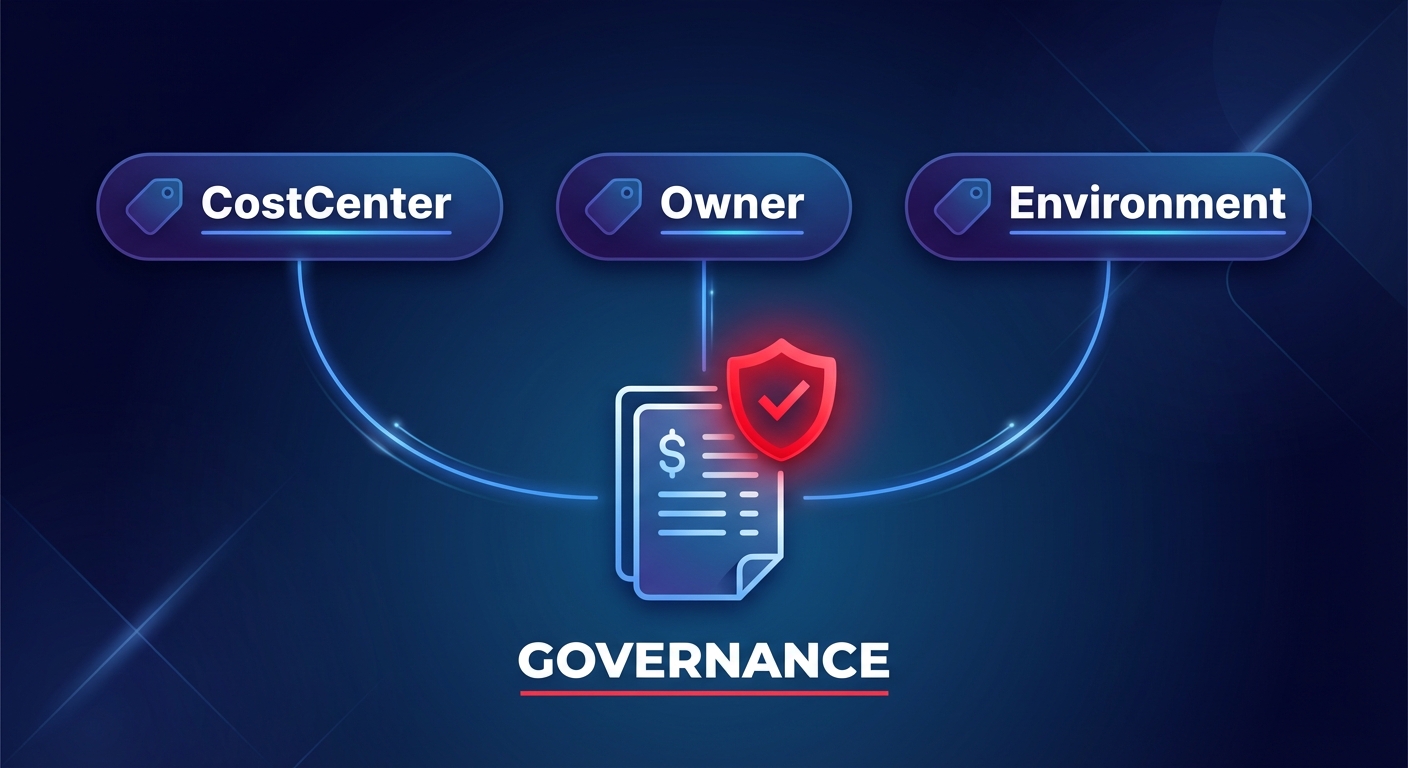
Visibility is only effective if it leads to accountability. Implementing AWS cost allocation tags allows you to attribute every dollar to a specific owner, team, or project, effectively converting your invoice into actionable FinOps data. A robust tagging taxonomy should act as a “constitution” for your cloud operations, covering business, technical, and automation needs.
Business tags like CostCenter and Owner ensure that departments remain accountable for their consumption. Technical tags, such as Environment (Prod vs. Dev) or ApplicationID, help engineers understand the infrastructure footprint of specific services. Most importantly, automation tags like “ScheduledStop” can be used to power down non-production resources during off-hours, a tactic that can reduce dev/test compute costs by as much as 70%.
To maintain this discipline at scale, you should use Service Control Policies (SCPs) to deny the creation of any resource that lacks mandatory tags. This prevents “unallocated” spend from ballooning – a significant risk considering that unmanaged accounts often see up to 50% of their budget consumed by unattributed line items.
Automate alerts and financial forecasting
Relying on month-end invoice reviews is a reactive strategy that frequently results in “sticker shock.” Instead, modern engineering teams use cloud cost budgeting and forecasting to set financial guardrails that detect issues before they become expensive liabilities.
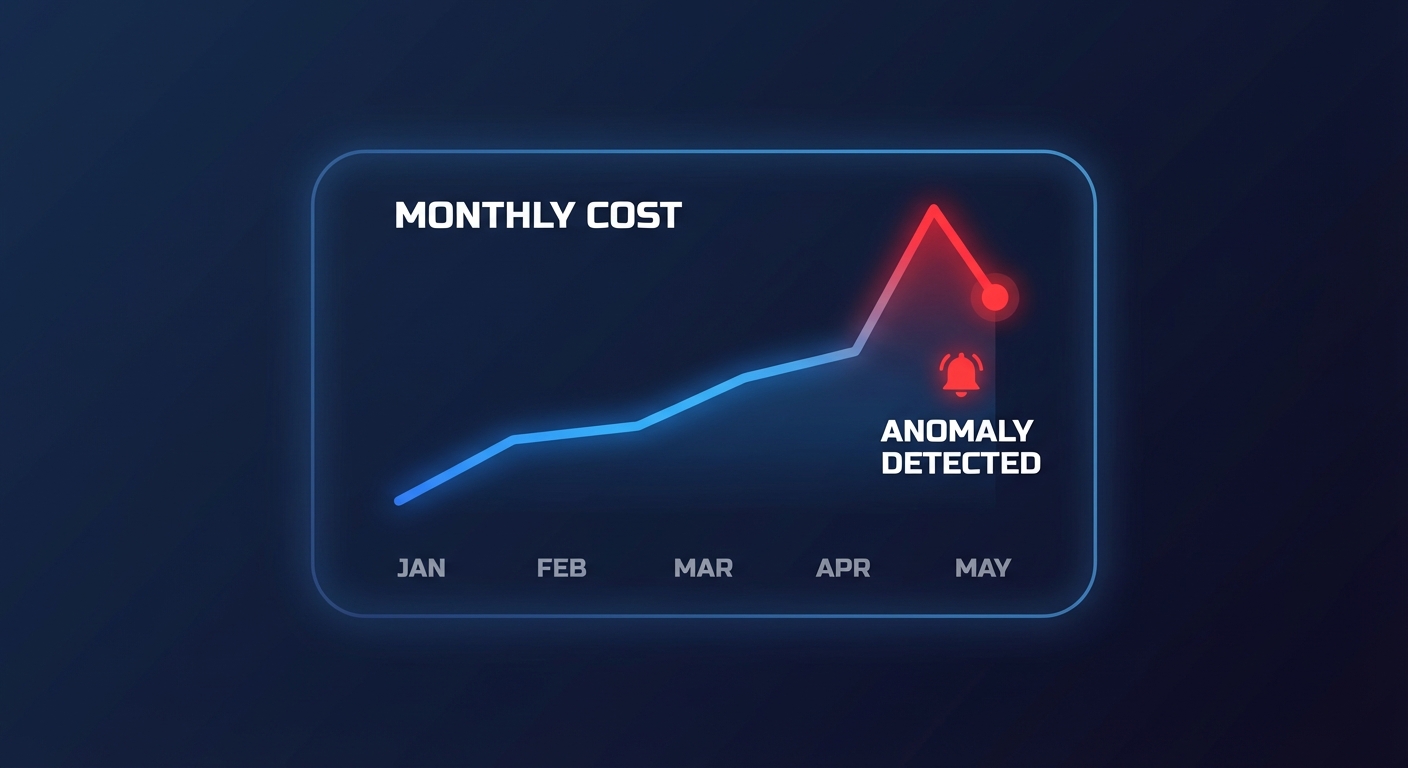
While AWS Budgets is excellent for tracking spend against fixed thresholds, such as alerting you when you hit 80% of your monthly limit, it may not catch sudden mid-month spikes. This is where AWS Cost Anomaly Detection provides a critical safety net. By using machine learning to analyze historical patterns, the service identifies deviations like a misconfigured Lambda function that might otherwise go unnoticed for weeks.
To keep stakeholders aligned, you can use tools like Amazon QuickSight or Grafana for building automated cost dashboards. These visualizations provide real-time transparency and help shift organizational culture from reactive firefighting to proactive optimization.
Execute high-impact cost reduction tactics
Once visibility and guardrails are in place, you can execute technical optimizations that provide immediate ROI. These tactics focus on matching your resource supply to your actual workload demand.
Right-sizing and autoscaling
Research indicates that 40% of EC2 instances sit below 10% CPU utilization at peak capacity. Understanding the impact of right-sizing can help you cut compute costs by approximately 35% without compromising application performance. To maintain these gains as traffic fluctuates, you should implement EC2 auto scaling best practices, such as target tracking and predictive scaling, to ensure your fleet only expands when necessary.
Storage and compute tier optimization
Storage and compute choices represent the largest portion of most AWS bills. Migrating from gp2 to gp3 EBS volumes, for example, offers a 20% lower price point per gigabyte while providing more predictable performance. On the compute side, transitioning to AWS Graviton instances provides up to 40% better price-performance compared to traditional x86-based instances. For fault-tolerant workloads like batch processing or CI/CD pipelines, you can leverage Spot Instances to achieve up to 90% savings over On-Demand pricing.
Commitment-based discounts
Choosing between AWS Savings Plans and Reserved Instances is the primary lever for managing baseline costs. In the current cloud landscape, Compute Savings Plans are often preferred for their flexibility, as they apply across regions and instance families even as your architecture evolves. This prevents you from being locked into specific hardware that may become obsolete as your product scales.
Scale savings with automated rate optimization
While manual best practices are a strong foundation, the sheer complexity of modern AWS environments often outpaces the capacity of human engineering teams. To achieve real results for your business, you need a continuous, automated approach that manages these levers in real-time.
Hykell specializes in AWS rate optimization and autonomous infrastructure management. We perform deep-dive audits to uncover hidden savings, identify underutilized resources, and optimize Kubernetes and EBS configurations without requiring code changes. Our platform manages the lifecycle of commitments and right-sizing on your behalf, ensuring you always operate at the lowest possible cost.
By leveraging Hykell, you can reduce your total AWS bill by up to 40% with zero engineering effort. We operate on a performance-based model, meaning we only take a slice of what we save you – if you do not save, you do not pay.
Stop managing your AWS bill manually and start focusing on the innovation that drives your business forward. Explore our library of technical resources or book a free cloud cost audit today to see how much you could save on autopilot.