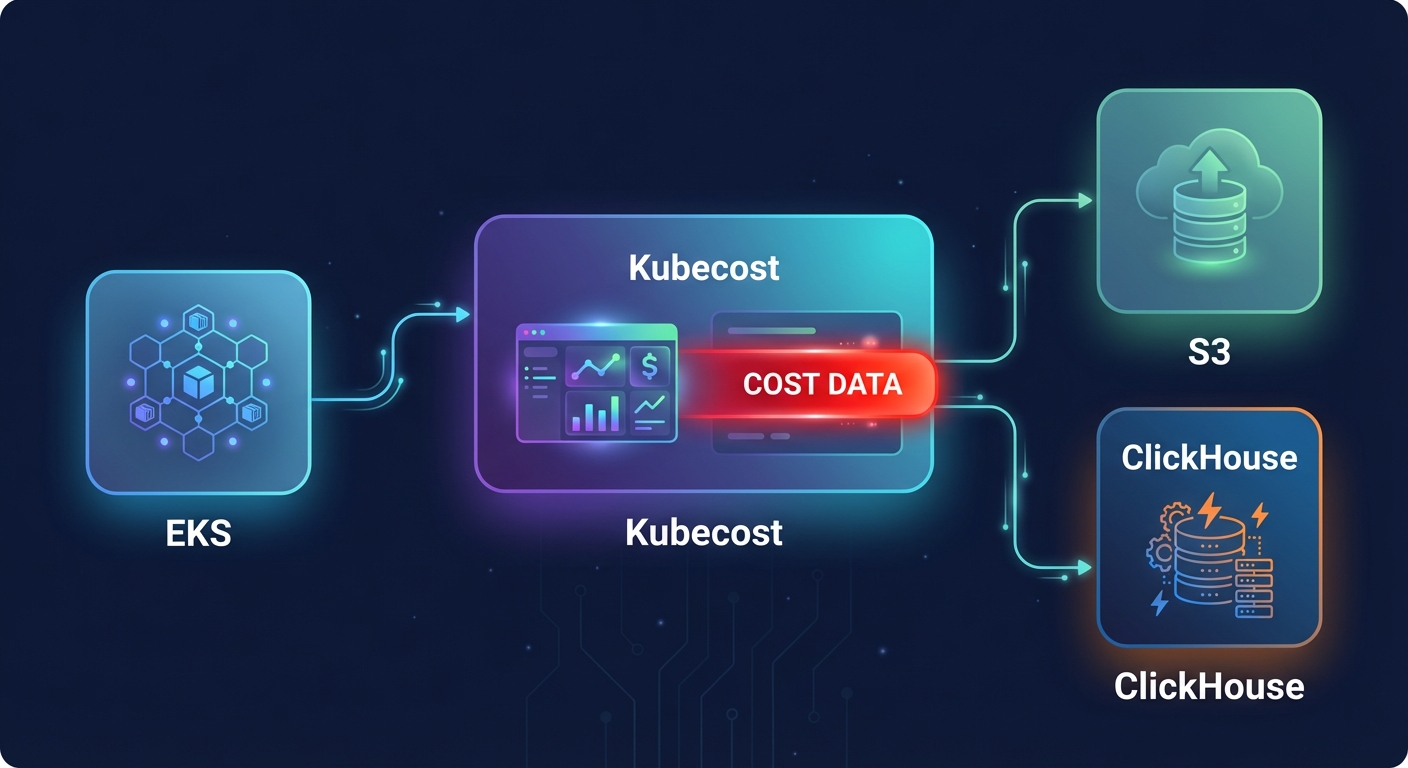
Does your Kubernetes spend feel like a black box that only makes sense at the end of the month? While standard EKS billing shows cluster-level costs, Kubecost Enterprise provides a financial microscope to attribute every cent to specific pods, teams, and microservices.
The technical blueprint for AWS integration
You can integrate Kubecost with your AWS environment through a streamlined process, particularly by using the Kubecost AWS integration via the EKS add-on. This is the recommended method for most engineering teams because it offers a pre-configured bundle available through the Amazon ECR public gallery, providing immediate visibility for single-cluster environments without complex licensing hurdles.
Before you begin, your infrastructure must meet specific technical prerequisites to ensure data persistence and performance. For clusters running EKS version 1.23 or newer, you must deploy the EBS CSI driver to manage the persistent storage required for your historical cost data. This setup requires configuring an IAM service account with `AmazonEBSCSIDriverPolicy` permissions. Furthermore, the latest Kubecost architecture leverages S3-compatible object storage and a ClickHouse database to maintain high performance across multi-cluster environments, allowing your monitoring footprint to scale alongside your infrastructure.
Granular cost allocation and CUR accuracy
The primary value of the Enterprise tier is its ability to reconcile in-cluster resource usage with your actual AWS billing data. While many basic tools estimate costs using public on-demand rates, this approach ignores the significant discounts you may have negotiated. Kubecost Enterprise resolves this by integrating directly with your AWS Cost and Usage Reports (CUR). By pulling granular data from an S3 bucket and querying it via Athena, the platform provides pod-level tracking that reflects your real-world AWS rate optimization strategies, including Reserved Instances and Savings Plans.
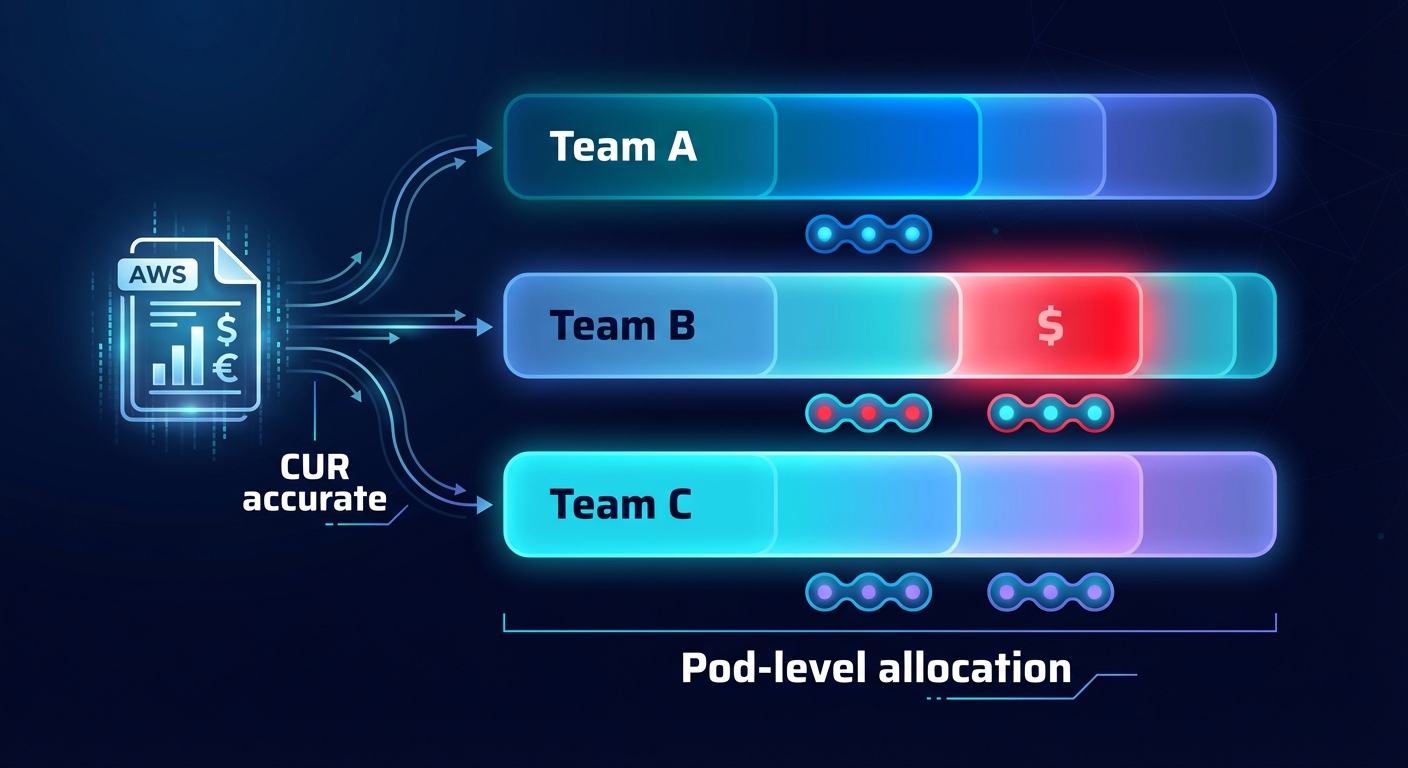
This level of precision is essential for organizations implementing cloud chargeback and showback strategies. Instead of guessing how to split a massive monthly bill, you can hold individual application teams accountable for their specific resource consumption. This transparency ensures that the cost management strategies for EKS you deploy are based on hard data rather than broad averages, driving better financial alignment across the entire engineering organization.
Anomaly detection and automated optimization insights
Kubecost Enterprise moves beyond static reporting by using machine learning to detect spending anomalies in real-time. Rather than waiting for a monthly invoice to discover a misconfigured deployment, the platform identifies spikes in CPU or memory usage at the namespace level and immediately alerts your team via Slack or email. These proactive triggers allow you to address runaway costs before they impact your quarterly budget.
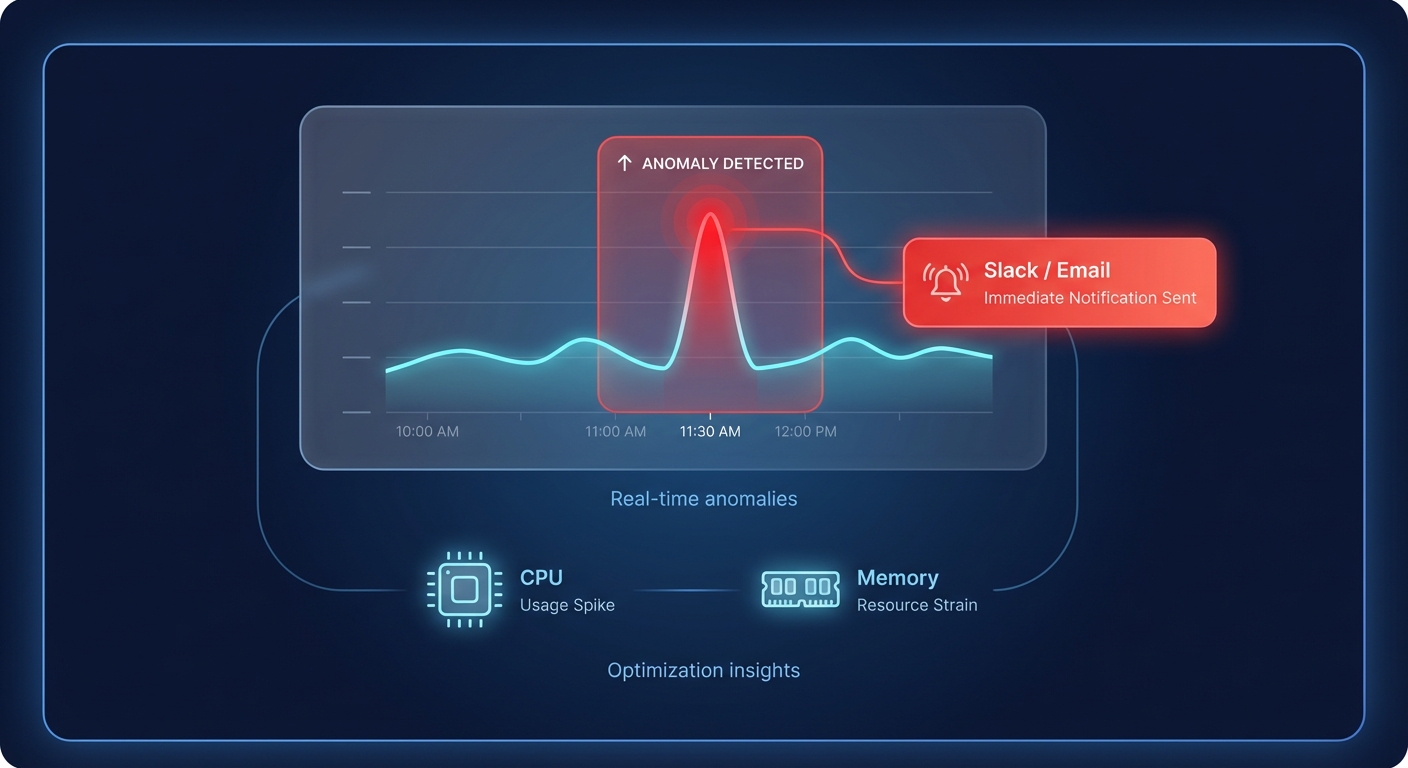
The platform further supports your Kubernetes cost monitoring efforts by providing actionable optimization recommendations. It identifies containers with excessive resource requests that result in idle capacity and suggests moving non-critical workloads to Spot Instances to capture deeper discounts. Additionally, it highlights Kubernetes optimization on AWS opportunities like migrating from gp2 to gp3 storage volumes, which can reduce your storage expenses by up to 20% while maintaining or improving performance.
AWS Marketplace licensing and billing
Acquiring the Enterprise tier is simplified through the AWS Marketplace, allowing you to consolidate licensing into your existing AWS bill. This is particularly beneficial for large organizations, as the spend often counts toward your AWS Enterprise Discount Program (EDP) consumption commitments. While open-source cloud cost management tools are useful for basic monitoring, the Enterprise subscription unlocks advanced capabilities such as unified multi-cluster views, SSO/SAML integration for secure access, and dedicated enterprise SLAs for mission-critical environments.
Choosing between visibility and automated execution
Kubecost Enterprise is a premier choice for organizations that need deep visibility and a platform for manual cost governance. It empowers your team to see exactly where your money is going and provides a clear roadmap for remediation. However, for many busy DevOps teams, visibility is only the first step of a long journey that still requires manual intervention to execute changes.
If your goal is to reduce your total AWS bill by up to 40% without adding more tasks to your engineering backlog, Hykell offers a fully automated cloud cost optimization solution. Unlike a dashboard that requires you to act on its findings, Hykell works in the background to automatically right-size your infrastructure and manage your commitment portfolio on autopilot.
With Hykell’s performance-based pricing, you only pay a portion of what you actually save. This model removes the financial risk of cost management tools while ensuring your infrastructure remains lean and efficient. You can calculate your potential savings or contact Hykell today to transform your AWS environment from a source of financial stress into a competitive advantage.