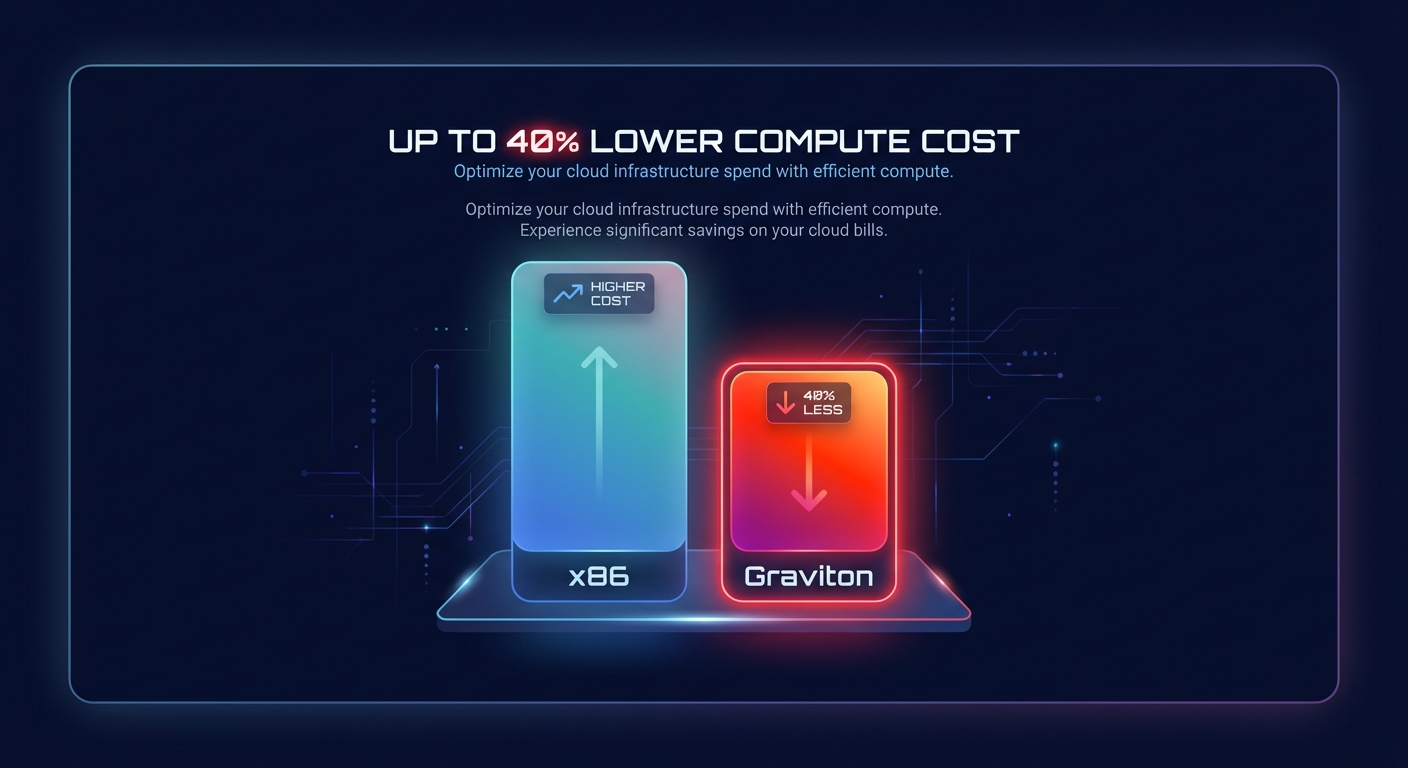
Are you still paying the “x86 tax” on your AWS bill? While many engineering leaders settle for marginal gains from commitments, top-tier enterprises are achieving 40% cost reductions and massive performance boosts by shifting to AWS Graviton.
For FinOps leaders and SRE directors, the transition to ARM-based architecture has become a primary lever for radical efficiency. A detailed cost comparison between Graviton and Intel instances reveals that Graviton instances typically cost 18–20% less per hour than comparable Intel Xeon instances while delivering significantly better price-performance.
Logz.io: Achieving a 50% TCO reduction
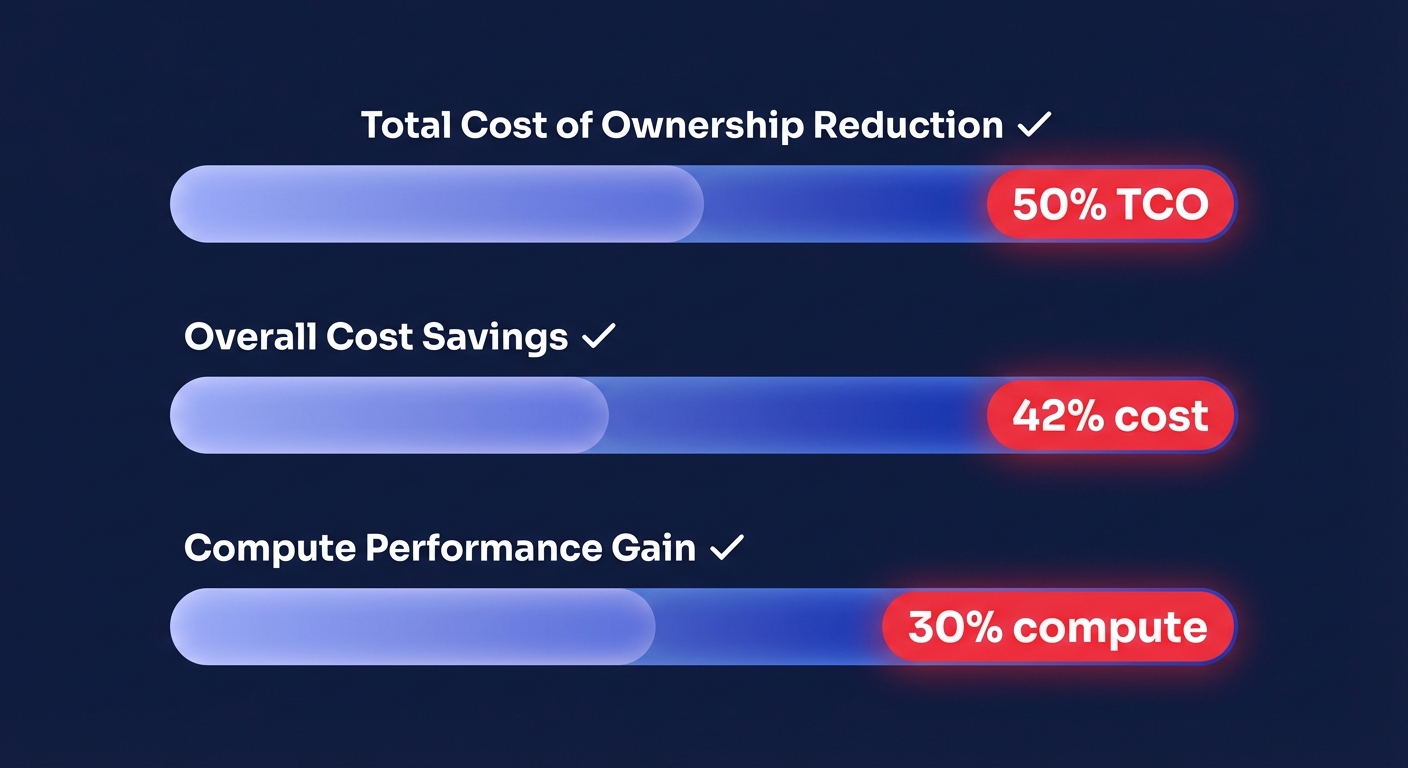
Logz.io, a cloud observability platform, provides a compelling example of Graviton’s scale. Facing the high costs of managing massive OpenSearch clusters, they migrated their workloads from Azure and x86-based AWS instances to Graviton. By utilizing storage-optimized Im4gn and Is4gen instances, they realized a 50% total cost of ownership reduction within six months.
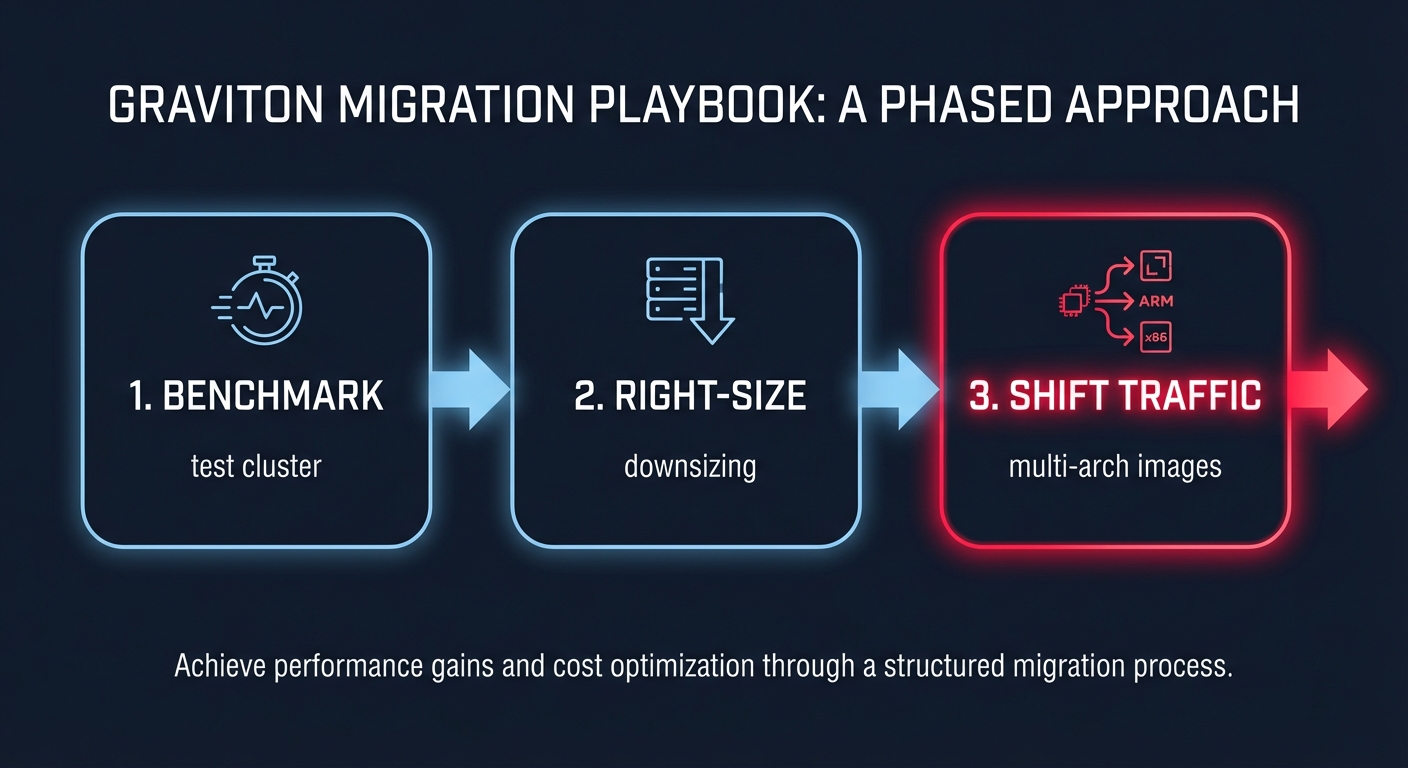
Their success was rooted in a phased migration approach. They built test clusters alongside production environments to benchmark performance for several weeks before the final cutover. This methodical validation ensured that their telemetry storage was no longer compute-bound, empowering them to maximize their AWS infrastructure value without sacrificing the sub-millisecond latency their customers demand.
Zendesk and Techcom Securities: Downsizing for double gains
When Zendesk migrated to Graviton, the primary goal was sustainable, compounding savings. They achieved a 42% cost reduction primarily by downsizing their EC2 instances post-migration. Because Graviton’s vCPU-to-core mapping is 1:1, unlike the hyperthreading used in x86 architecture, many workloads require fewer resources to achieve the same throughput.
Similarly, Techcom Securities, a leader in financial services, transitioned 47% of their compute workloads and 50% of their database footprint to Graviton. This resulted in a 30% overall compute cost reduction and an 18% improvement in EC2 unit cost efficiency. For many of their applications, this transition required virtually no code changes, proving that the compatibility of software with AWS Graviton is often higher than engineering teams initially fear.
Performance impact across modern workloads
The financial gains are only half the story, as enterprises often find that performance improves as costs drop. For instance, a major media company reported a 73% improvement in video encoding speed on Graviton4 while simultaneously cutting costs by 35%. In the fintech sector, Paytm reduced compute costs by 35% and saw 20-30% throughput improvements for their MySQL and EMR clusters, demonstrating that ARM-native optimization pays dividends in data-heavy environments.
Organizations running .NET 6+, Java, or Go often see immediate 25% performance boosts. One enterprise reduced their monthly compute bill from $50,000 to $27,500 by migrating applications to Graviton instances, all while gaining a 15% performance edge. These gains are particularly visible in memory-intensive workloads where Graviton’s superior memory bandwidth allows for higher concurrency during peak traffic.
Optimization tactics for successful migration
The most successful migrations follow a specific playbook rather than a blind “lift and shift” of the entire estate. Engineering leaders typically prioritize containerized workloads first, as Kubernetes and EKS environments are considered low-hanging fruit. By using multi-architecture images, you can run mixed-instance clusters and gradually shift traffic to Graviton nodes using node selectors.
Another high-impact tactic involves switching managed services like RDS, ElastiCache, and Lambda to Graviton. A financial services firm recently cut PostgreSQL costs by 35% by moving to Graviton3-powered instances with virtually no architectural re-engineering. Even non-critical workloads, such as CI/CD build servers, offer quick wins. Moving 20 build servers to Graviton can save between $4,000 and $6,000 annually with minimal risk. To maximize the ROI, the real experts layer these lower hourly rates with AWS rate optimization strategies like Savings Plans and Reserved Instances.
Accelerate your gains without the engineering overhead
While the data supports a move to Graviton, many organizations hesitate because of the perceived engineering lift. Identifying which instances to right-size and which binaries need recompiling can stall a FinOps initiative for months. Hykell removes this friction by providing a platform that analyzes your entire AWS environment to identify high-impact Graviton migration candidates.
We help you accelerate your Graviton gains by layering architecture-specific optimizations on top of automated rate management. Our clients typically see a 40% reduction in cloud expenses without their DevOps teams spending weeks on manual benchmarking.
If you are ready to stop overpaying for legacy architecture, it is time to validate your savings potential. Hykell provides automated cloud cost optimization that uncovers hidden inefficiencies and starts your journey toward a leaner, faster AWS footprint. Use our tool to see how much you could save with a risk-free cost audit.