Are you still flying blind with 15-day metric retention while your EKS bill grows exponentially? Moving from the Kubecost free tier to Enterprise is often the difference between simply spotting a cost spike and actually preventing the next one.
Signs your EKS clusters have outgrown the community tier
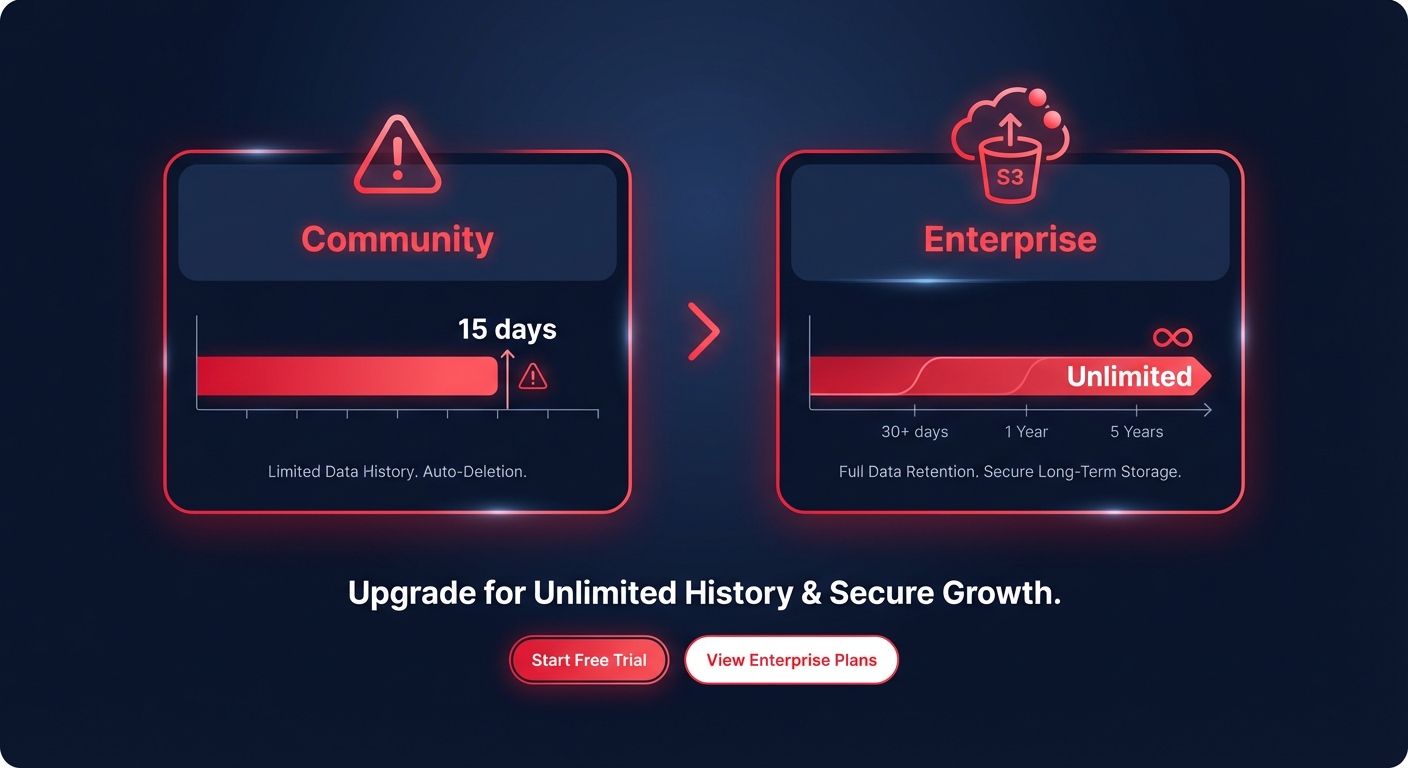
The open-source version of Kubecost serves as an excellent financial microscope for a single cluster, but it quickly hits a ceiling as you reach production scale. One of the primary bottlenecks is the 15-day retention wall. The free tier limits your historical data, which makes it nearly impossible to perform month-over-month comparisons or seasonal trend analysis. Kubecost Enterprise solves this by providing unlimited retention via durable object storage, typically using Amazon S3 to store long-term historical data for audit and analysis.
Management complexity also increases as your footprint grows beyond a single environment. If you are managing multiple EKS clusters, the community version forces you to jump between different dashboards, leading to multi-cluster fragmentation. The Enterprise version offers a federated ETL pipeline that provides a unified multi-cluster view of your entire AWS footprint. This centralization is critical for maintaining a single source of truth across dev, staging, and production environments.
Accuracy gaps represent another significant reason to upgrade. While the free tier estimates costs based on public rates, the Enterprise tier integrates directly with your AWS Cost and Usage Reports (CUR). This integration ensures your dashboards reflect your actual negotiated rates, including the specific impact of Reserved Instances, Savings Plans, and any Enterprise Discount Program (EDP) agreements you have in place.
Architecture and deployment options on AWS
Architecting Kubecost Enterprise on AWS requires moving away from local storage toward a distributed, scalable model that can handle higher throughput. Organizations typically choose between two primary deployment patterns depending on their scale and compliance needs.
The Amazon EKS-optimized bundle
AWS and Kubecost provide a pre-configured bundle available via the Amazon ECR public gallery. This is often the most efficient starting point for teams because it is exempt from the standard spend limits found in the standard v3 free tier. This bundle simplifies the deployment on Amazon EKS by including pre-configured settings that align with AWS best practices, providing immediate visibility into pod-level costs without heavy manual configuration.
Federated Enterprise architecture
For complex, multi-account environments, the federated Enterprise architecture utilizes a high-performance ClickHouse database. This setup scrapes metrics for AWS cloud cost savings from Amazon Managed Service for Prometheus and offloads historical data to S3. Such a distributed architecture ensures that cost history remains available for auditing and chargeback even if a specific cluster is decommissioned or replaced.
Understanding the Enterprise pricing and TCO
Kubecost Enterprise moves away from the free-tier model toward a subscription or usage-based approach. While basic single-cluster visibility is available at no additional cost through the EKS-optimized bundle, full enterprise features usually involve a subscription. On the AWS Marketplace, pricing for enterprise licensing for AWS customers often utilizes usage-based models, though many organizations opt for custom private offers to better align with their specific scale.
When evaluating the total cost of ownership, you should weigh the licensing fee against the potential savings. Organizations using Enterprise features frequently report 30–50% savings generated by automated rightsizing and idle resource detection. For many teams, the engineering hours saved by moving away from manual Kubernetes cost monitoring and reporting more than justifies the investment in a dedicated platform.
Automation patterns for hands-off optimization
The real power of an upgrade lies in moving from passive monitoring to active, automated governance. Enterprise capabilities allow you to embed cost awareness directly into your DevOps workflows rather than treating it as a month-end accounting exercise.
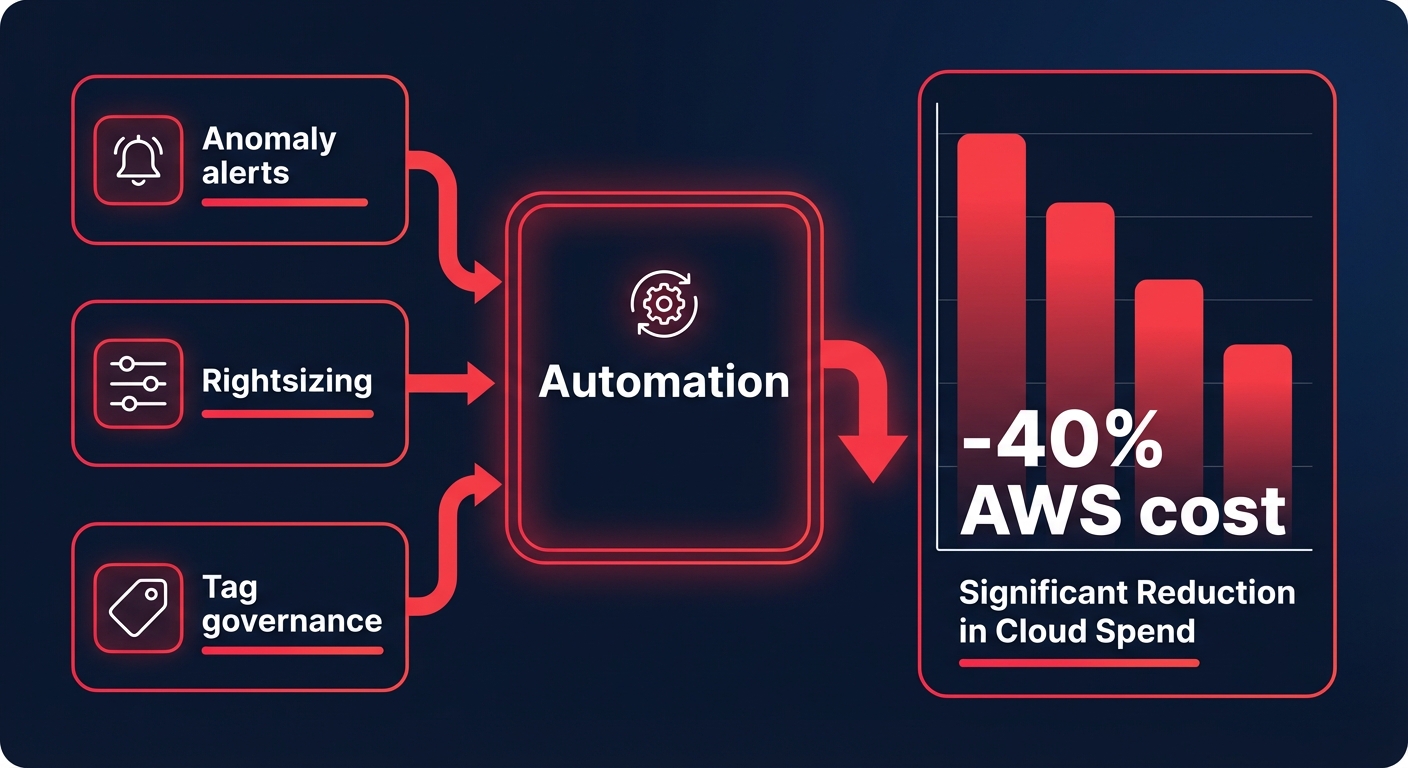
- Real-time anomaly detection allows you to trigger automated cost anomaly alerts via Slack or PagerDuty the moment a deployment exceeds its budget, preventing small configuration errors from becoming massive bills.
- Advanced rightsizing workflows provide 1:1 recommendations for container requests and limits based on historical usage. These can be integrated into CI/CD pipelines to prevent developers from over-provisioning resources during the deployment phase.
- By enforcing a strict taxonomy of AWS cost allocation tags, you can map Kubernetes spend directly to specific business units, which facilitates accurate chargeback and makes individual teams accountable for their infrastructure waste.
Scaling past visibility with Hykell
While Kubecost Enterprise provides the visibility needed to understand your spend, it still requires your engineering team to manually implement the recommended changes. This is where Hykell transforms your strategy from observation to execution. Hykell acts as an autopilot for your AWS environment, taking the insights gathered from your observability stack and turning them into realized savings without constant manual intervention.
Hykell complements your Kubecost deployment by automating AWS rate optimization and rightsizing without any engineering effort on your part. While Kubecost focuses on the granular details inside the cluster, Hykell optimizes the underlying EC2 and EBS infrastructure, ensuring you achieve maximum discount coverage with zero commitment risk.
Most organizations find that combining Kubecost’s pod-level visibility with Hykell’s automated execution leads to a 40% reduction in total AWS costs. Hykell operates on a performance-based model, meaning you only pay a slice of what you actually save. You can stop spending your engineering cycles on manual cost audits and start saving on autopilot by scheduling a free AWS cost audit with Hykell today.