Does your AWS compliance strategy feel like a tax on your performance? While auditors focus on checks and balances, FinOps and DevOps leaders often find themselves caught between strict regulatory requirements and the pressure to optimize cloud spend.
Building a compliant environment in AWS doesn’t have to mean overprovisioning “just in case.” By understanding how frameworks like SOC 2, ISO 27001, PCI DSS, and HIPAA overlap with operational efficiency, you can design infrastructure that is both audit-ready and cost-effective.
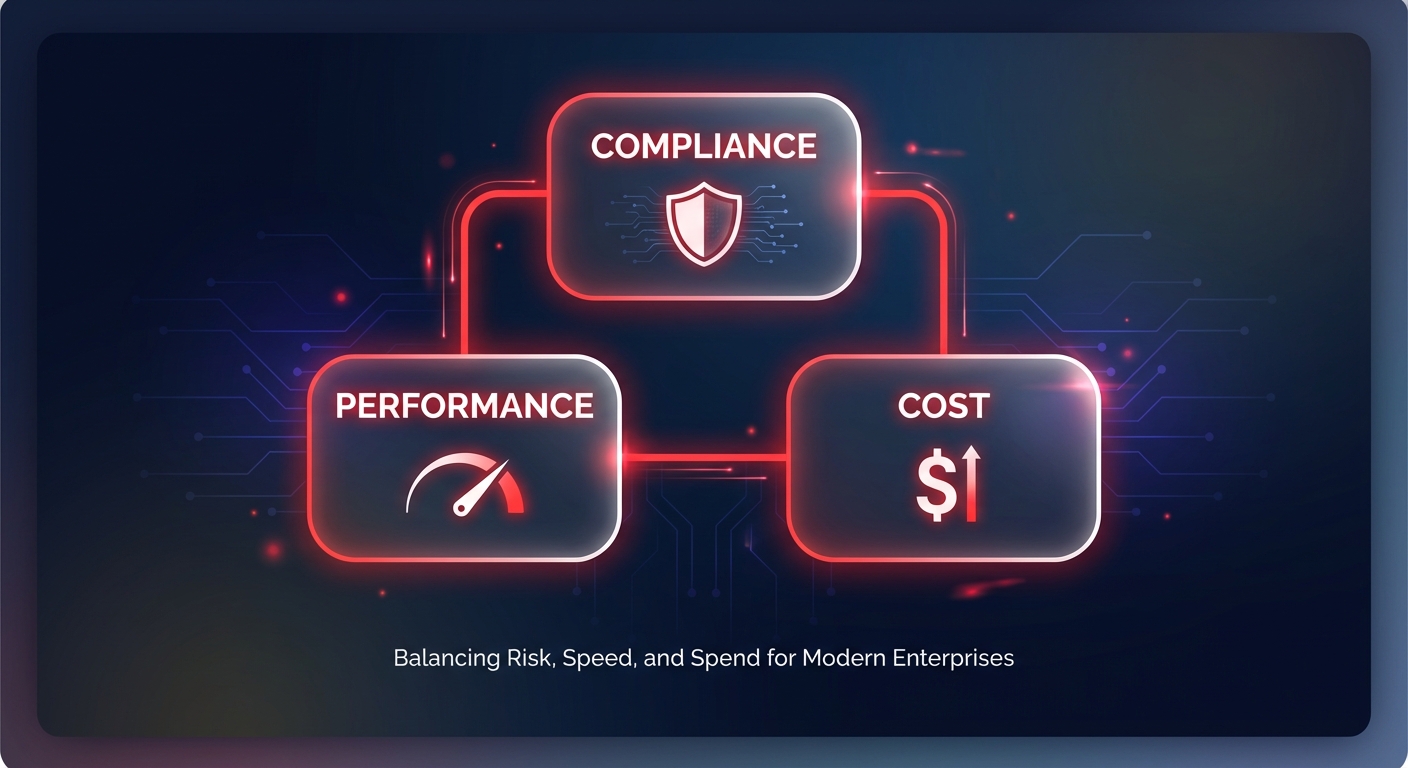
The compliance-performance-cost trifecta
In the world of cloud governance, compliance is often viewed as a security-only domain. However, the AWS Well-Architected Framework explicitly links operational excellence and security with performance efficiency and cost optimization. Understanding these guaranteed service levels is essential because they provide the blueprint for building reliable systems that don’t waste capital.
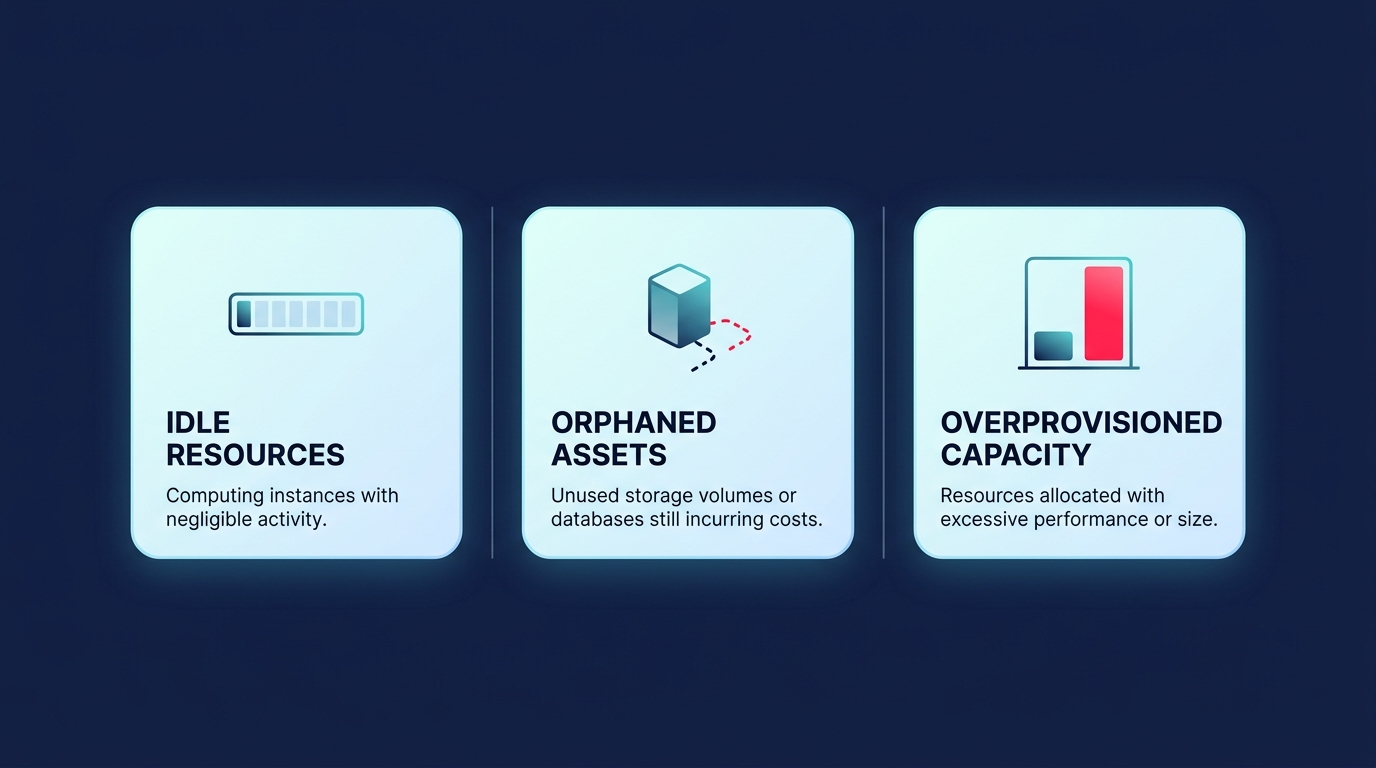
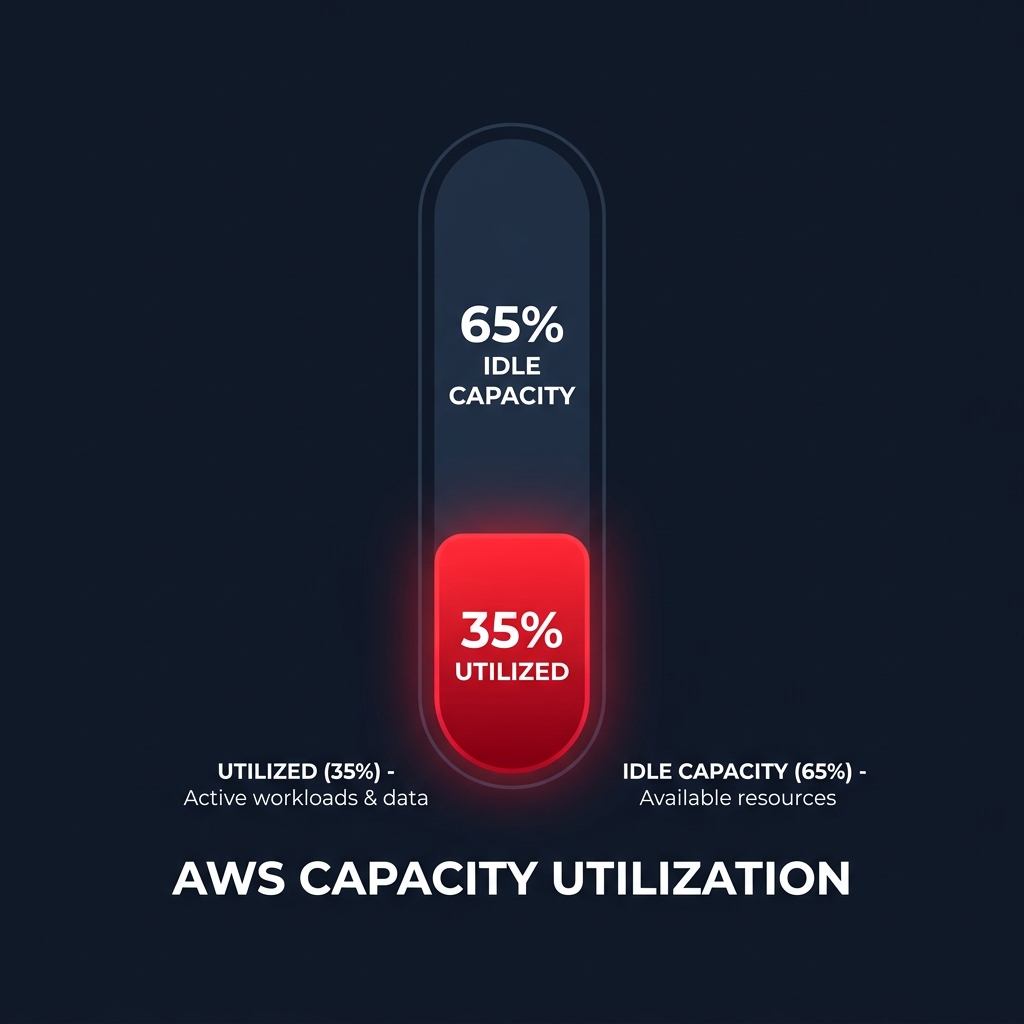
If your environment is compliant but sluggish, you likely fail the availability or processing integrity requirements of modern frameworks. Conversely, if you are overspending on idle resources to meet a perceived compliance “buffer,” you are failing your internal cloud cost governance framework. The goal is to transition from reactive auditing to a state where compliance controls actually drive performance gains and fiscal discipline.
SOC 2: Availability and capacity management
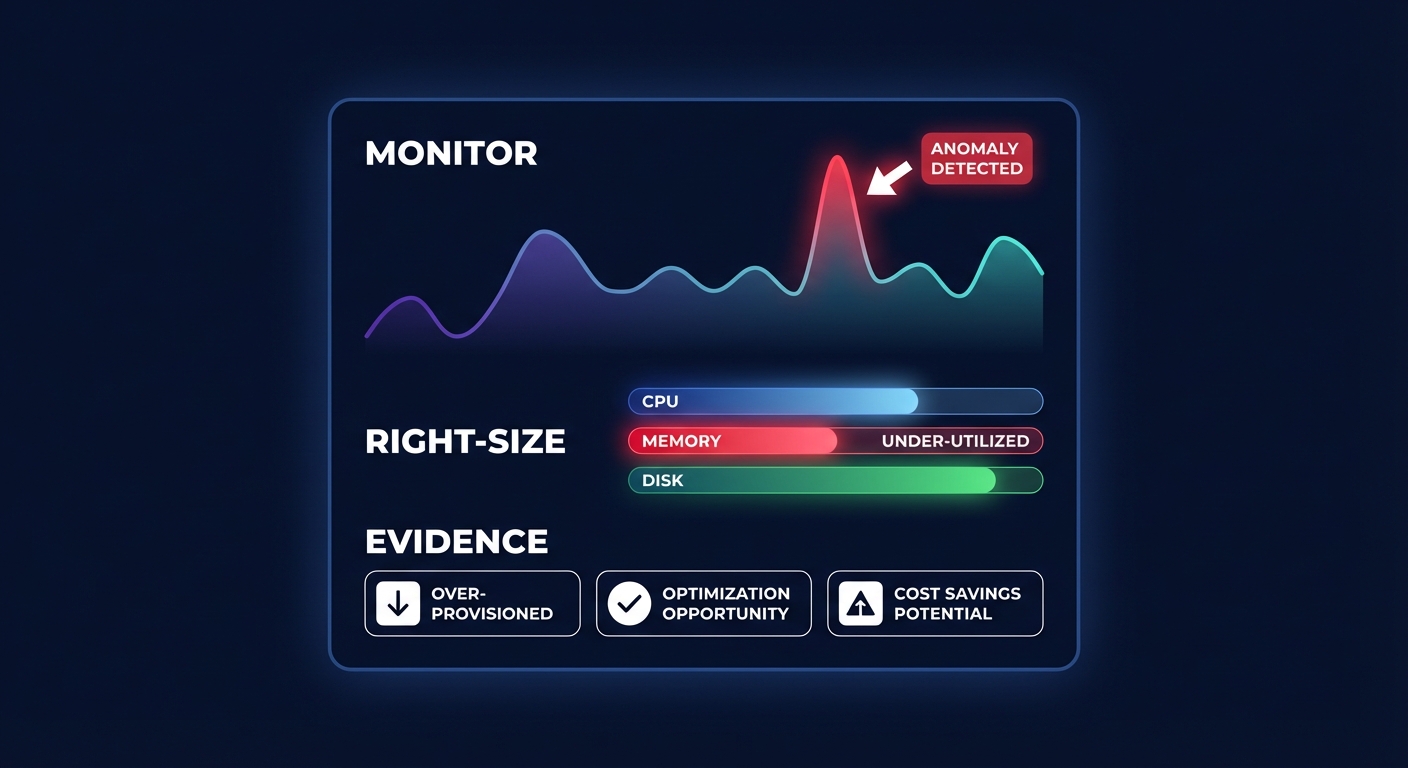
SOC 2 (System and Organization Controls) focuses heavily on the Trust Services Criteria. For AWS users, the “Availability” (CC3 series) and “Processing Integrity” (CC8 series) criteria are where performance and cost intersect most frequently. Auditors look for evidence that you monitor system components to maintain capacity and resolve performance issues before they cause downtime.
Specifically, CC7.1 requires organizations to monitor infrastructure for anomalies. Implementing robust AWS CloudWatch application monitoring provides the necessary telemetry to prove you are tracking CPU, memory, and disk utilization in real-time. To pass a SOC 2 audit without wasting money, you must document a clear right-sizing policy. This policy explains how you use an EC2 instance selection guide to ensure instances meet performance demands without excessive waste. Automated reports showing that you consistently adjust resources based on demand act as primary evidence for operational excellence.
ISO 27001: The mandate for capacity planning
ISO 27001 Annex A.12.1.3 (Capacity Management) is a direct bridge between compliance and cost optimization. It requires that the use of resources be monitored and tuned, with projections made for future capacity requirements. In a static data center, this was a manual inventory process; in AWS, this is handled by a cloud cost audit combined with live performance metrics.
Tuning, in this context, means optimizing your workloads to be as efficient as possible. An AWS Graviton migration is a powerful move for ISO 27001 compliance, as Graviton instances offer up to 40% better price-performance. When you show an auditor that you have transitioned to custom silicon designed for the cloud, you demonstrate proactive resource management that fulfills the “tuning” requirement while significantly lowering your monthly bill.
PCI DSS and HIPAA: The cost of logging and isolation
PCI DSS and HIPAA introduce stricter requirements for data isolation and audit trails, which can significantly drive up expenses if managed poorly.
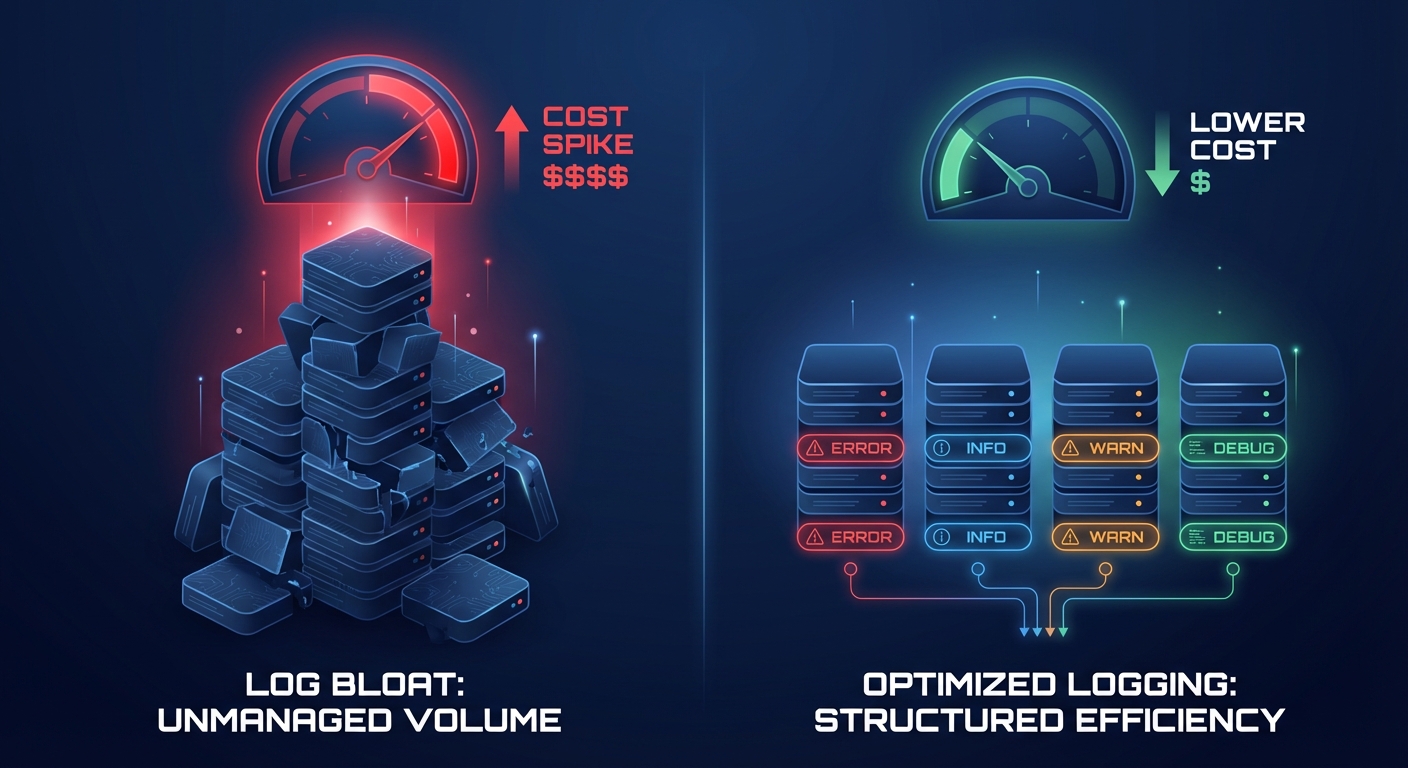
- Logging requirements: PCI DSS Requirement 10 and HIPAA §164.312(b) demand extensive audit logs. This often leads to “log bloat” where CloudWatch Logs pricing becomes a major portion of your bill, sometimes reaching 30% of total spend for high-growth teams.
- Asset inventory: Both frameworks require a precise inventory of all resources handling sensitive data. This is where AWS cost allocation tags become a dual-purpose tool. They provide the metadata for your compliance asset list while simultaneously allowing FinOps teams to perform effective cost allocation.
Design patterns for compliant efficiency
To balance these requirements, high-performing AWS teams adopt specific design patterns that satisfy auditors while keeping infrastructure costs predictable.
Implementing AWS cost anomaly detection fulfills the SOC 2 requirement for “continuous monitoring” of system changes. If a developer accidentally launches a massive, non-compliant instance, you catch the financial impact and the security risk simultaneously. Furthermore, you can use AWS Config cost optimization strategies to enforce that no resource is launched without mandatory tags, such as `Owner` or `DataClassification`. This ensures every dollar spent is attributable to a specific compliance scope.
Compliance often requires high availability, which leads many teams to avoid Spot instances for production. However, you can still achieve massive savings through AWS rate optimization using Savings Plans and Reserved Instances. By committing to a baseline of “compliant compute,” you can reduce costs by 30-72% without changing your architecture or risking your performance SLA.
How Hykell supports compliant AWS environments
The friction between compliance and optimization usually stems from the manual effort required to manage both. Hykell bridges this gap by automating the financial side of your infrastructure without touching the configuration of your compliant workloads.
Our cloud observability platform provides the role-based views needed for audits. While your DevOps team sees real-time performance anomalies, your compliance officers can access the historical resource utilization data required for SOC 2 and ISO 27001 evidence.
Hykell’s automated AWS cost optimization works in the background to ensure you are always on the most efficient rate strategy. Because our tool requires zero code changes and operates via read-only access for analysis, it fits seamlessly into even the most stringent HIPAA or PCI-regulated environments. You maintain the performance and security standards your auditors demand, while we automatically strip away the 30-40% of waste that typically accumulates in complex, compliant clouds.
Ready to see how much your compliant environment could be saving? Calculate your potential savings or schedule a deep-dive cloud cost audit today.