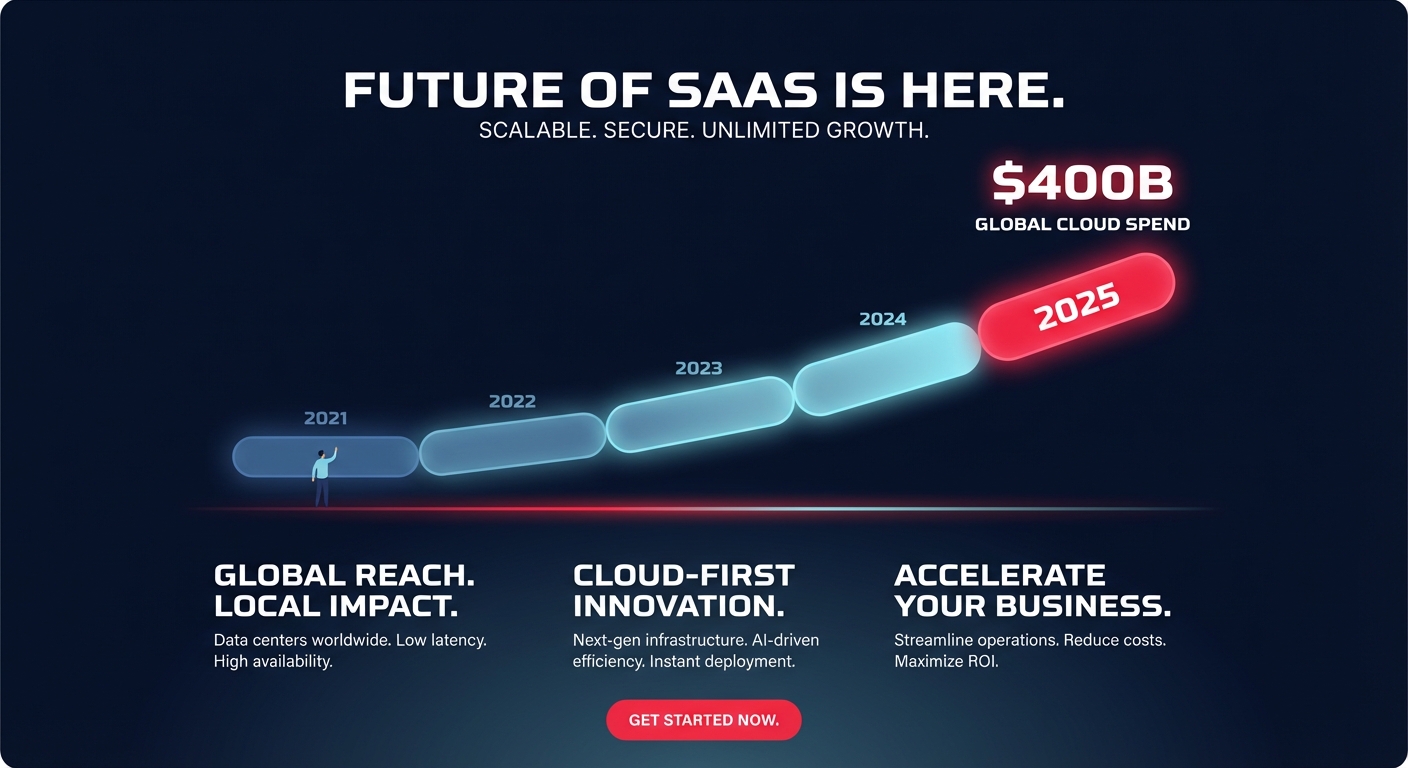
Are you still treating your AWS bill as a fixed cost? With global cloud infrastructure spending projected to exceed $400 billion in 2025, the gap between simply “paying for the cloud” and “optimizing for value” is widening. Staying competitive requires moving beyond manual audits toward high-velocity automation.
As AWS continues to lead the market with a ~30% share, the complexity of its pricing models is evolving. For engineering and FinOps teams, the primary challenge in 2025 is no longer just finding savings but managing the velocity of cloud spend in real time.
The state of cloud waste in 2025
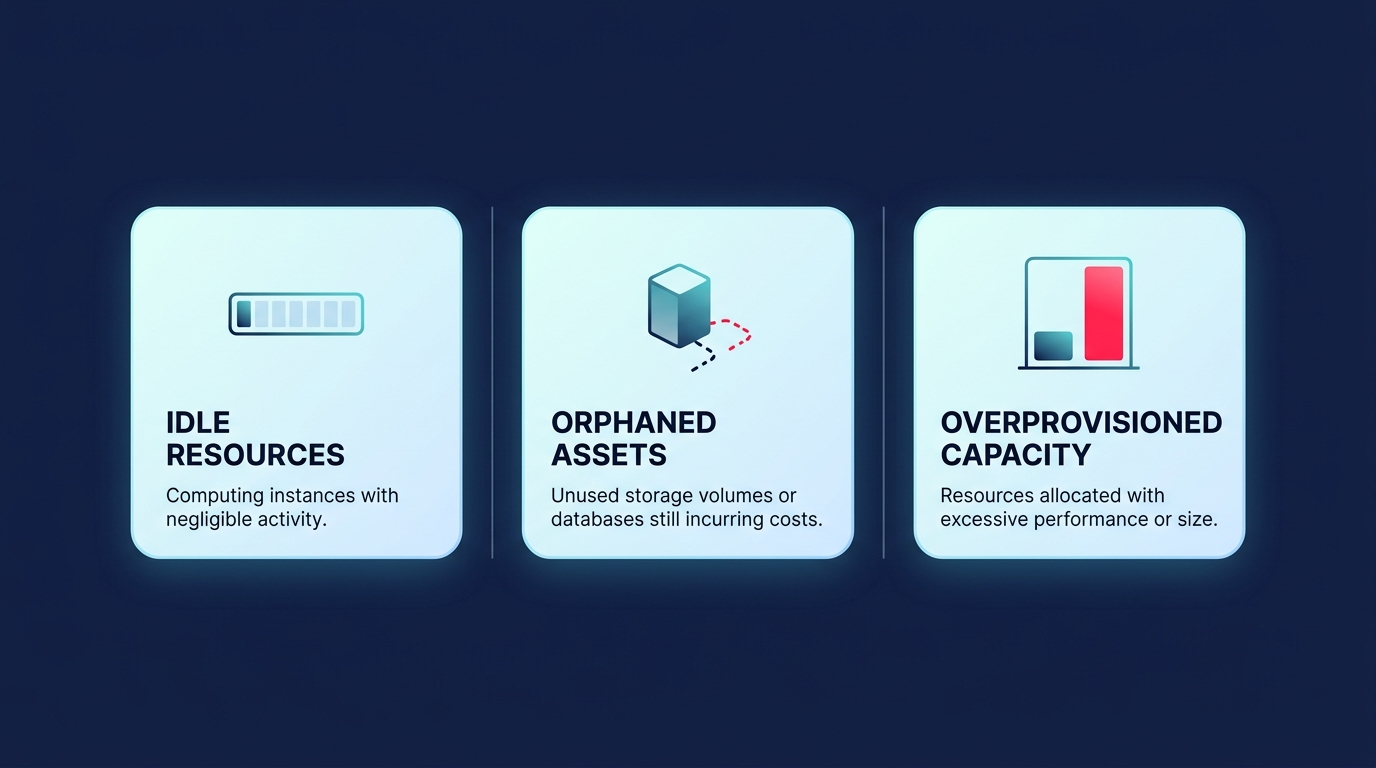
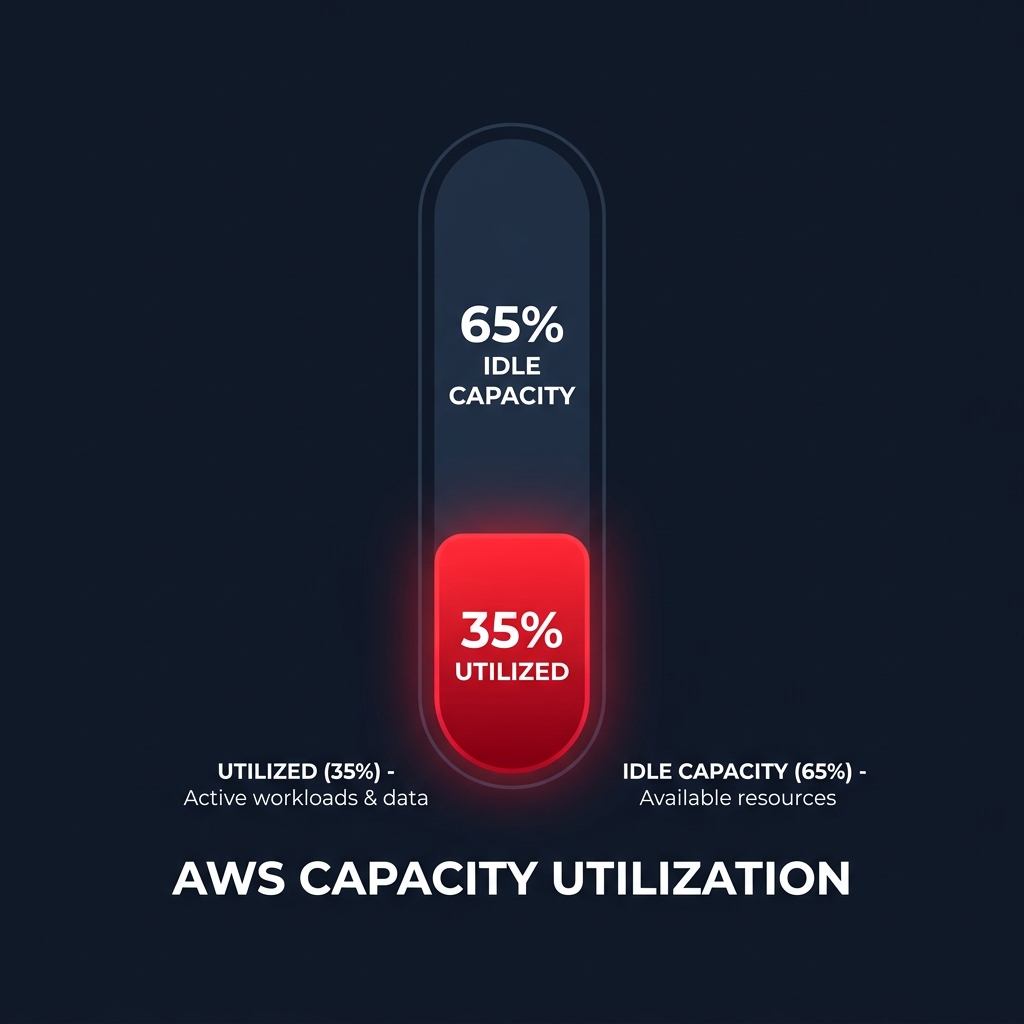
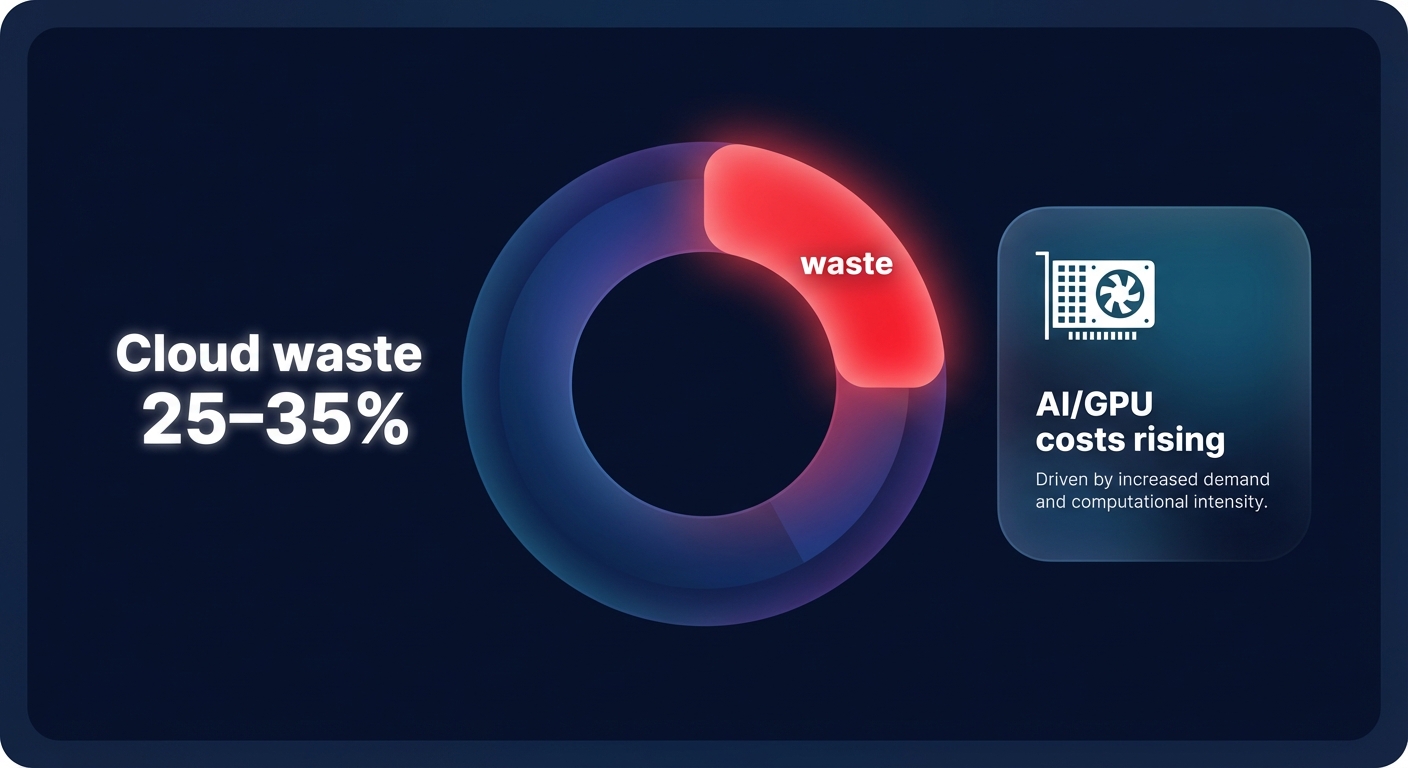
Despite the maturity of cloud-native governance tools, organizations typically overspend by 25–35% on their cloud resources. In high-growth environments, waste can frequently exceed 40% due to idle resources and over-provisioned instances. This inefficiency is becoming more expensive as companies rush to adopt AI and data-intensive workloads, which drive demand for expensive GPU and custom silicon instances.
The GPU-as-a-service market alone is projected to grow from $3.23 billion in 2023 to nearly $50 billion by 2032. For technical leadership, this means the “cost of curiosity” in AI development is higher than ever. To prevent experimental projects from blowing through annual budgets in weeks, comprehensive cloud observability has transitioned from a luxury to a non-negotiable requirement.
Emerging AWS pricing and cost drivers
The AWS pricing landscape is shifting from simple usage fees toward complex, tiered structures and specialized commitments. Understanding these shifts is the first step in maintaining a lean infrastructure.
- The 2025 Lambda Log Tiering Update: Starting May 1, 2025, AWS is introducing tiered ingestion pricing for Lambda logs. While the first 10 TB remains at $0.50/GB, high-volume users can see costs drop for usage over 50 TB. This shift highlights the need for proactive CloudWatch Logs management to prevent observability “bill spirals” that often represent up to 30% of an engineering team’s monthly bill.
- Expansion of Custom Silicon: Migrating to ARM-based architecture is no longer an experiment for niche workloads. Adopting AWS Graviton instances now offers up to 40% better price-performance over traditional x86 instances, making it the most effective hardware-level lever for reducing compute spend without re-architecting your entire stack.
- Data Egress Scrutiny: Data transfer costs can silently devour a budget, representing 25–35% of the total spend for data-heavy platforms. Between cross-AZ traffic fees and regional transfers, teams are increasingly turning to architectural audits to minimize unnecessary data movement.
From manual management to automated FinOps
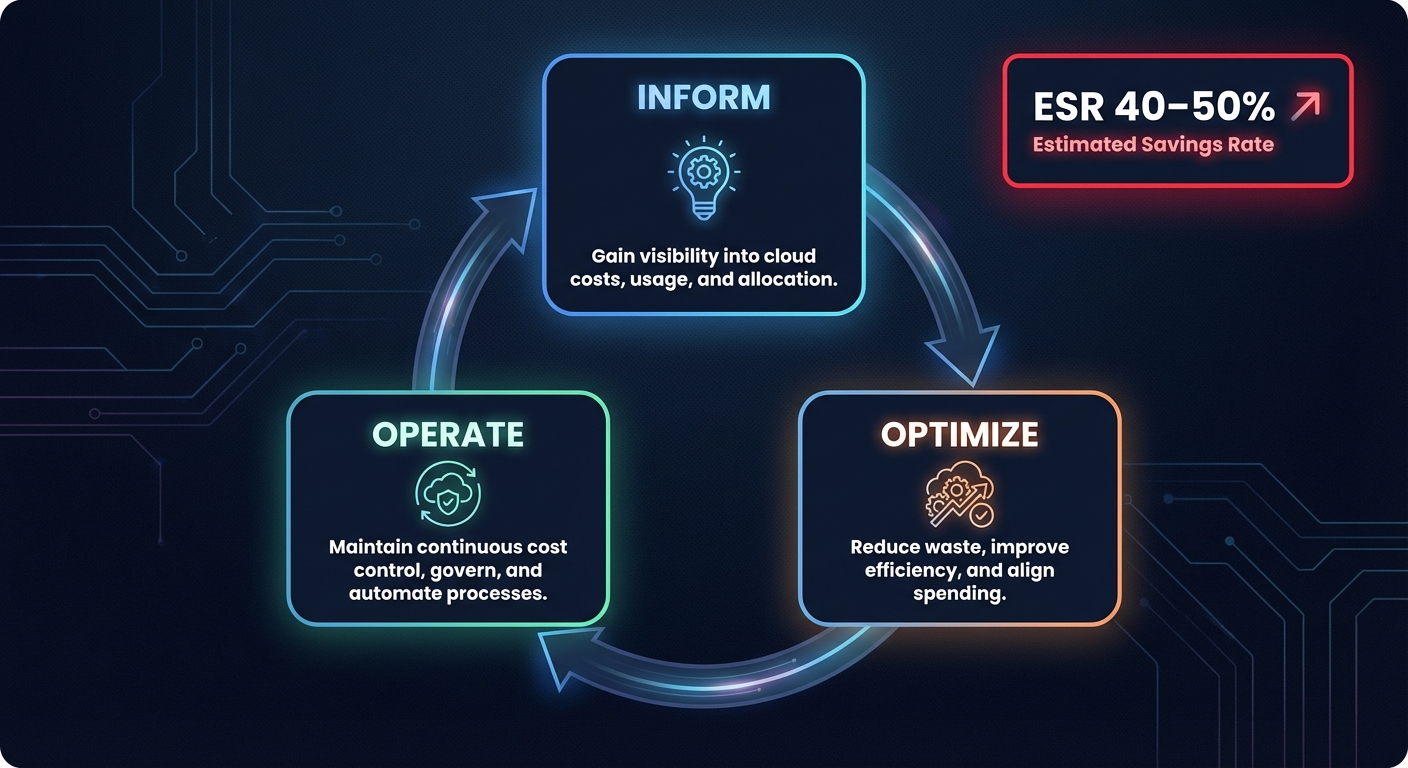
The “Inform, Optimize, Operate” cycle remains the backbone of any successful FinOps framework, but manual execution is failing to keep pace with modern deployment speeds.
Effective Savings Rate (ESR)
Mature FinOps teams have moved beyond “coverage” as their primary metric. Instead, they focus on the Effective Savings Rate (ESR), which measures the actual discount achieved compared to On-Demand pricing. While a typical team might see an ESR of 10–15%, top performers using automated rate optimization often push this above 40–50% by algorithmically blending Savings Plans, Reserved Instances, and Spot capacity.
Rightsizing on autopilot
Manual rightsizing audits are often obsolete before the report is even downloaded. In 2025, the trend is moving toward automated AWS rightsizing, where machine learning analyzes P99 utilization to downsize underutilized EC2 and RDS instances without engineering intervention. This proactive approach ensures your infrastructure scales with actual demand, rather than relying on “safety buffers” that eat into your margins.
Practical best practices for 2025
To stay ahead of the curve, your team should prioritize high-impact strategies that target the most common sources of waste.
- Enforce Tagging Governance: Use AWS Tag Policies to prevent “tag sprawl.” Comprehensive cost allocation tags allow you to attribute every dollar to a specific owner or project, eliminating the “unallocated spend” black hole that often consumes up to 50% of unmanaged budgets.
- Optimize Kubernetes Density: For EKS environments, focus on pod rightsizing and intelligent node scaling. Using tools like Karpenter can help bin-pack workloads onto the most cost-effective instance types, reducing cluster costs by 30–50%.
- Storage Tiering: Migrating from EBS gp2 to gp3 can yield a ~40% price reduction while providing better baseline performance. You should also automate the deletion of orphaned snapshots and unattached volumes to prevent “zombie” costs.
- Leverage Spot Instances for Non-Critical Workloads: For fault-tolerant tasks like CI/CD or batch processing, Spot Instances offer up to 90% savings over On-Demand rates.
Modernize your cost strategy
The future of cloud optimization is not found in spreadsheets, but in intelligent automation. As AWS infrastructure becomes more complex, the teams that thrive will be those that treat cost optimization as a continuous, automated process rather than a quarterly chore.
By combining deep visibility with automated remediation, you can reclaim up to 40% of your AWS budget while ensuring your engineering talent stays focused on innovation. If you are ready to see how these trends apply to your specific environment, scheduling a comprehensive cloud cost audit is the first step toward turning your cloud spend into a sustainable competitive advantage with Hykell.