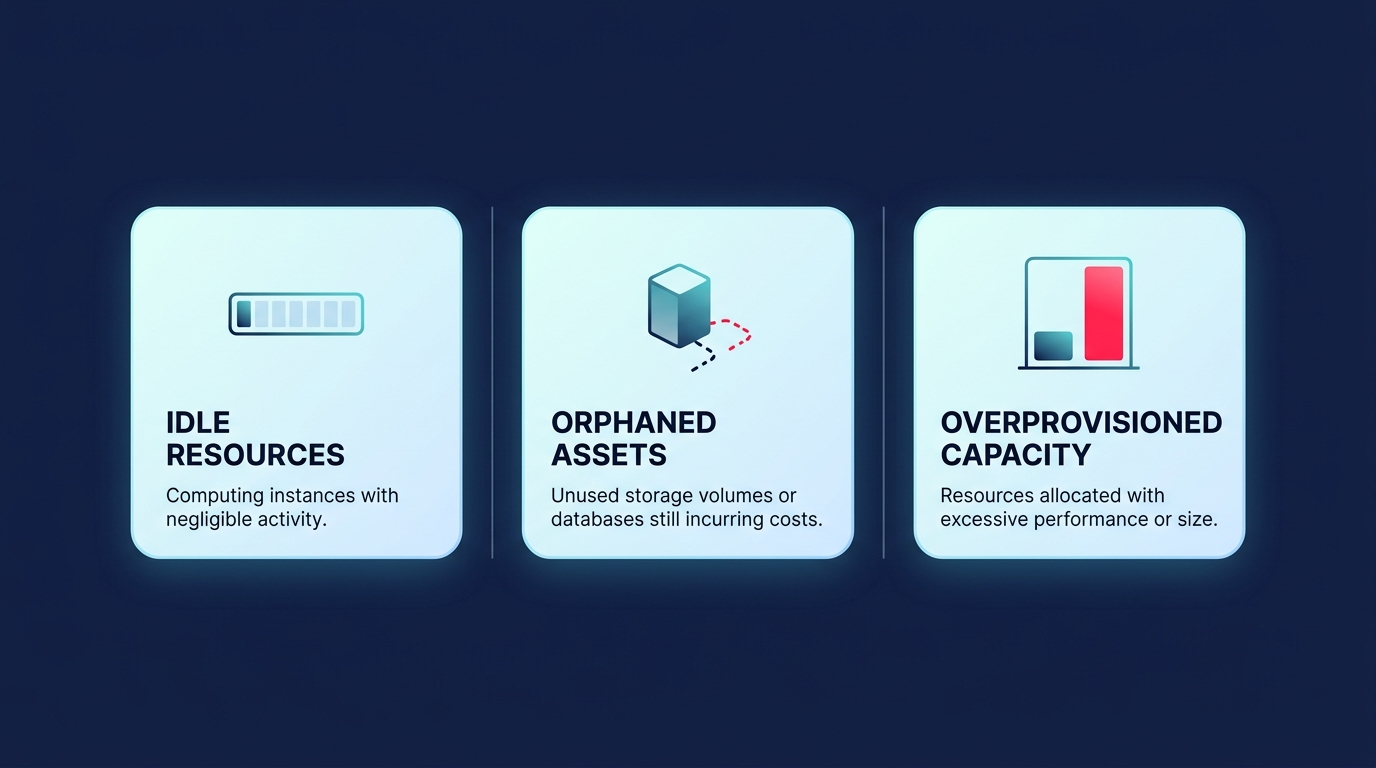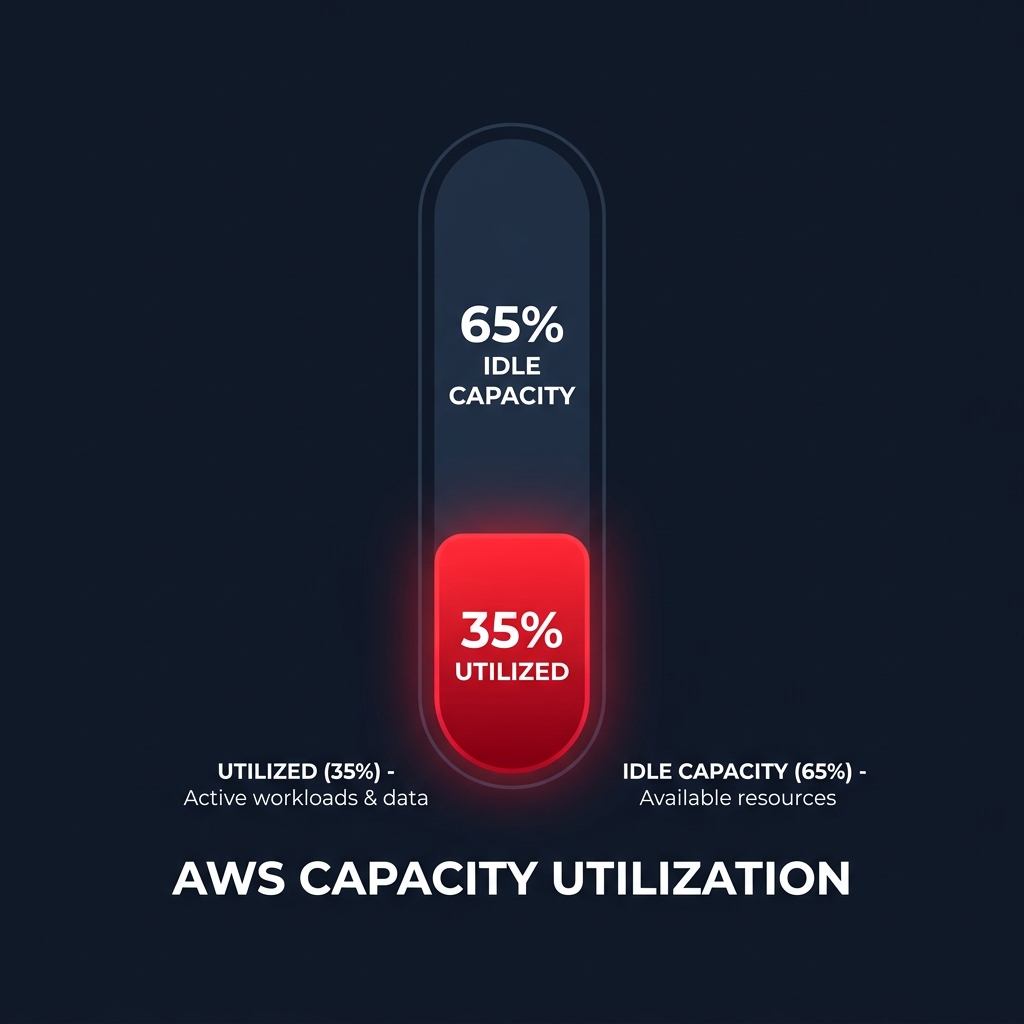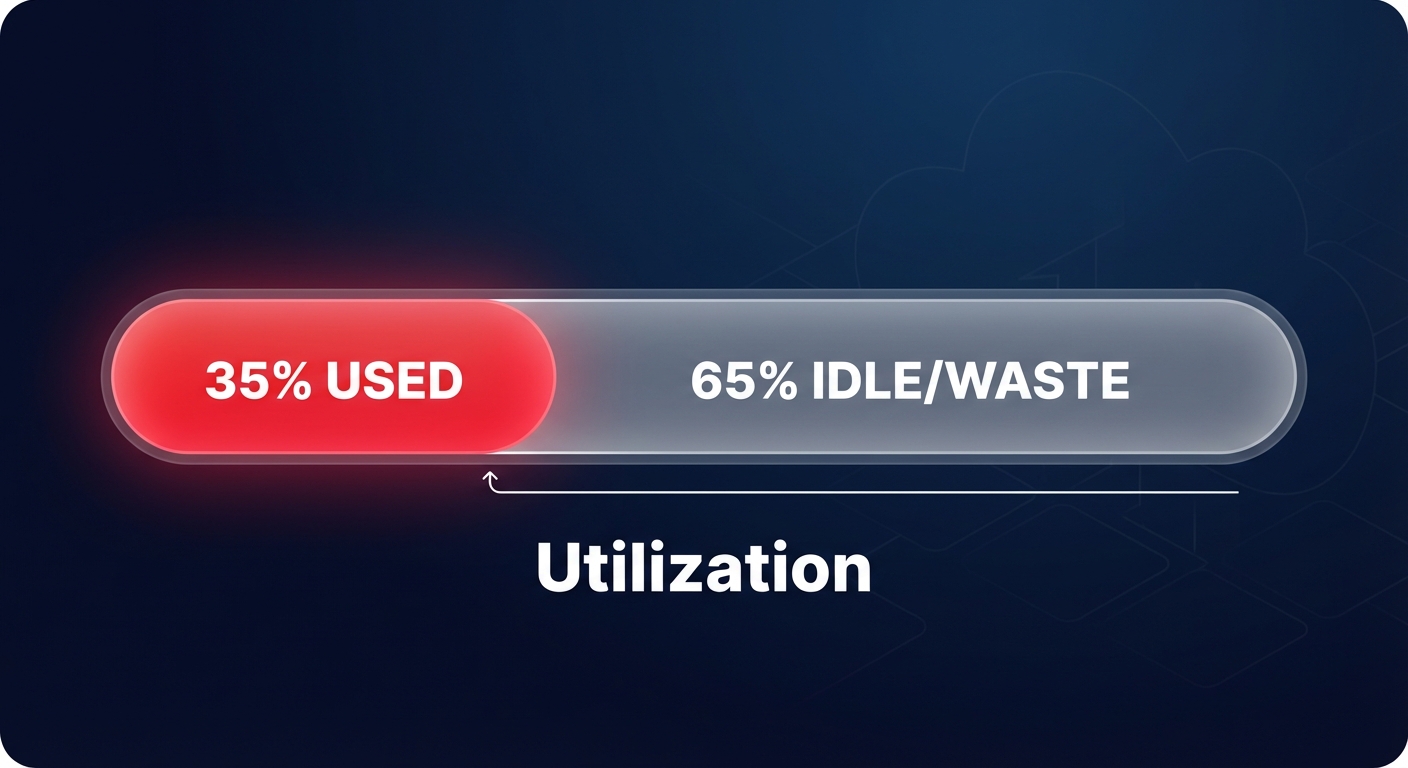
Are you actually measuring your cloud’s success, or just watching the bill grow? Most AWS environments operate at a meager 30–40% utilization, meaning nearly two-thirds of your budget vanishes into idle capacity and unoptimized commitments.
Migration KPIs: Tracking velocity and value
When you move workloads to the cloud, your metrics must reflect more than just “getting there.” Measuring the efficiency of the transition ensures you are not just migrating architectural debt to a more expensive location. Establishing a baseline using AWS billing best practices helps you understand your starting point before you scale.
Migration velocity serves as the primary pulse of your project, tracking the number of workloads or applications migrated per month or quarter. This visibility allows you to identify bottlenecks within your migration strategy, whether you are utilizing a simple rehost or more complex refactoring. Alongside velocity, you should measure the adoption of Infrastructure as Code (IaC). Aiming for high coverage with Terraform or CloudFormation prevents the creation of “zombie” resources that typically plague manual environments.
Finally, a rigorous total cost of ownership (TCO) comparison is essential. By comparing pre-migration costs against cloud performance benchmarking data, you can validate the financial logic of the move. Organizations that align these migration KPIs with broader business outcomes often achieve up to 37% faster time-to-market for new features.
Operational excellence: The FinOps metrics that matter
Once your infrastructure is operational, your focus must shift from migration speed to continuous efficiency. High-growth teams often discover that hidden expenses, such as AWS CloudWatch logs pricing spikes, can represent up to 30% of their total bill. Managing these expenses requires a shift toward sophisticated FinOps KPIs that track both spend and commitment health.
Effective Savings Rate (ESR)
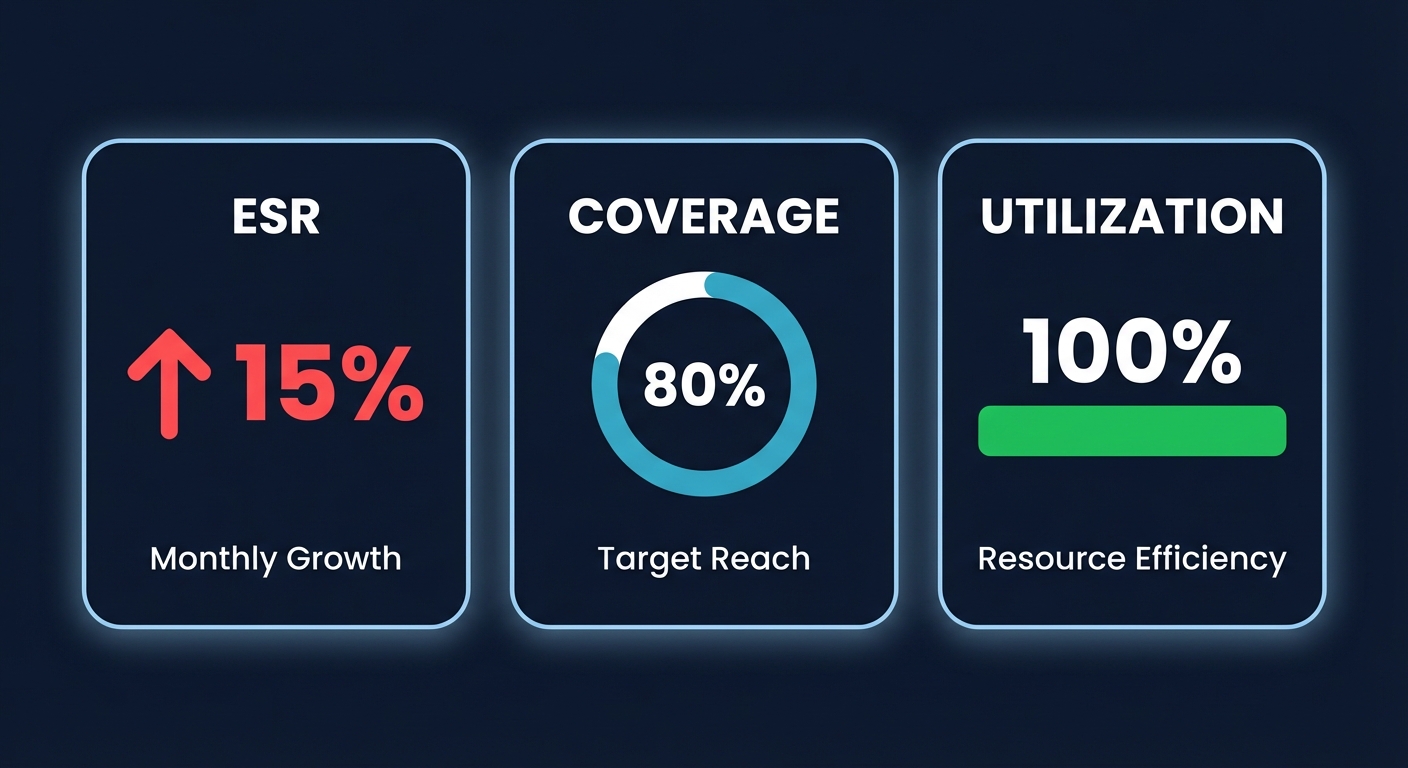
The Effective Savings Rate (ESR) is a critical metric for measuring FinOps maturity. This unified metric captures the true efficiency of your cloud commitments by factoring in the actual discounts achieved versus on-demand rates. While choosing between AWS Savings Plans and Reserved Instances can offer up to 72% discounts, a low ESR typically indicates that you are paying for unused capacity or missing coverage. Hykell’s AWS rate optimization specifically targets this gap, often doubling the ESR for customers by algorithmically blending different commitment types to maximize flexibility.
Commitment coverage and utilization
Maintaining high discount coverage is only half the battle. You should target an RI/Savings Plan coverage rate above 80% to ensure the majority of your eligible spend is discounted. However, this must be balanced against commitment utilization, which should stay near 100%. If your coverage is high but your utilization is low, you are wasting capital on empty reservations that provide no real-world value.
Unit economics and cost per customer
Technical metrics like total monthly spend often fail to resonate with executive leadership. To bridge this gap, you must track unit economics, such as the cost per customer or cost per transaction. This connects engineering performance directly to revenue growth. If your AWS bill grows by 20% while your customer base expands by 50%, your efforts in automated AWS rightsizing and efficiency are delivering measurable business scaling.
Performance vs. cost: The “Golden Signals” of optimization
Optimizing your cloud budget should never lead to a breach of your AWS performance SLA. Instead, you should use technical utilization metrics to identify over-provisioning without impacting the end-user experience. You must track technical utilization metrics to identify where you are over-provisioned.
Aim for an average fleet utilization of 60–80% for CPU and memory on production workloads; if your fleet averages below 10%, you are carrying significant waste. You should also monitor your idle resource percentage, identifying any assets with minimal utilization over 14 days as prime candidates for automated AWS rightsizing. Storage efficiency and migrating applications to Graviton offer further gains, as ARM-based processors can deliver up to 40% better price-performance. Hykell can help you accelerate your Graviton gains by identifying compatible workloads automatically and managing the transition.
Implementing and tracking KPIs in AWS
Effective tracking requires a multi-layered approach to visibility that goes beyond the basic summaries in AWS Cost Explorer. You need to establish governance that makes every dollar accountable through precise attribution and real-time alerts.
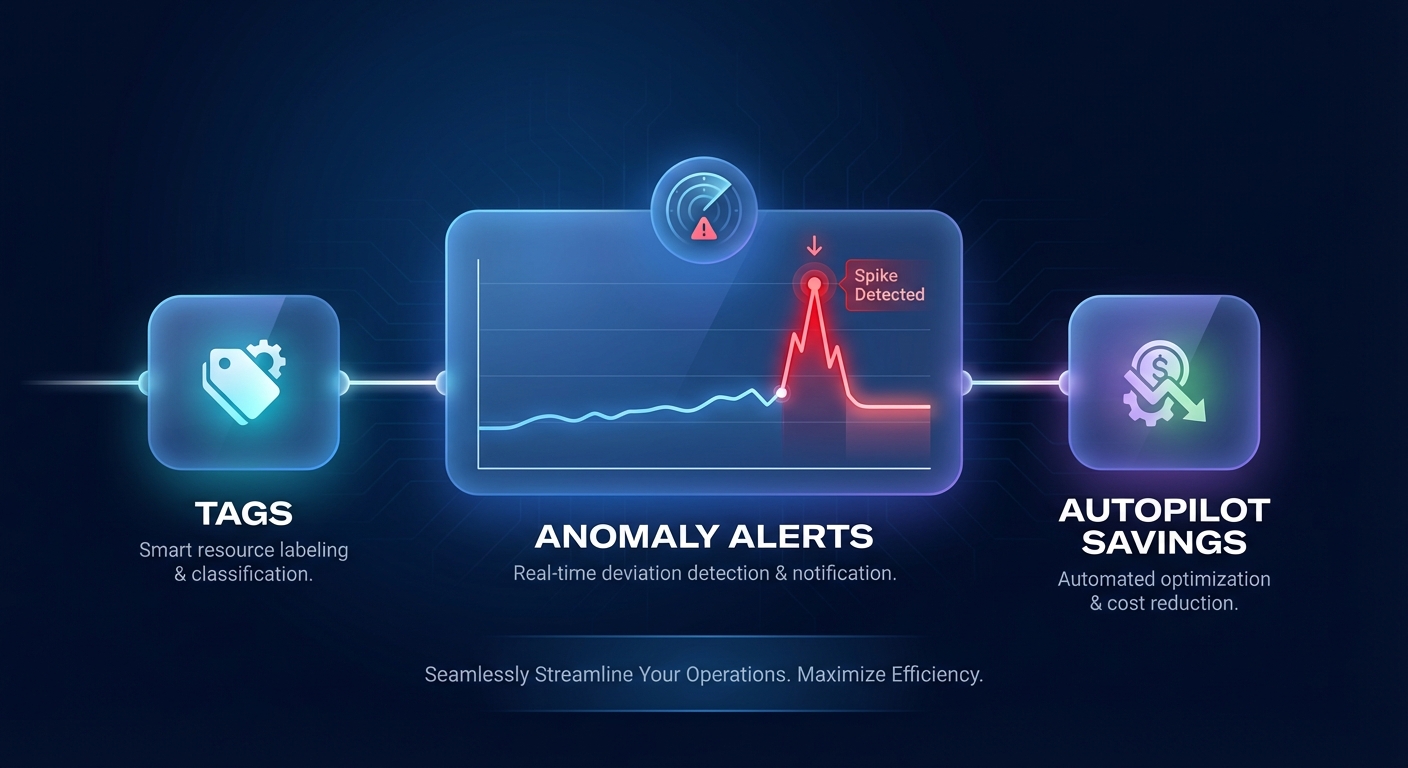
Robust implementation starts with AWS cost allocation tags, ensuring every resource is tied to a specific business unit, environment, or application ID. Without this, cost attribution becomes guesswork. Once tagging is in place, you should deploy cost anomaly detection automation to catch spend spikes in real time. This is critical for controlling AWS egress costs, where a single misconfigured function can generate thousands of dollars in debt within hours. Finally, provide your team with role-specific observability tools so that CFOs and DevOps leads alike have the granular data they need to make informed decisions.
Moving from metrics to automated outcomes
While tracking KPIs is the foundation of a healthy cloud environment, the real value lies in execution. Many engineering teams fail to capture 30–40% of potential savings because they lack the time to manually apply rightsizing recommendations or manage the complexities of reservation marketplaces.
Hykell solves this by putting your AWS savings on autopilot. Instead of just delivering another dashboard, we execute the optimizations – covering everything from EC2 and EBS adjustments to advanced Kubernetes cost optimization – with zero engineering lift. Because our model is performance-based, we only take a slice of what you save. Stop managing complex spreadsheets and start managing outcomes by booking a free AWS cost audit with Hykell today.