Are you leaving seven figures on the table by treating your AWS bill as a fixed cost? For organizations spending over $1 million annually, the AWS Enterprise Discount Program (EDP) is the ultimate lever for cost predictability – if you know how to navigate the commitment risks.
The AWS EDP – also referred to as a Private Pricing Agreement (PPA) – is a contractual commitment where you pledge a specific dollar amount of spend over a one-to-five-year term. In exchange, AWS provides a percentage discount that applies broadly across more than 200 services. Unlike AWS Savings Plans or Reserved Instances that target specific compute or database resources, an EDP acts as a blanket discount on your entire cloud portfolio, including compute, storage, databases, and networking.
Eligibility and the hidden requirements of entry
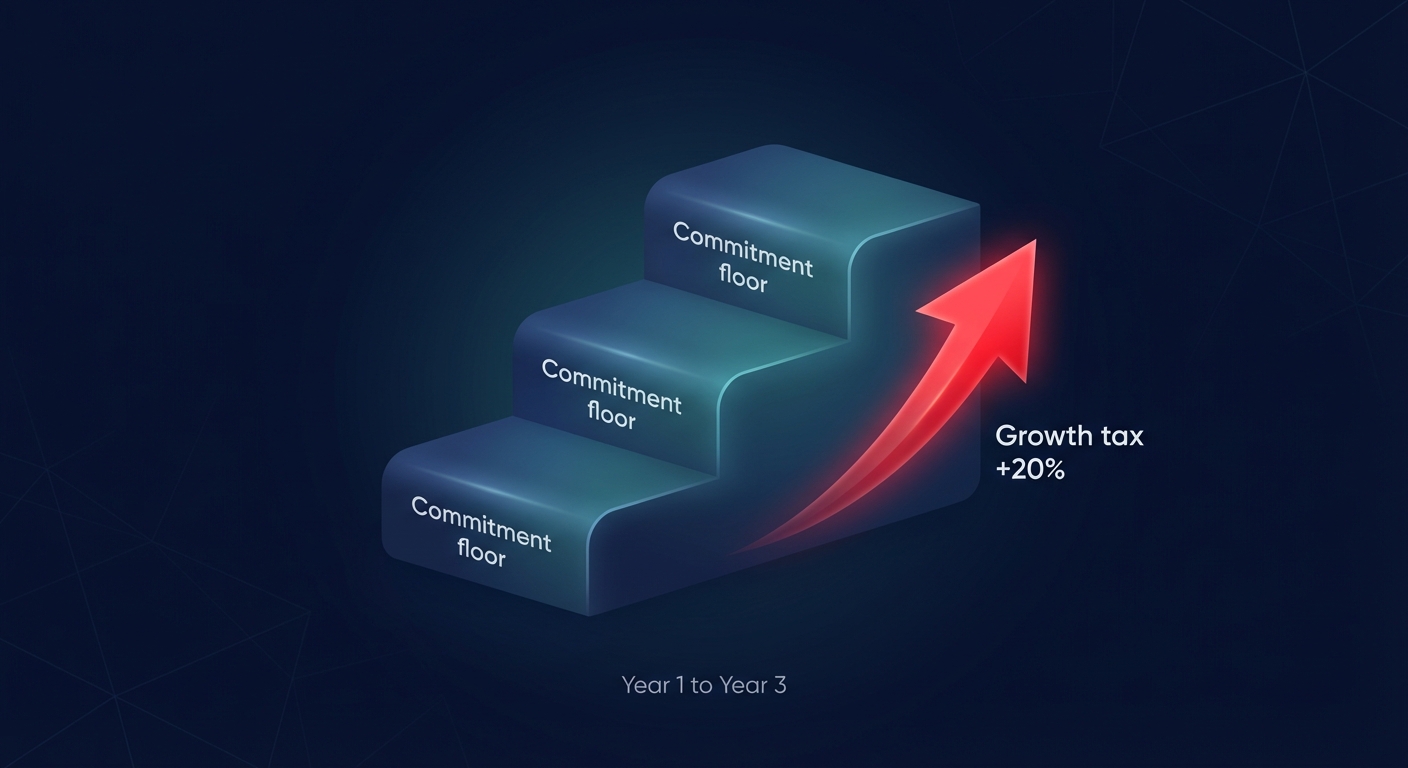
While AWS officially suggests a $1 million annual spend threshold, many organizations successfully negotiate agreements starting at $500,000 if they can demonstrate a high-growth trajectory. However, entry often comes with a “growth tax” that requires your first-year commitment to be significantly higher than your trailing spend – typically a 20% increase over the previous six months.
This growth requirement is non-negotiable and creates a significant risk for businesses with unpredictable workloads. If you commit to $3 million in the first year, you generally cannot reduce that pledge in the subsequent years of the contract; you are locked into a spend floor that only moves upward. Furthermore, EDP participation requires mandatory Enterprise Support, which can cost between 3% and 10% of your monthly usage. For many mid-sized firms, these support fees can cannibalize a significant portion of the negotiated savings if the agreement is not structured carefully.
Typical discount ranges and pricing thresholds
Negotiation leverage in an EDP is largely driven by your annual commitment level and contract duration. Baseline discounts for a $1 million commitment typically range from 6% to 9%. However, 3-year agreements often secure approximately 15% discounts compared to roughly 10% for 1-year deals at the same spend level. Strategic pricing breaks occur at specific annual spend milestones, specifically at $1.5M, $2M, and $5M.
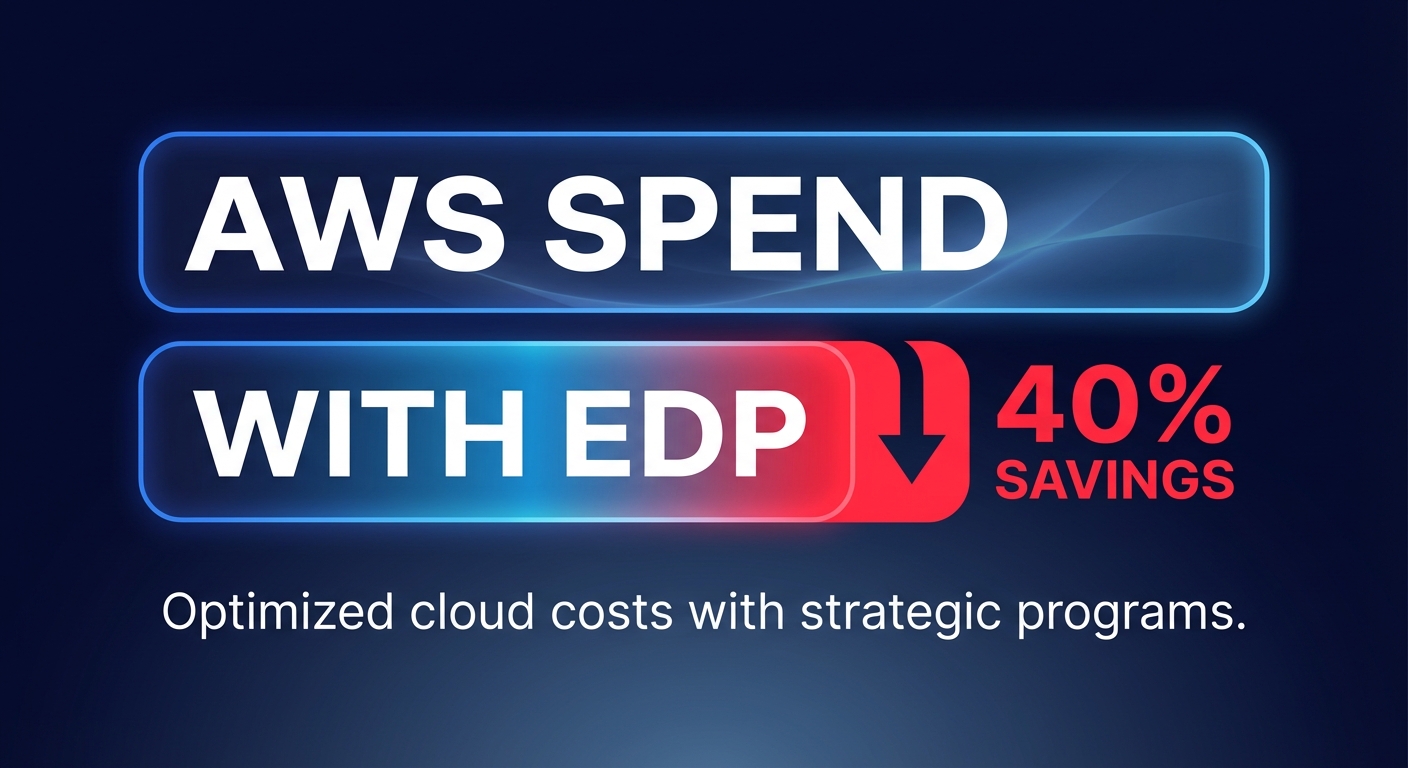
A minor increase in your committed volume can sometimes yield a disproportionate jump in your discount rate. For instance, moving from a $1.5 million to a $1.6 million annual commitment can increase your discount rate from 12% to 14%. When combined with aggressive AWS rate optimization that targets specific service types, mature organizations often achieve an overall discount of 40% to 70% off On-Demand rates.
Mastering the negotiation: leverage points for CFOs
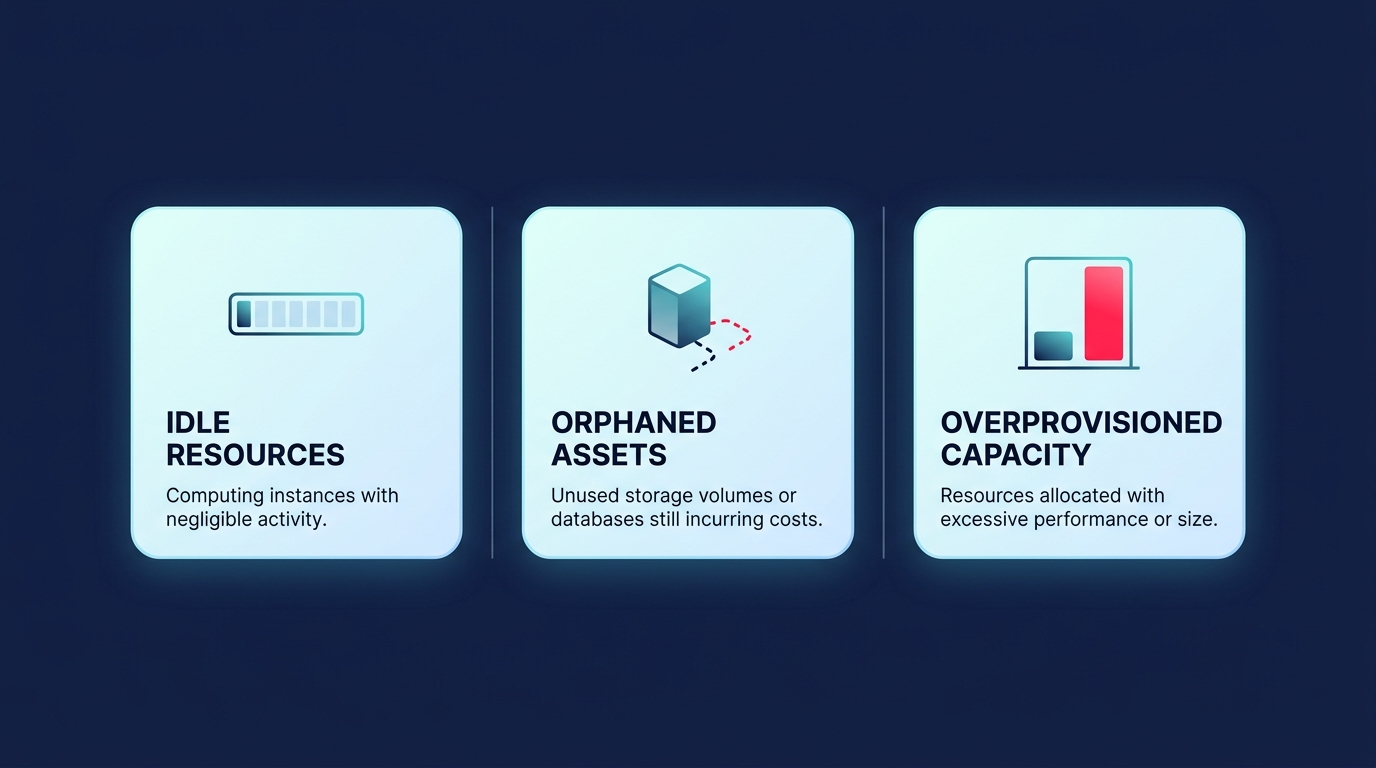
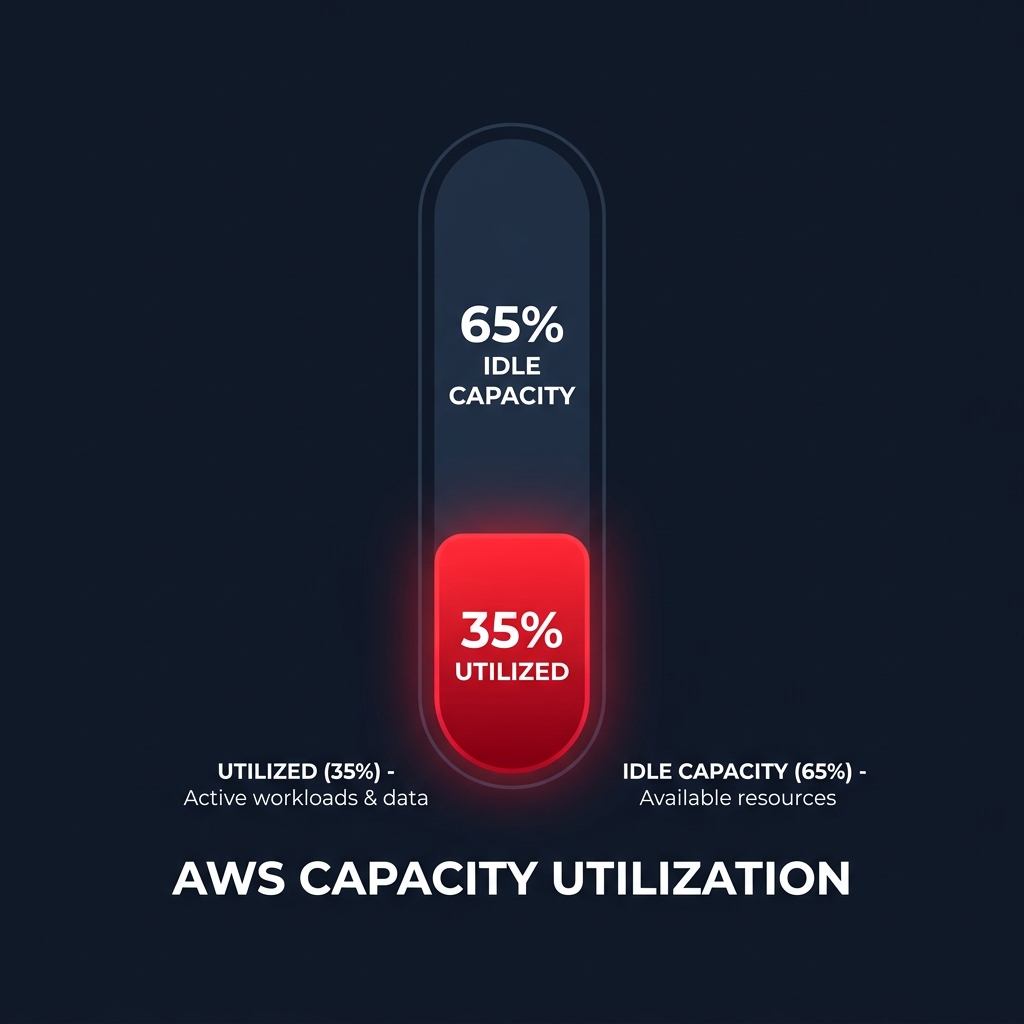
The most common mistake engineering leaders make is entering negotiations without first “cleaning the house.” AWS calculates your EDP offer based on your gross spend, which often includes significant waste. If you perform a forensic audit of your AWS costs and eliminate orphaned EBS volumes or right-size oversized EC2 instances before the negotiation, you can commit to a lower, more efficient baseline that better reflects your actual needs.
During the negotiation, you should focus on several high-leverage terms to ensure the contract remains flexible.
- Pre- versus post-discount measurement: You must clarify if your commitment is measured before or after the discount is applied. If you commit to $2 million but receive $200,000 in discounts, you should negotiate for the full $2 million to count toward retiring your commitment rather than just the $1.8 million net spend.
- Marketplace inclusion: By default, AWS limits Marketplace purchases to 25% of your committed spend. If your stack relies heavily on third-party SaaS from the AWS Marketplace, you can negotiate to increase this threshold to 30% or 35% to provide more flexibility in how you meet your spend obligations.
- True-up mechanics and clarity: Insist on quarterly true-ups rather than annual ones to provide better visibility into your “pacing” and prevent an unexpected bill at the end of the year. Additionally, ensure you define which services are excluded from the discount, as data transfer fees or specialized managed services can represent hidden costs in your AWS commitments.
Aligning EDP with automated cost optimization
An EDP is not a substitute for active resource management; it is a foundation that works best when stacked with other instruments. While the EDP provides a portfolio-wide discount, you should still utilize Savings Plans and Reserved Instances for your steady-state compute workloads to maximize your Effective Savings Rate (ESR). However, be aware of recent policy shifts; as of January 2024, EDP customers are prohibited from selling discounted RIs on the Marketplace.
This makes internal liquidity and precise forecasting more critical than ever. High-performing FinOps teams use automation to manage the “rate optimization” layer on autopilot. While your EDP locks in the base discount, Hykell’s automated AWS cost optimization hub continuously adjusts your mix of Savings Plans and RIs to ensure you hit the highest possible savings percentage. This dual approach ensures you never pay for unused capacity while simultaneously retiring your EDP commitment.
By pairing a well-negotiated EDP with Hykell’s automation, you eliminate the friction between engineering and finance. Your DevOps team stops playing “commitment tetris” with spreadsheets, and your CFO gains the budget predictability required for long-term planning. If you are approaching an EDP renewal or preparing for your first major commitment, the most expensive move you can make is guessing. You can calculate your potential savings today and establish a forensic baseline before you sign your next multi-year contract.